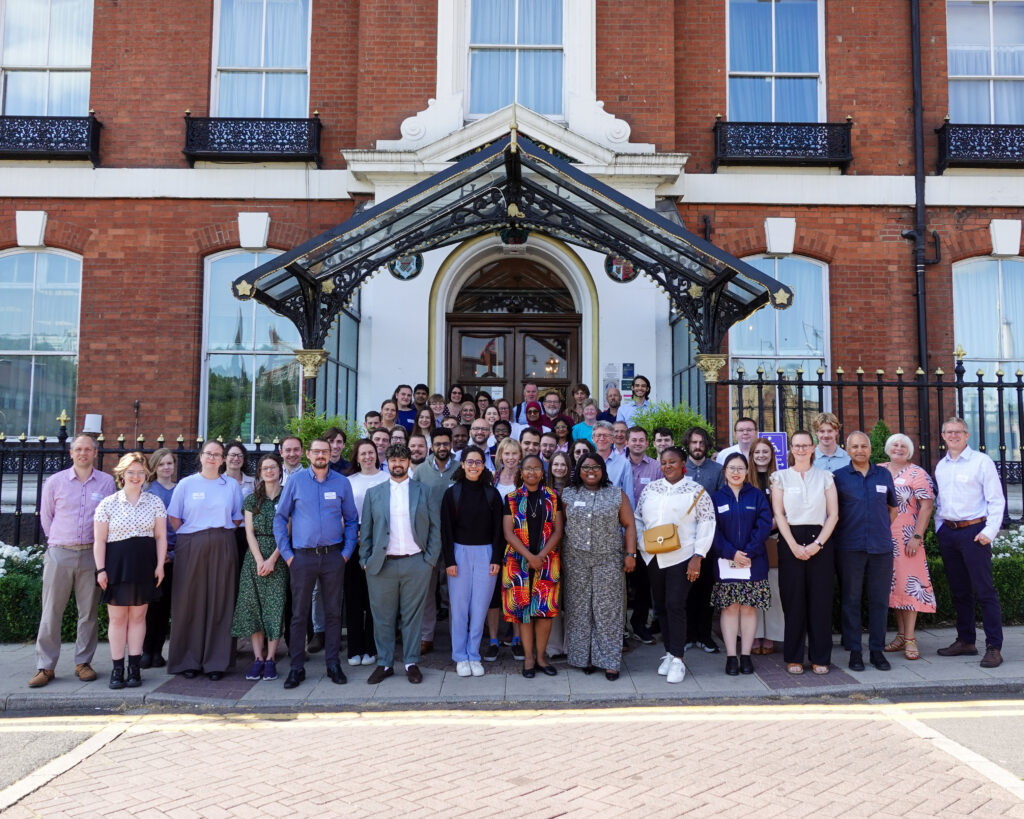
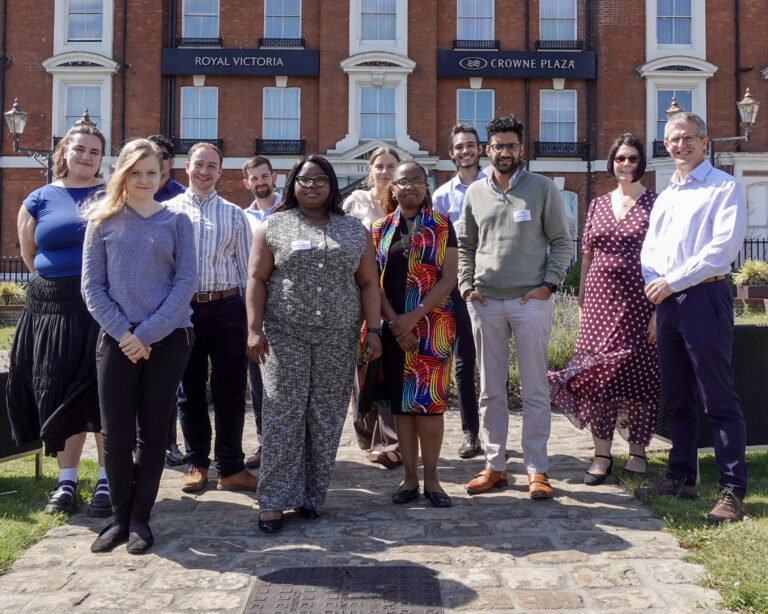
A large group of people wearing business attire stand in rows smiling at the camera. They are outside on grass, the weather is sunny with blue skies and behind them is a stately home. Members of the group include PhD students, academic staff and industry partners who are sponsoring students

CDT WIRe Annual One-Day Conference 2026

The CDT WIRe Annual One-Day Conference took place 12 July 2026. The event is a fantastic day for our PhD students to come together alongside industry partners, supervisors, and CDT WIRe alumni to celebrate their research and catch up with colleagues.

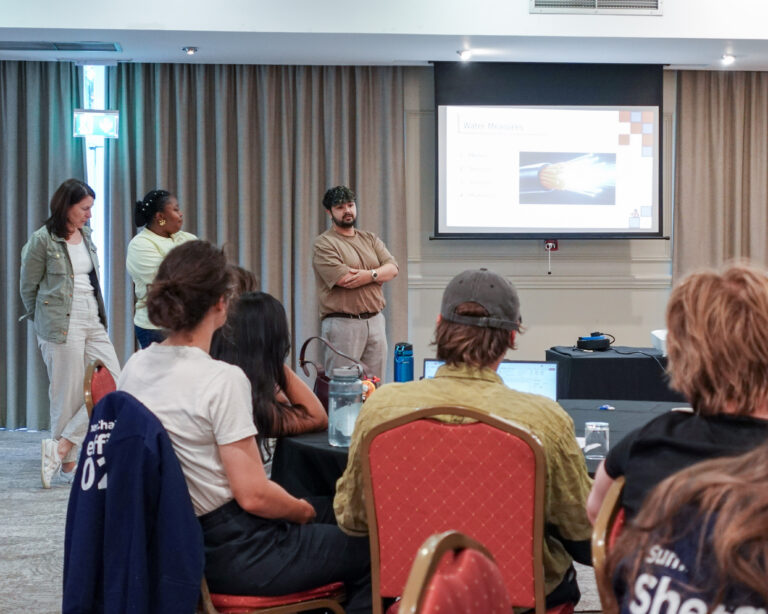
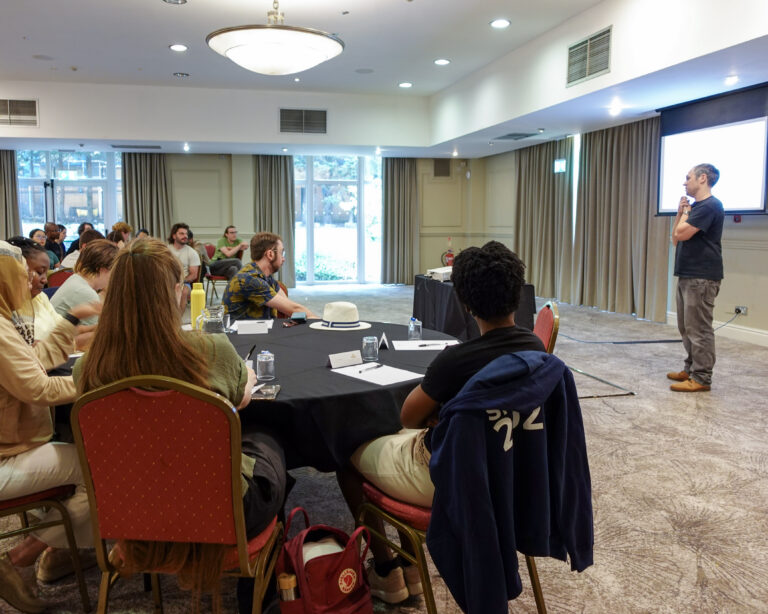
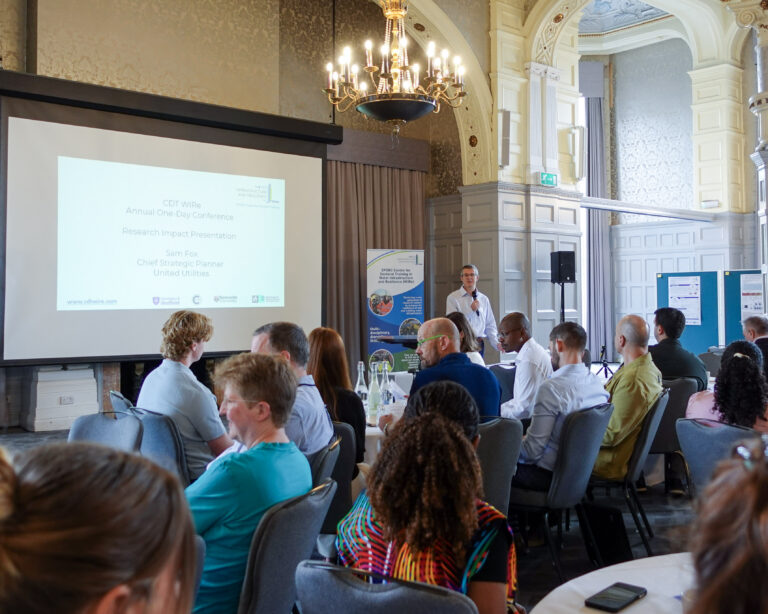
A man presents to a room full of people sat at round tables
Peter Jarvis opening the conference

The CDT WIRe Annual One-Day Conference began with an inspiring keynote presentation from Dr Sam Fox, Chief Strategic Planner at United Utilities, who led us through his career since completing his PhD at The University of Sheffield – demonstrating how completing a PhD opened up exciting career opportunities. Sam highlighted the need for impactful research across the water sector, outlining several key challenges faced by the sector that require innovative solutions.


With demand increasing but supply becoming less predictable in the face of climate change, how do we improve the resilience of our water sector long-term? ‘We need to collaborate, innovate and look at new sustainable solutions’.


We need to know the scale of demand we are working at, but with increasing uncertainty, challenges also increase – for example, how do we predict water use for the year 2100?


Sam’s advice for our students: ‘Start with the punchline to get people’s interest and then engage with the depth and value of your work’

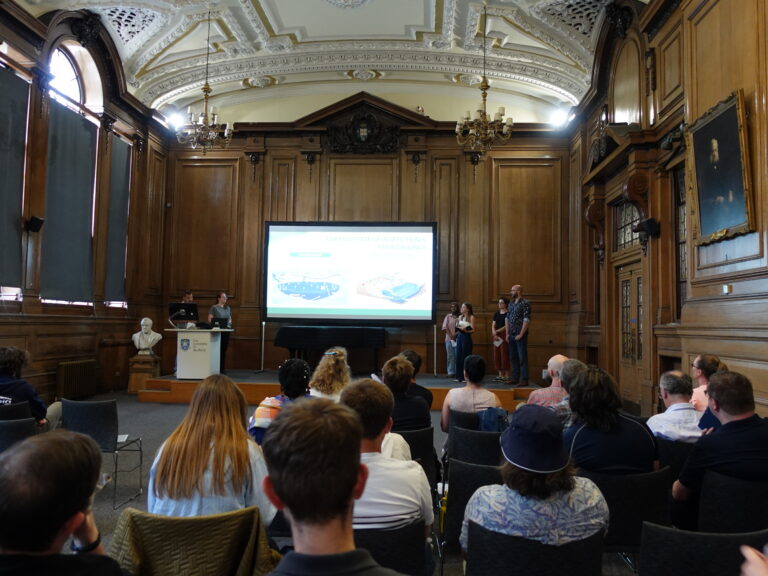
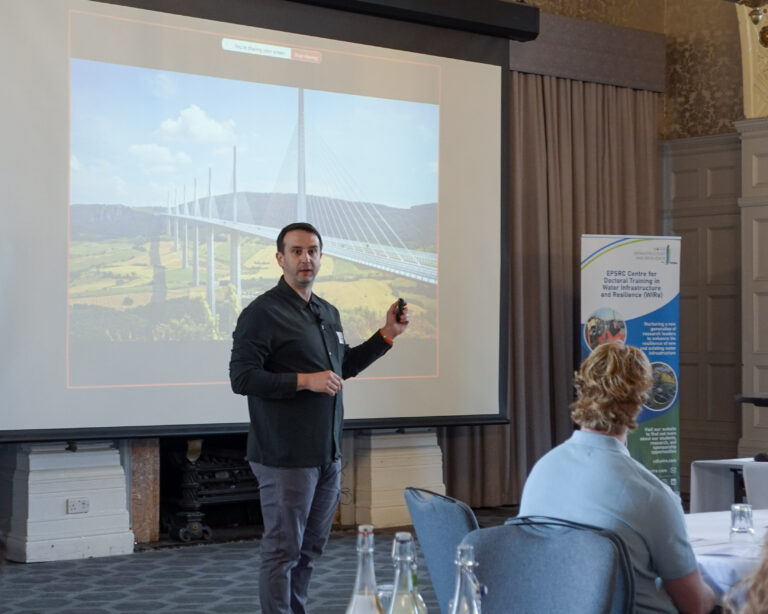
A man stood in front of a projector screen presents to an audience that is not in frame.
Dr Sam Fox presenting
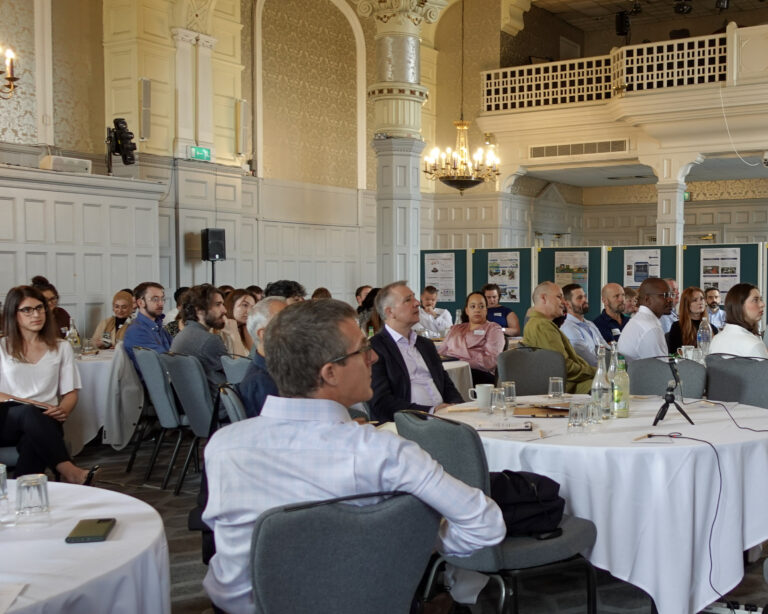
an audience of people sat at round tables
The conference audience

Throughout the day, students from Cohort IV presented full-length talks on their research over the last four years. 

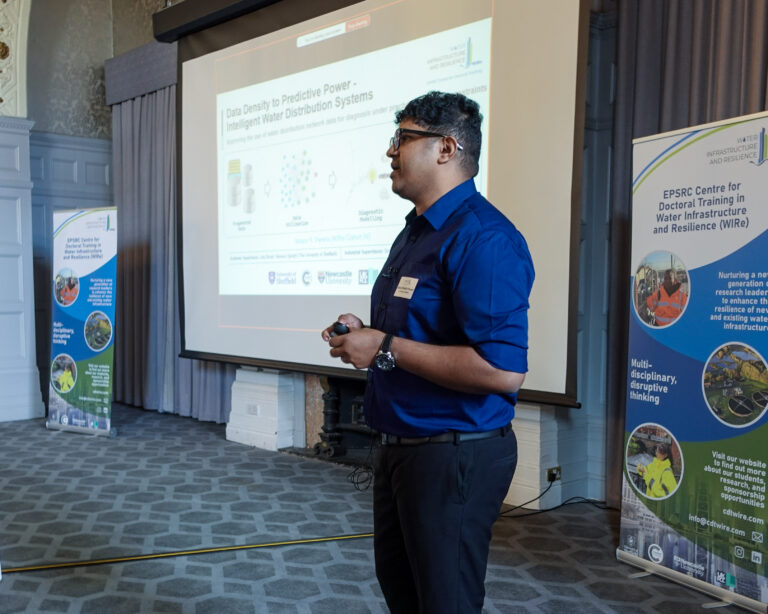
a man presenting with a projector screen behind him
Ishara Perera presenting
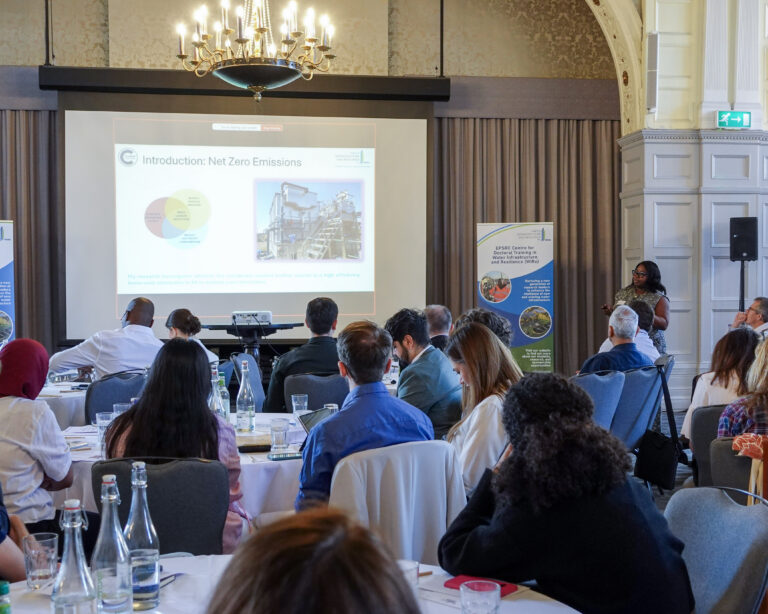
a woman presenting to a conference audience
Blessing Mobolaji presenting

Students from cohorts V-VII presented posters of their research, which we were able to read and discuss during the breaks between talks.


As well as producing posters, students in Cohort V presented 3-minute poster pitches; we are always impressed with how our students clearly explain their research in such a small amount of time!

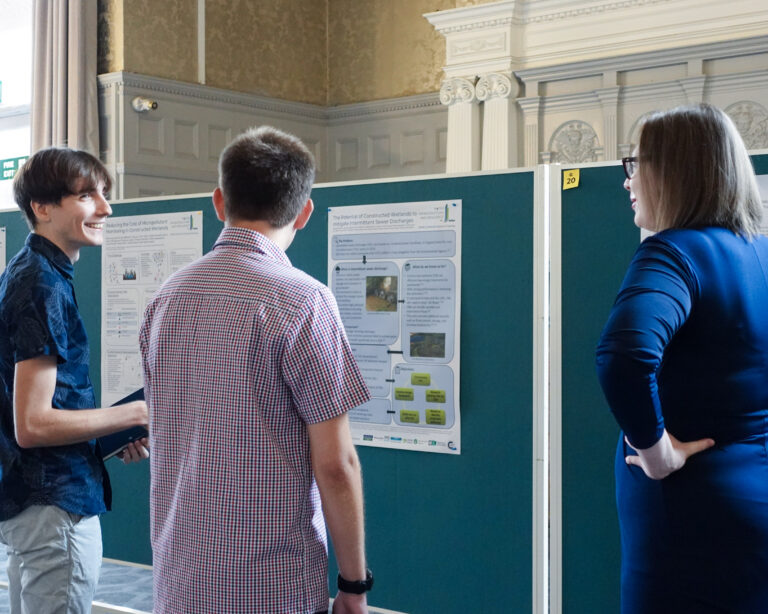
people stood near scientific posters. the people are deep in conversation
Delegates discuss posters
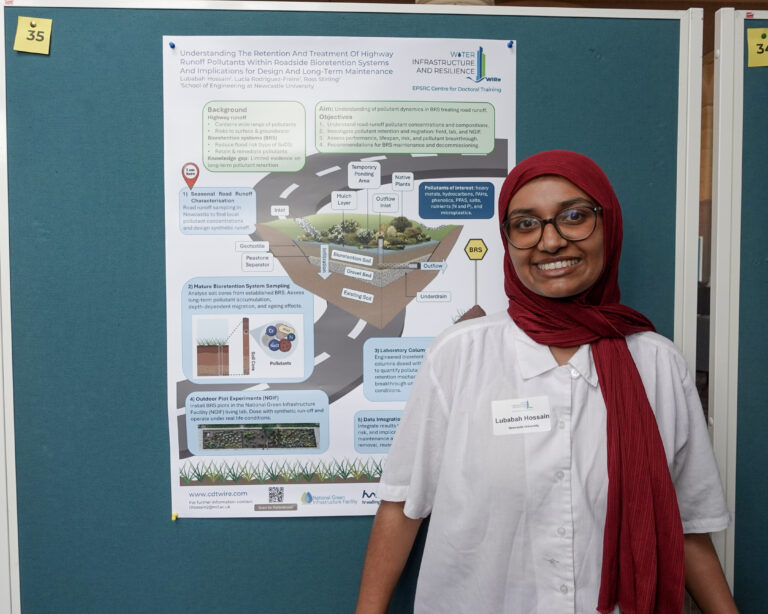
A woman stands smiling next to a scientific poster
Lubabah Hossain's poster
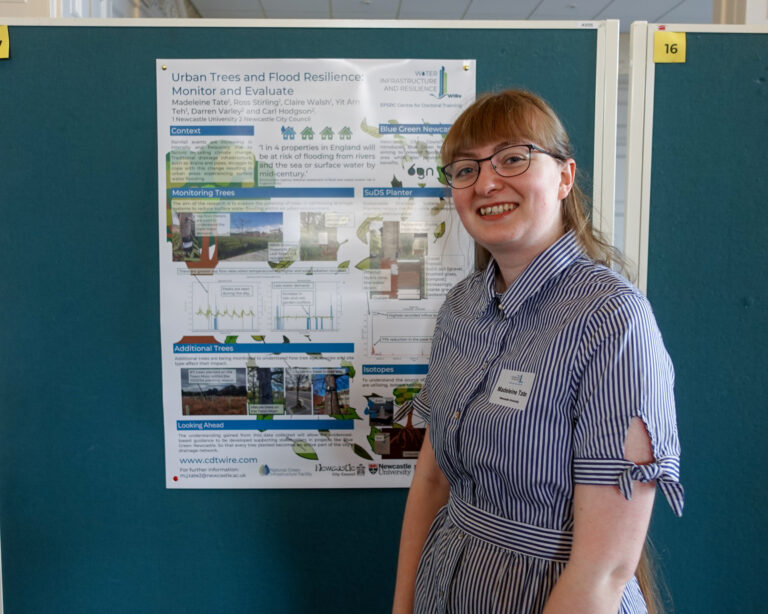
A woman stands smiling next to a scientific poster
Madeleine Tate's poster
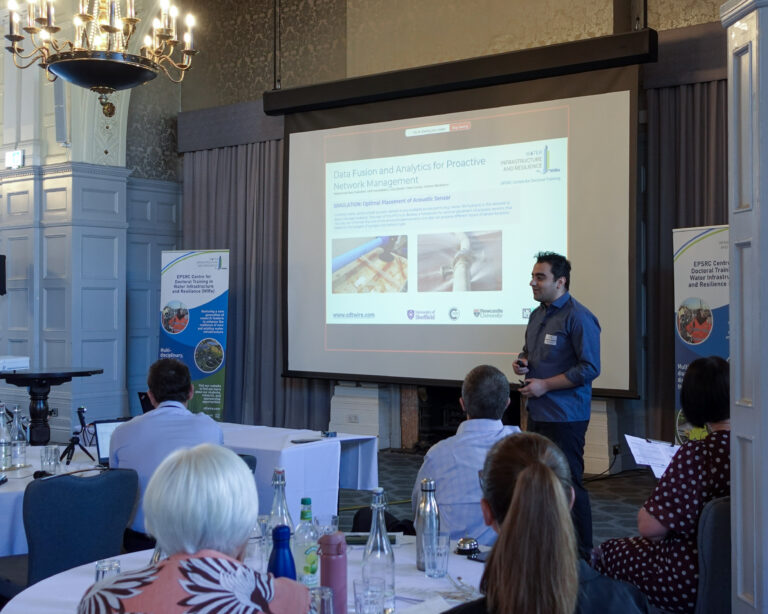
a man stands in front of a projector screen presenting to a room of people who are sat around round tables
Mohammad Shekofteh's poster pitch

A massive congratulations to the winners of our conference prizes:


🎉 Best Poster: Tomas Hotzel Escardo ‘Advanced sensing and AI for risk detection in rail environments’

✨ Best Poster Pitch: Vladislav Dukhovskoy ‘City-Scale Strategies for Urban Drainage to Regulate Quantity and Quality of Flow’

🏆 Best Talk: Jen Hollands ‘Disrupting disruptions: Drinking water treatment resilience to chemical shortages’

🏅 We also awarded the prize for the highest achieving student from our induction semester - well done Joanna Karska!

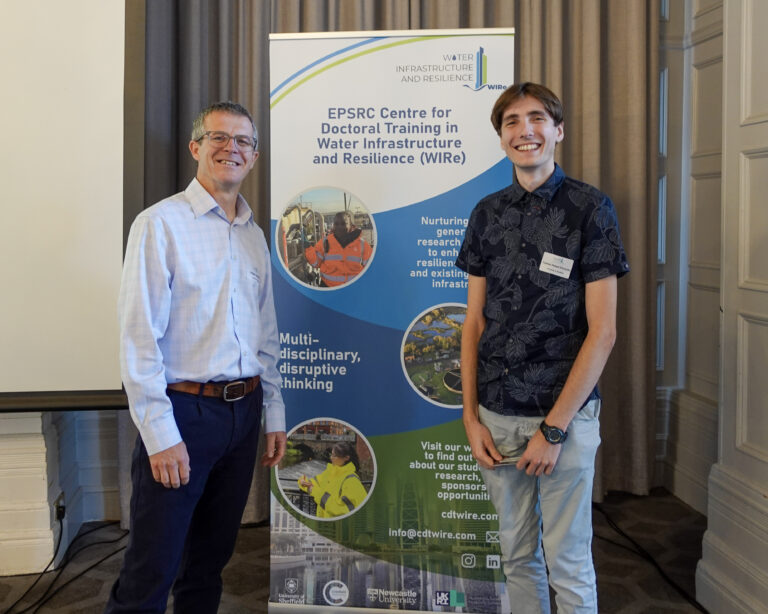
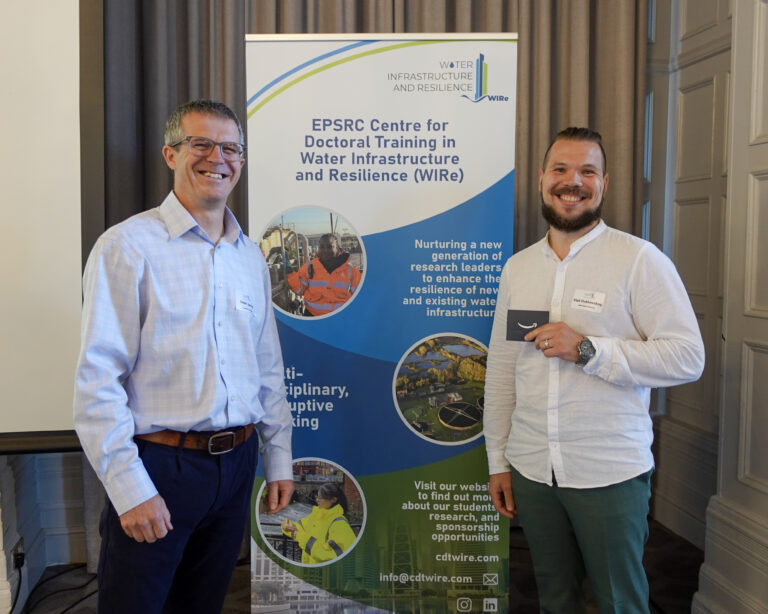
two men stand smiling at the camera. between them is a roller banner promoting CDT WIRe
Tomas wins the prize for Best Poster
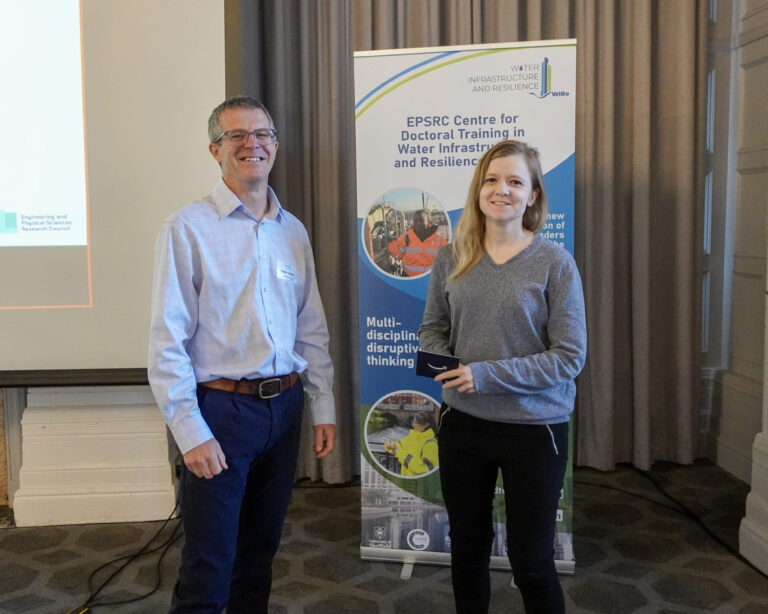
two men stand smiling at the camera. between them is a roller banner promoting CDT WIRe
Vlad wins the prize for Best Poster Pitch
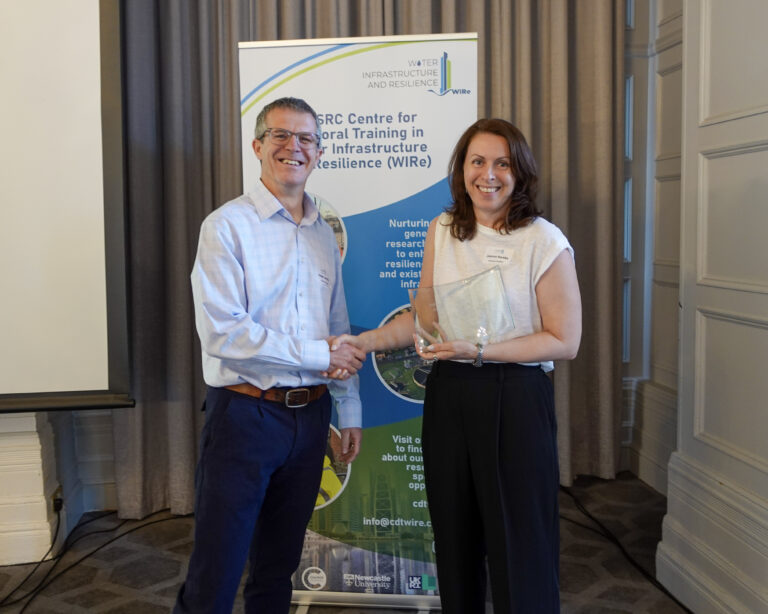
A man and a woman stand smiling at the camera. between them is a roller banner promoting CDT WIRe
Jen wins the prize for Best Talk
A man and a woman stand shaking hands and smiling at the camera. between them is a roller banner promoting CDT WIRe
Joanna wins the prize for Highest Achieving Student from our induction semester

It was a brilliant day of talks and posters; we can’t wait to see what our students do next, both with their projects and beyond the PhD journey!

A large group of people wearing business attire stand in rows smiling at the camera. They are outside on grass, the weather is sunny with blue skies and behind them is a doorway to a red brick building. They are delegates from the CDT WIRe Annual One-Day Conference
All delegates of the CDT WIRe Annual One-Day Conference

This was Cohort IV’s final Annual One-Day Conference! Their talks highlighted how much progress they have made during their time with CDT WIRe, and they are now on the final stretch of their PhD journey - we wish them all good luck as they get ready to submit their theses!

A group of people stand smiling at the camera, they are outside in the sun, stood in front of a red brick building.
Cohort IV

After the conference, we walked into the centre of Sheffield to Gameshow Allstars to unwind with some games, puzzles, and healthy competition.


Students in Cohorts V-VII then travelled to Rotherham to take part in the annual WIRe Summer Challenge. This year's topic was robotics, and you can find out what we got up to here.

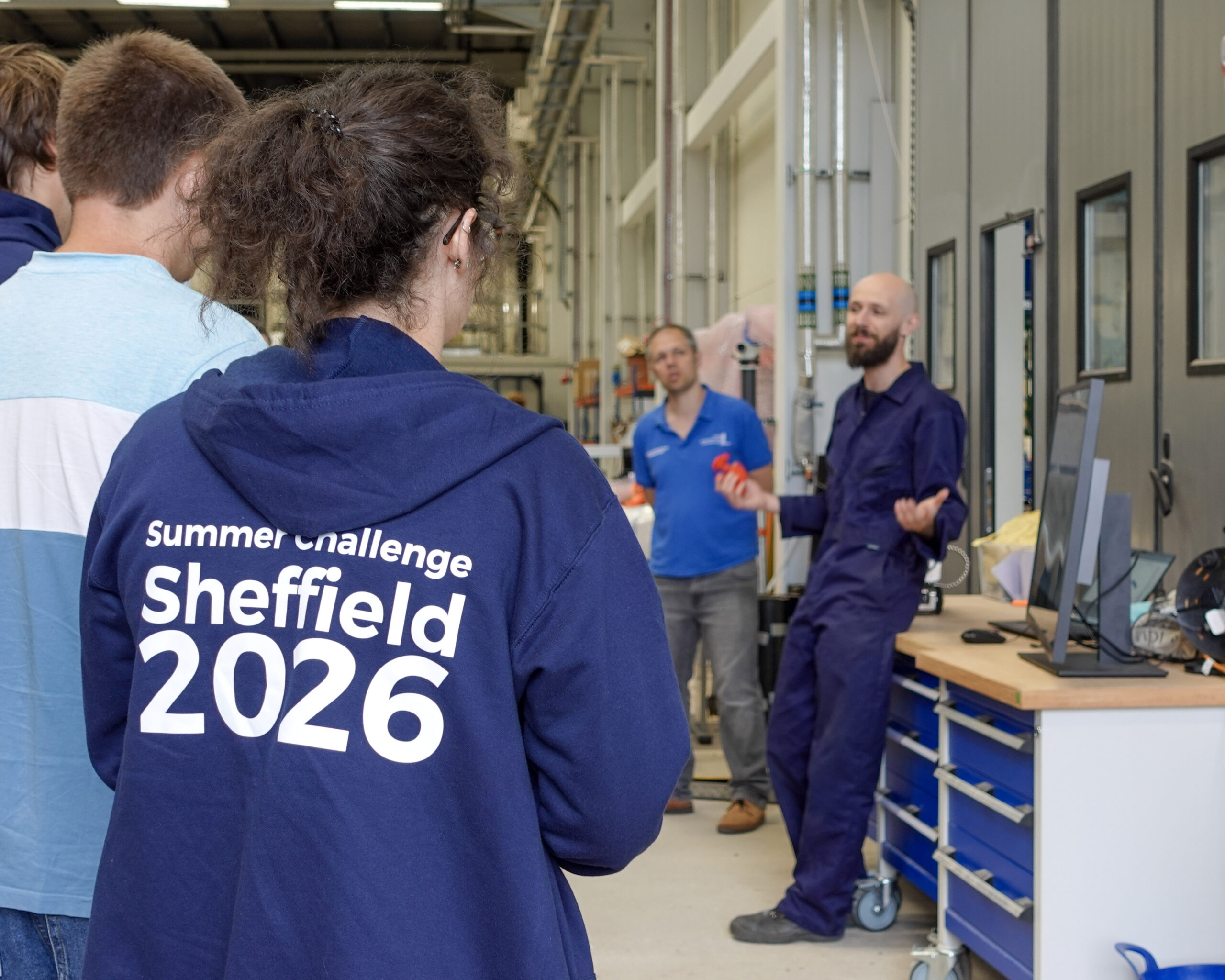
A person is stood with their back to the camera listening to an industry demonstration. Text on the back of the hoodie in the foreground reads 'Summer Challenge Sheffield 2026'

Robots – WIRe Summer Challenge 2026

After the CDT WIRe Annual One-Day Conference, We were in Rotherham for the 2026 WIRe Summer Challenge, talking all things robots and automation across the water sector.


The week kicked off with a visit to ICAIR UK in Sheffield, where our students were introduced to this year's topic and engaged with industry demonstrations from Cura Terrae, Synovate and Synthotech Limited, and nuron, highlighting some of the latest technologies being used for monitoring across the water sector.


Our students had the opportunity to quiz our industry colleagues about the innovative solutions they are developing to address challenges across the water sector. 

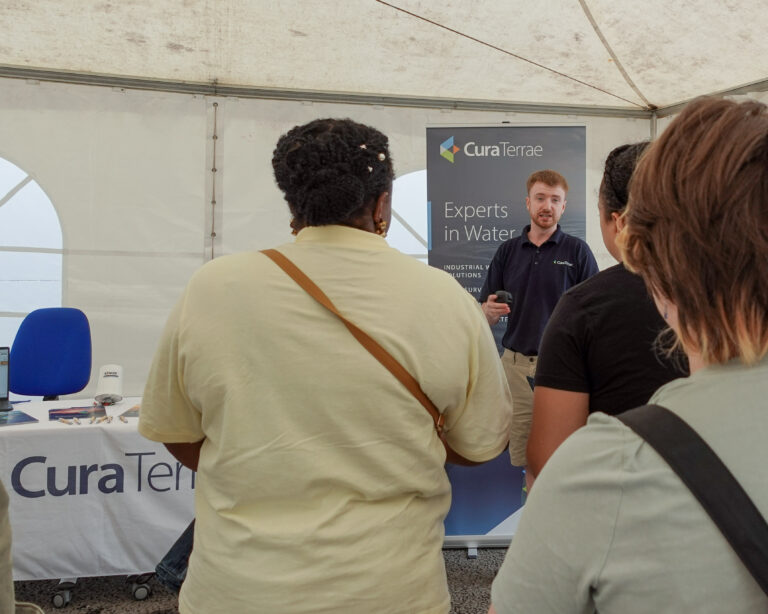
A man talking to an audience. The audience has their backs to the camera. The man is stood at an exhibition stand that is branded with 'Cura Terrae'
Cura Terrae's presentation
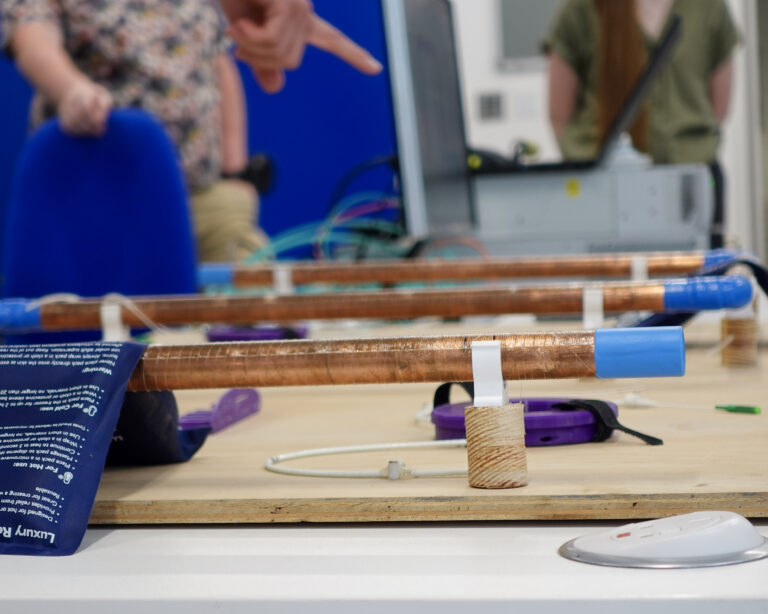
Fibre optic cables wrapped around a copper pipe
Nuron's demonstration - fibre optic cables to detect temperature changes along a pipe
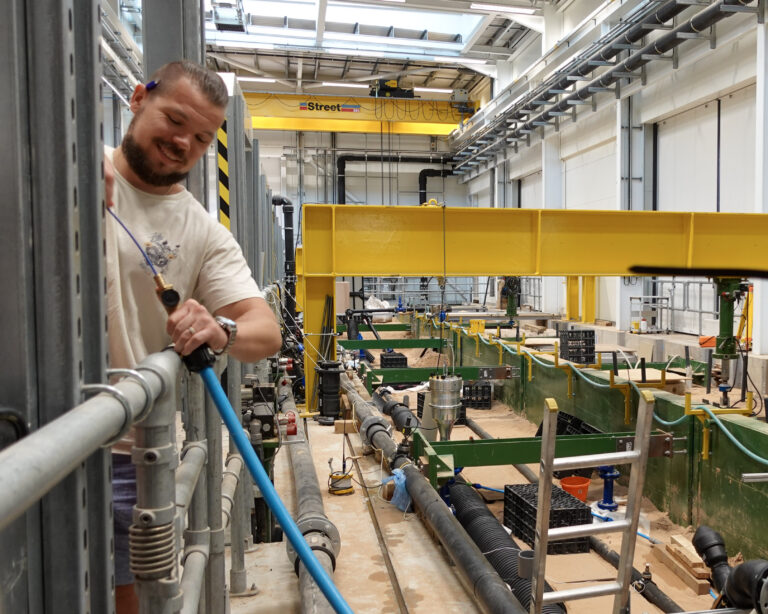
Our student, Vlad (Cohort V), engaging with Synthotech's demonstration, feeding a hydrophone along a pipe
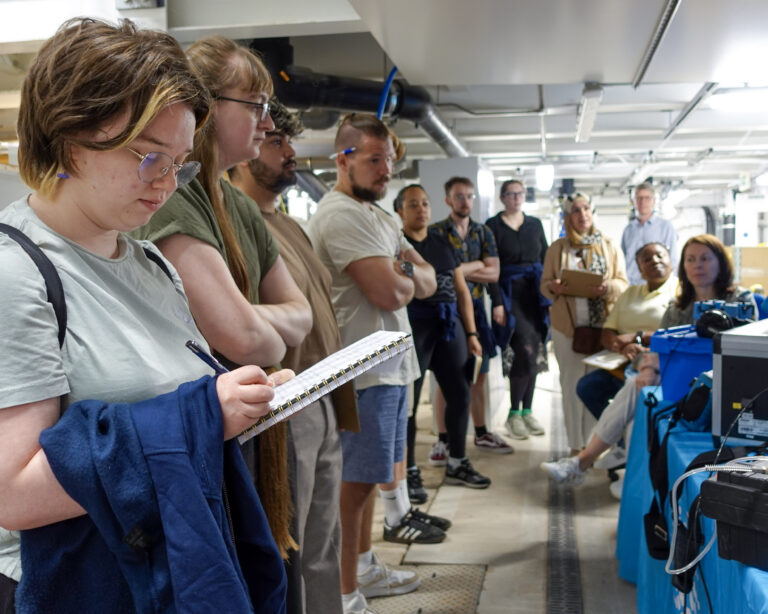
People stood making notes next to an industry demonstration
Students making notes around a demonstration

After the morning of demonstrations, our students were tasked to consider current challenges associated with the implementation of robotic inspection technologies within distributed water infrastructure.

A man presenting to a room of people sat around round table
Students presenting about robotic inspection challenges
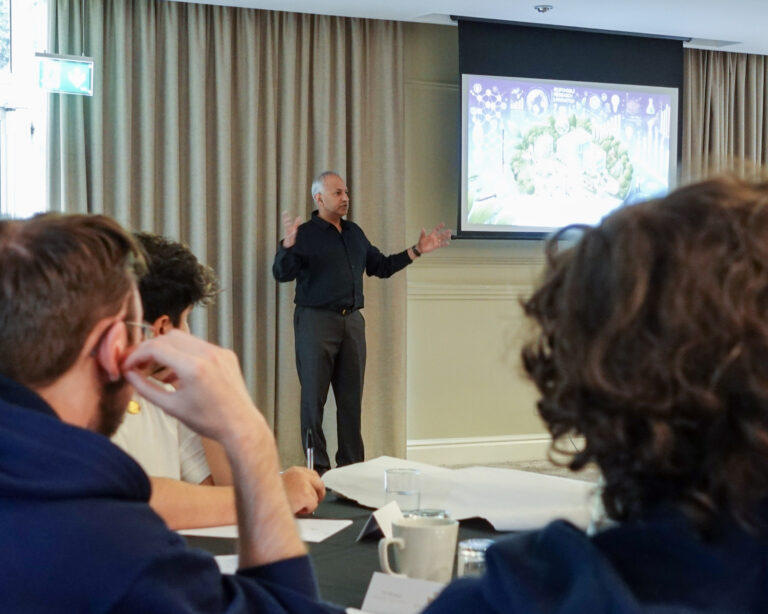
A man presents to a room of people sat at round tables
James Shucksmith (WIRe Co-Director) leading the afternoon presentations

The following day, we returned to ICAIR to see innovative robotics research projects at various stages of development. We got up close and personal with some of the latest robots being designed to monitor underground pipe networks.


Thank you to Rob Worley (Pipebots Project) and Aris Karnezis (PIPEON Project) for sharing your designs and discussing the needs of the water industry with our students!


We also heard from CDT WIRe alumnus, Edward John, who talked us through his current research developing a new way of measuring acoustics to detect asset failures and leakage.

In the afternoon, our students then split into teams and started putting together their own funding pitches for innovative autonomous systems that address key challenges across the water sector.

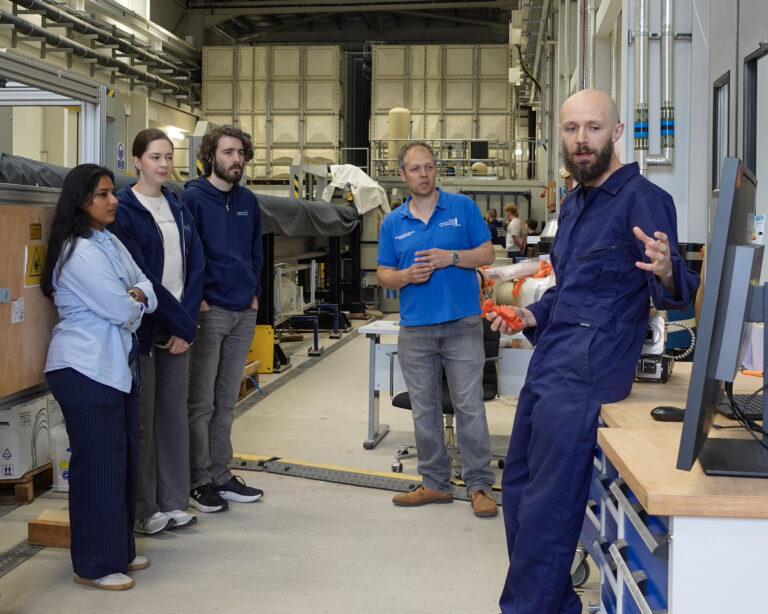
A man in a blue boiler suit talks to a group of people stood around a computer. They are in an industrial laboratory.
Rob Worley discussing the applications of Pipebots
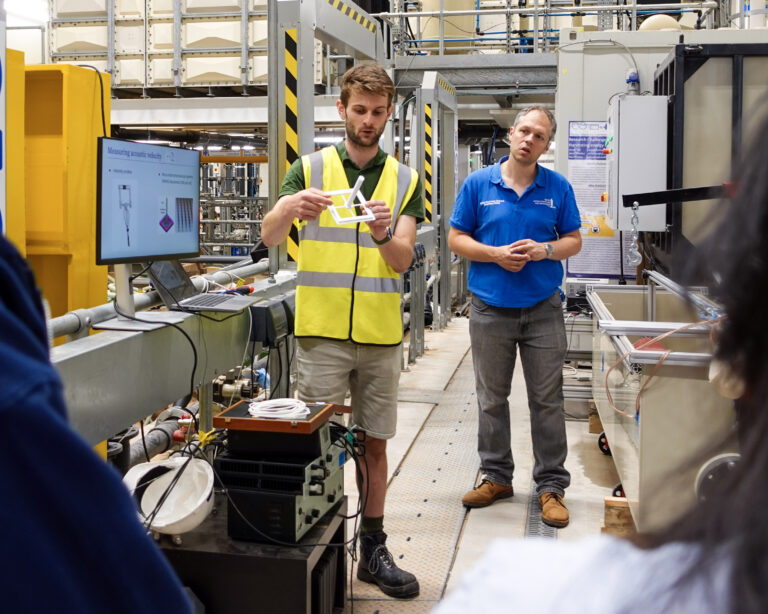
a man in a high visibility yellow vest presents to an unseen group of people. He has a PC with a PowerPoint presentation
Edward John discussing acoustics
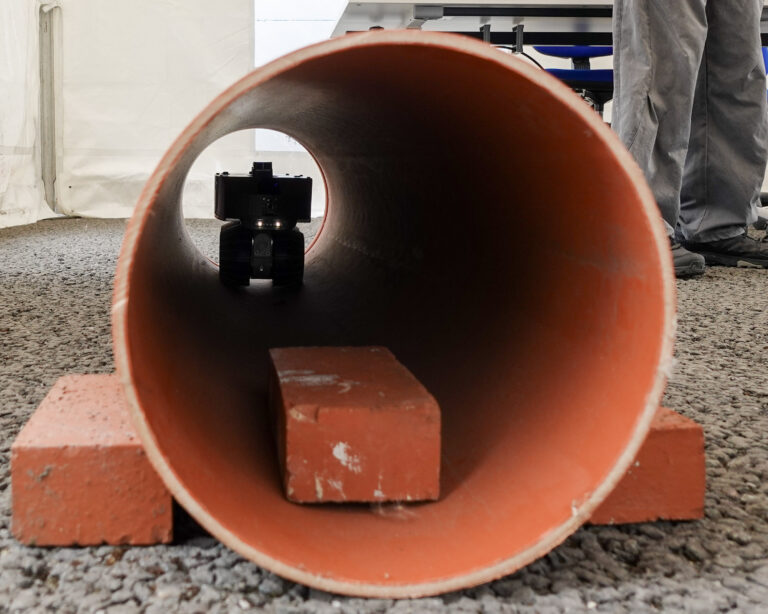
A small robot with wheels and lights on the front of it is in an orange plastic pipe
A robot in a pipe
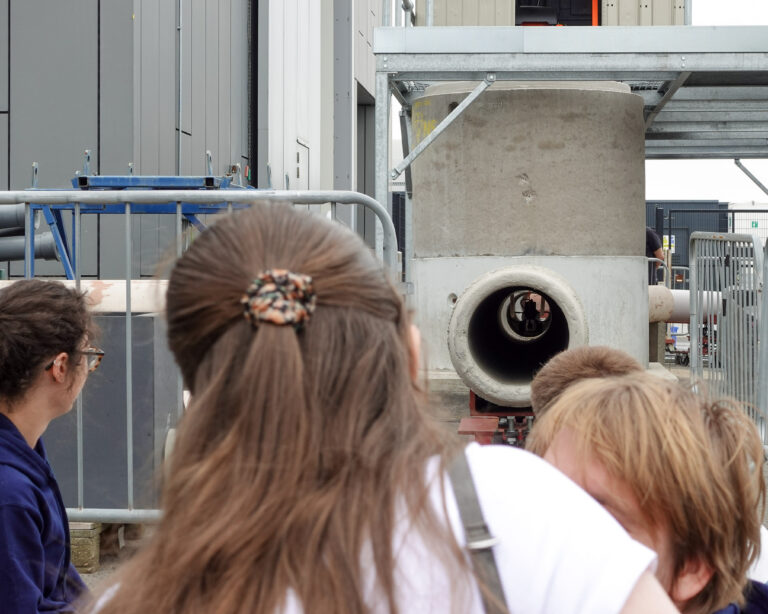
a group of people are looking down a concrete pipe to see a robot in the pipe. the picture is taken from behind the people
Students watching a robot move along a pipe

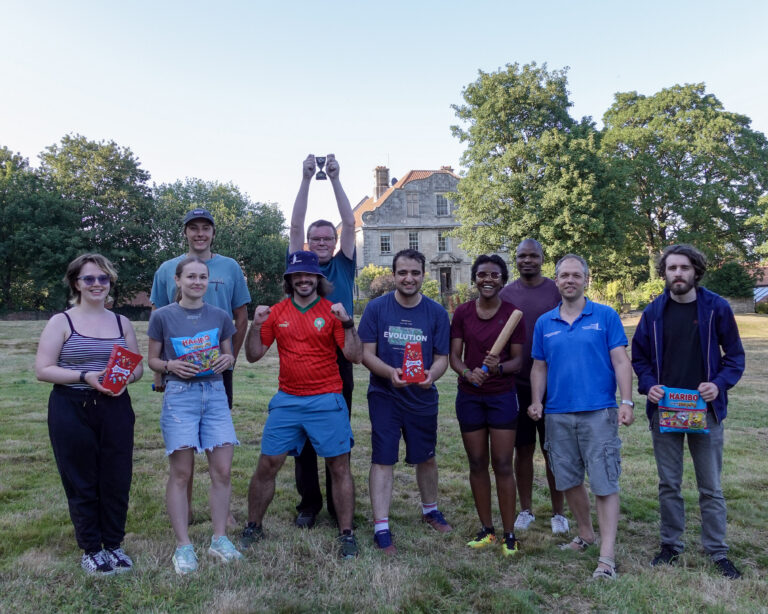
The day finished with the CDT WIRe Annual Rounders Game took place, giving the opportunity for people to expose their competitive side! Congratulations to the winning team for the landslide victory!

A group of people stood in a field smiling at the camera. One man lifts a trophy above his head
The winning rounders team

Kamal Birdi led a session on Responsible Research and Innovation on the morning of the third day, encouraging our students to consider the potential implications of their proposals, including any unintended consequences for society or the environment. They considered the various stakeholders and how their product or service may impact them, and how they would minimise any negative perceptions.

a man delivers a presentation
Kamal's workshop
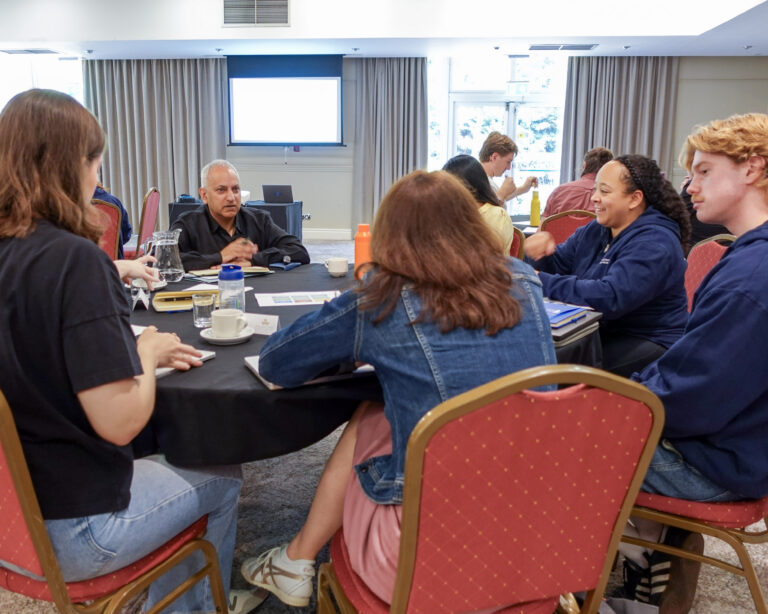
a group of people sat at a round table having a conversation
Students discussing RR&I with Kamal
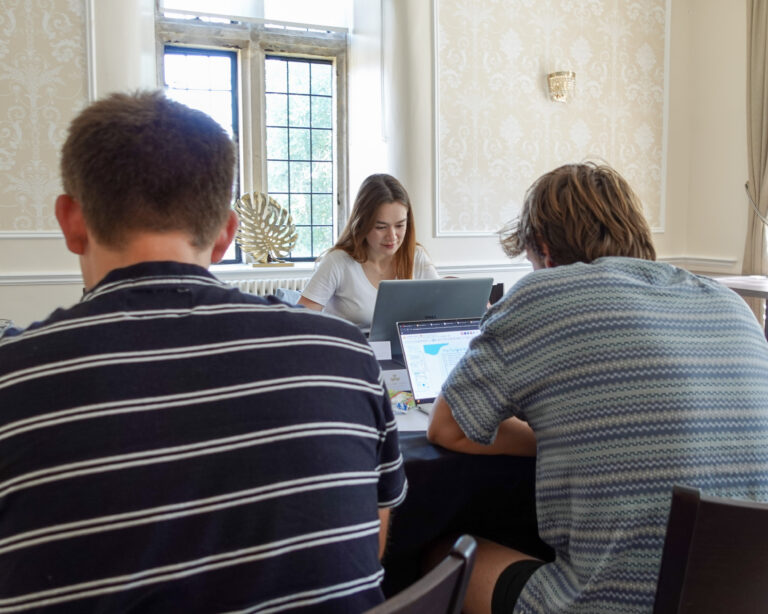
people work on laptops
Students working in their groups
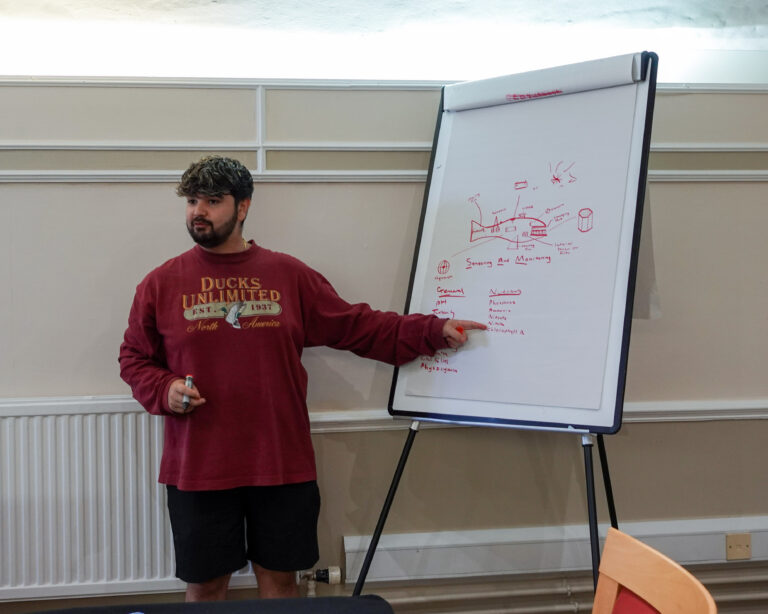
a man stands next to a flipchart with a diagram of a robot in the shape of a whale
Rubin's group makes notes for their idea

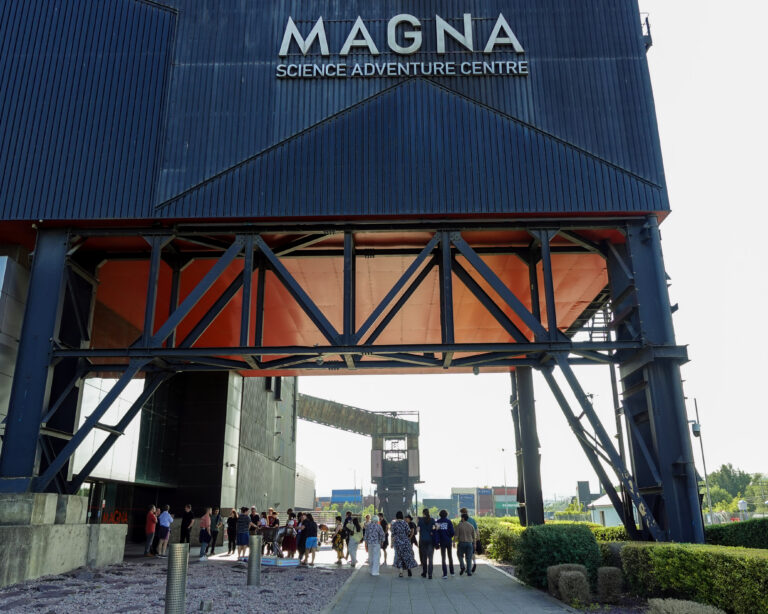
After a week of hard work, we were treated to an evening at Magna Science Adventure Centre for the final night. We explored the Earth, Air, Water and Fire pavilions, while learning about the local steel-making industry.

A large black building. A group of people walk below it. Text reads 'MAGNA SCIENCE ADVENTURE CENTRE'
Magna Science Adventure Centre

On the last day, our students presented their proposals, which were be judged by our panel of experts from across industry and academia, against the key criteria:


  • Transformation potential
  • Scientific innovation
  • Responsible Research and Innovation
  • Feasibility
a group of people stand beside a projector screen, presenting to an unseen audience
D.A.A.N.C.E. From left to right: Joanna, Soumi, Dougie, Hannah, Leticia (Natasha is behind Dougie)

The first group presented a pitch for a Distributed Autonomous Agricultural Nature Based Catchment Enhancement (D.A.A.N.C.E.), featuring treatment wetlands, automated sluice gates, and smart swales.

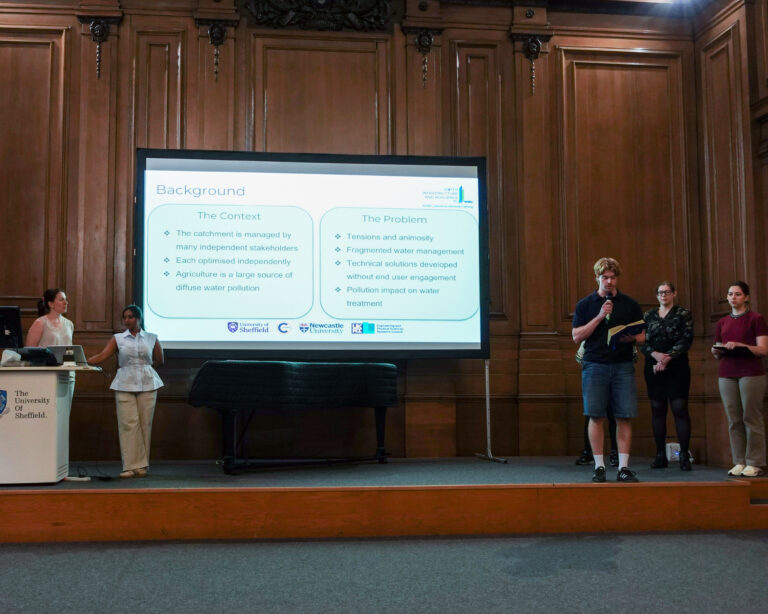
Next up was B.A.L.E.E.N. (Bioinspired Autonomous Lentic Extraction of Eutrophying Nutrients), whale-inspired robots filtering nutrients and algae from reservoirs to prevent algal blooms 

a group of people stand beside a projector screen, presenting to an unseen audience
B.A.L.E.E.N. From left to right: Sam, Jacob, Rubin, Reuben, Tafara
a group of people stand beside a projector screen, presenting to an unseen audience
S.W.A.R.M. From left to right: Linda, Mohammad, Lydia, Boyang, Madeleine, Roman

The third group proposed S.W.A.R.M.: Sustainable Water Asset & Robotic Management, with hexapod robots monitoring the biodiversity of Sustainable Drainage Systems

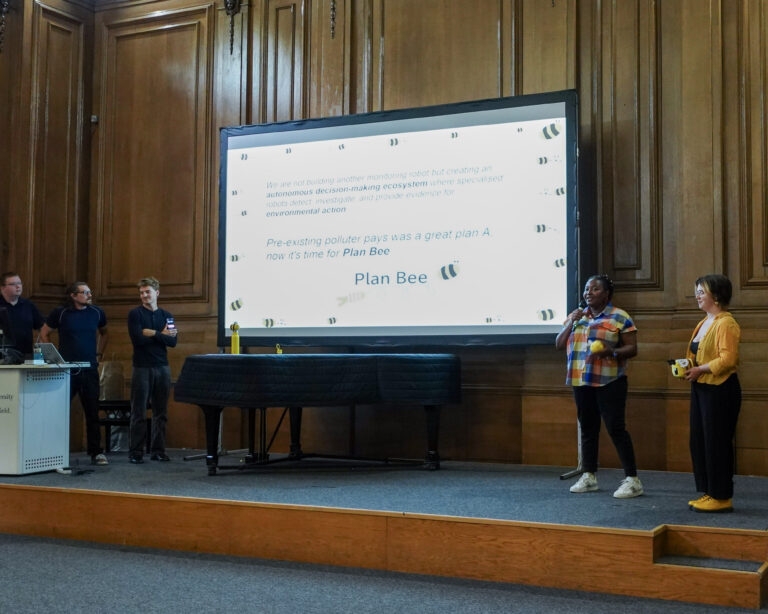
Presenting their pitch next was Plan Bee, with bee-inspired drones monitoring fertiliser and pesticide distributions using aerosols and runoff measurements, with the robots detecting, investigating and providing evidence for environmental action

a group of people stand beside a projector screen, presenting to an unseen audience
Plan Bee. From left to right: Gareth, Sebastian, Joshua, Mercy, Emily
a group of people stand beside a projector screen, presenting to an audience
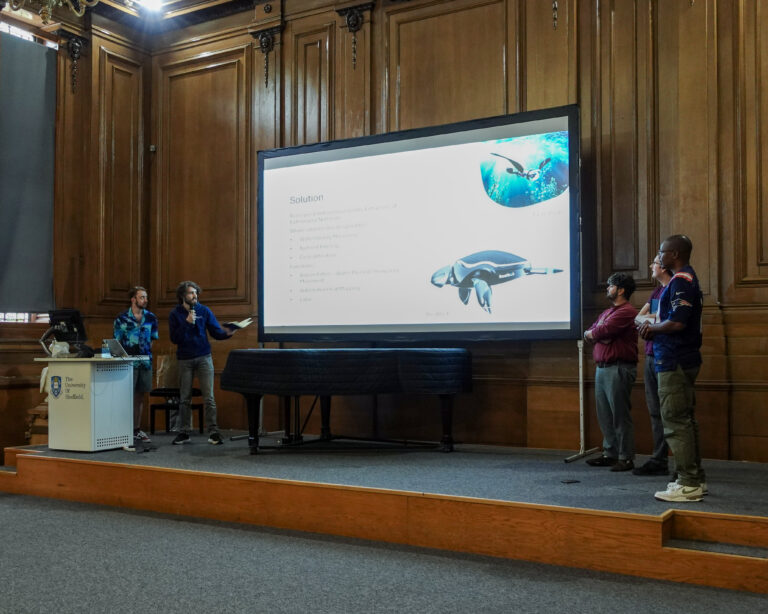
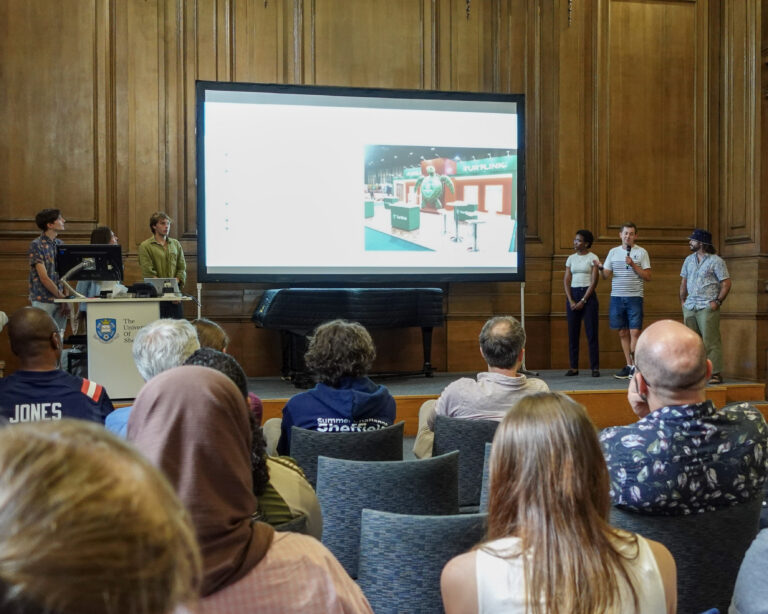
Turtlink. From left to right: Tomas, Başak, Jasper, Doreen, Nick, Vincent

The penultimate group proposed Turtlink, turtle-inspired robots delivering fibre optic cables through drinking water distribution network for proactive leak detection

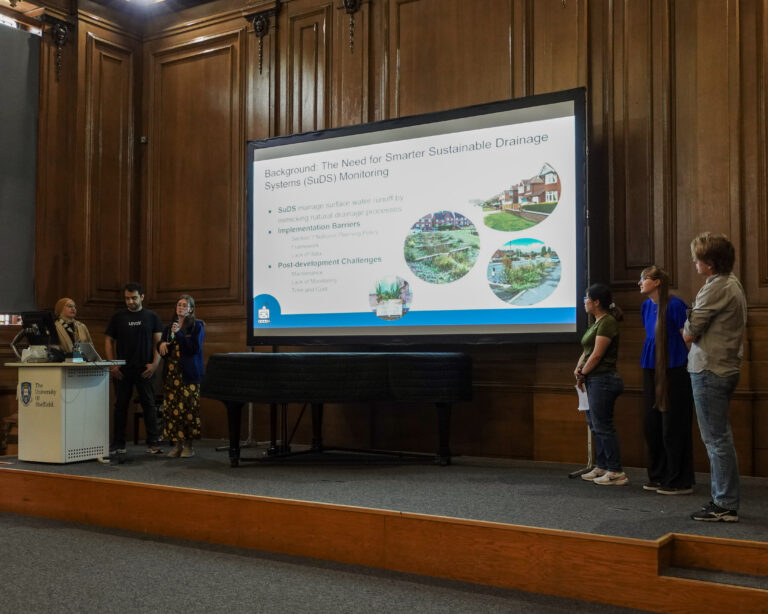
Last, but not least, we heard from the team behind Smart SuDS, a proactive, holistic and automated maintenance solution for Sustainable Drainage Systems

a group of people stand beside a projector screen, presenting to an audience
Smart SuDS. From left to right: Vlad, Freya, Lubabah, Gabriella, Rachael, Cerith

All of our student teams had fantastic ideas - maybe one day we will see them in action!


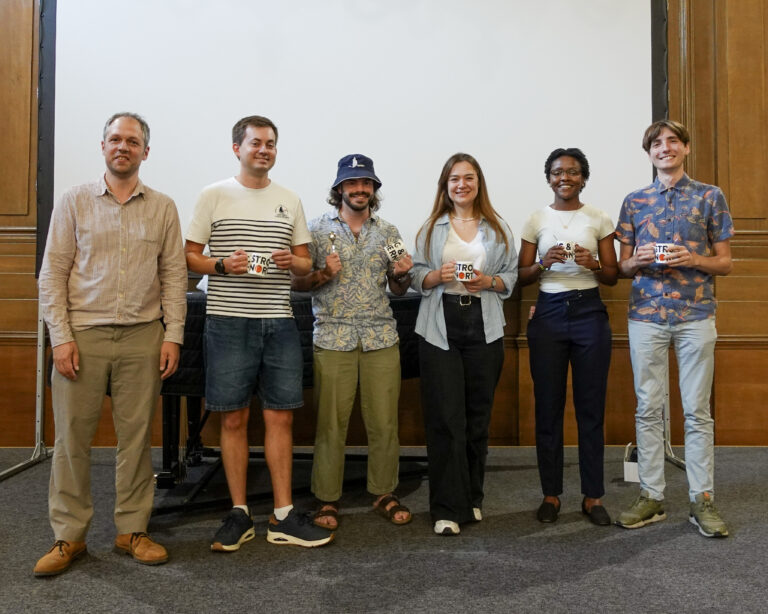
Congratulations to the winning team: Turtlink! The winning proposal was chosen by our panel of expert judges, who were very impressed with the pitch made by our students. The team considered all aspects of the proposal, including how to power the robots, marketing, and the finances for operations. The winning team received a Sheffield steel teaspoon and a mug to make the perfect brew, proving that not everything needs to be automated. 

six people stand in a row smiling at the camera, they are each holding a mug and teaspoon
The winning team: Turtlink

We hope everyone enjoyed this year's Challenge Week! A big thank you to Lindsay Hopcroft, James Shucksmith and the rest of the team at The University of Sheffield for organising a brilliant week! Time for some well-earned rest and a good cup of tea ☕

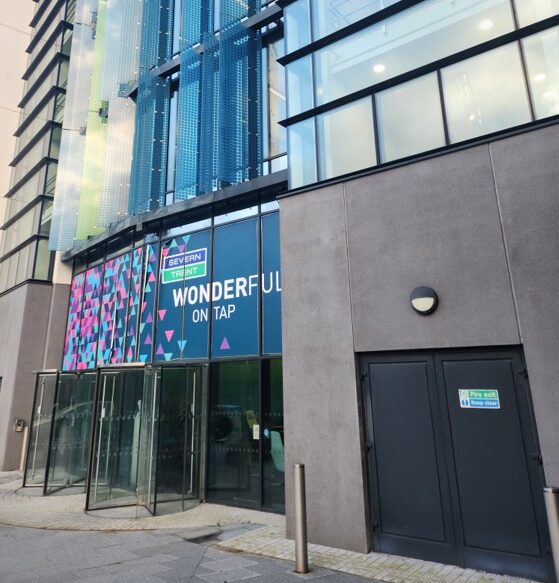
severn trent office

PhD Student Placement: Lydia Mahan at Severn Trent

Eight weeks at Severn Trent: From Induction to Insight

Lydia Mahan (Cohort VI) reflects on her placement with her industry partner Severn Trent:

I have recently completed an eight-week placement with Severn Trent, working within the Drainage and Wastewater Management Plan (DWMP) team. Looking back, it has been an incredibly valuable experience that has combined technical development, applied research, and real-world impact.

Getting Started: Weeks 1-2

The placement began with a strong and structured introduction. My first two weeks focused on induction activities, including orientation, gaining access to internal systems, and completing essential training.


Alongside this, I developed a foundational understanding of the DWMP framework and the broader challenges associated with surface water flooding. This early phase provided important context for the work ahead, particularly my focus on assessing risks and potential damages linked to surface water flood events - an area I was eager to explore in more depth.

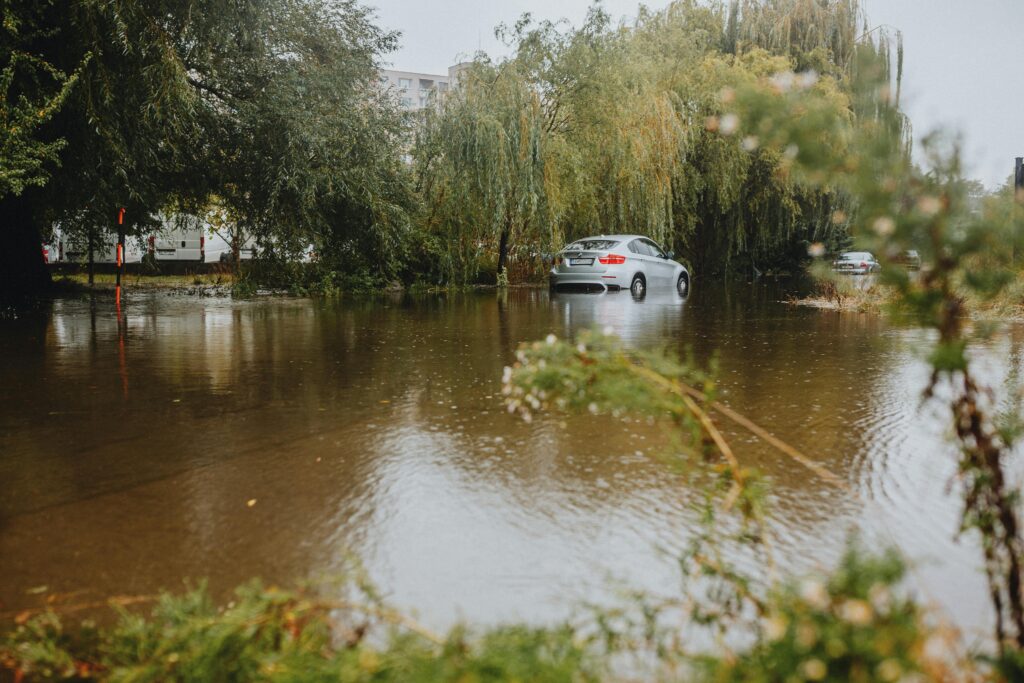
car on a flooded road

Building Momentum: Weeks 3-4

By weeks three and four, the placement had shifted into more technical and project-focused work. A key component of my role involved assessing surface water flood risk across a catchment using ArcGIS. This allowed me to engage directly with spatial data and develop practical analytical skills.


To support this work, I also began drafting guidance notes that documented my methodology, including context, data sources, assumptions, and step-by-step processes. This not only reinforced my own understanding but also created a resource that could be used by others in the team.


In parallel, I worked on evaluating the Common Value Framework. This involved reviewing a wide range of service measures, impact categories, and values to develop a refined shortlist for future assessments.


During this period, I also settled into a hybrid working routine—splitting my time between the Coventry office and Sheffield. The balance worked well: office days enabled collaboration and discussion, while university days provided space for focused analysis and writing.
Deepening the Work: Weeks 5-6

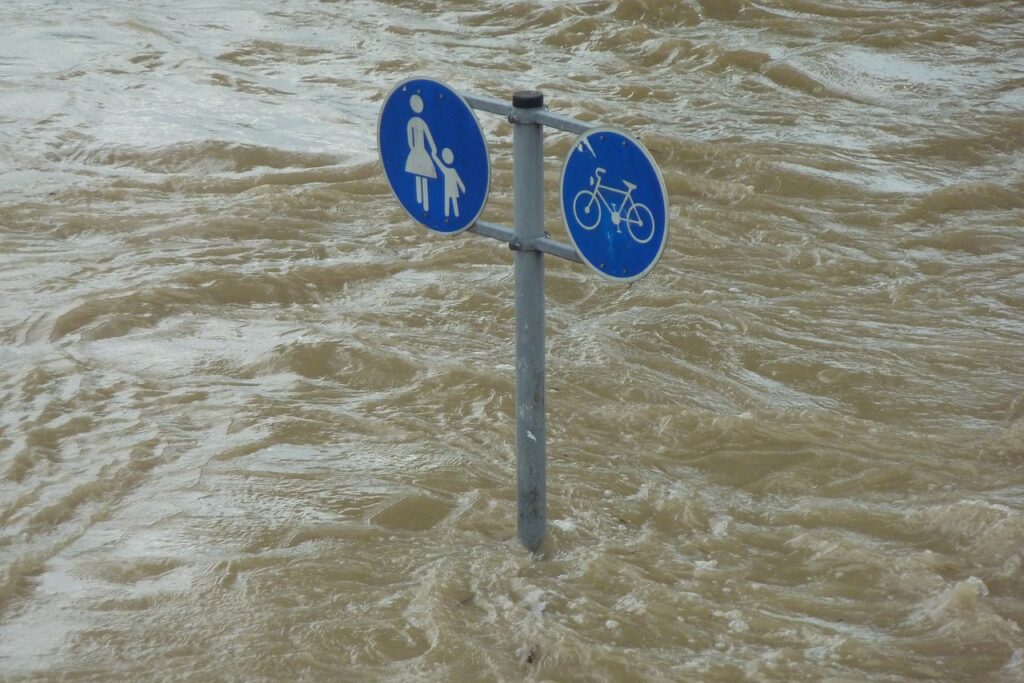
flood water around a signpost

As I moved into weeks five and six, I continued building on the foundations established earlier in the placement. My focus remained on both the Common Value Framework and the surface water flood-risk performance indicator.


One of the key pieces of work during this stage was a comparative analysis of wider-benefits valuation across grey and green infrastructure. Using the Common Value Framework, I explored how different types of interventions are valued - not just in engineering terms, but also in relation to their social, environmental, and economic impacts.


This phase helped deepen my understanding of how infrastructure decisions can deliver multi-dimensional value. I also had the opportunity to present my initial findings to the DWMP team, which was a great experience in communicating technical work to a professional audience.

Final Phase: Weeks 7-8

In the final two weeks, my focus shifted towards consolidating and communicating my work. I prepared a final report and delivered a presentation summarising my analysis, key findings, and reflections from the placement.


This included presenting outputs from the Common Value Framework work, as well as insights gained from assessing surface water flood risk. Bringing everything together allowed me to reflect on both the technical and practical aspects of the experience.

Reflections

Overall, this placement has been extremely rewarding. It has given me the opportunity to engage directly with end users, strengthening the relevance of my PhD research while gaining meaningful real-world insight.
 

Working within the DWMP team at Severn Trent has not only enhanced my technical skills but also provided a clearer understanding of how research can be applied in practice to address complex environmental challenges.

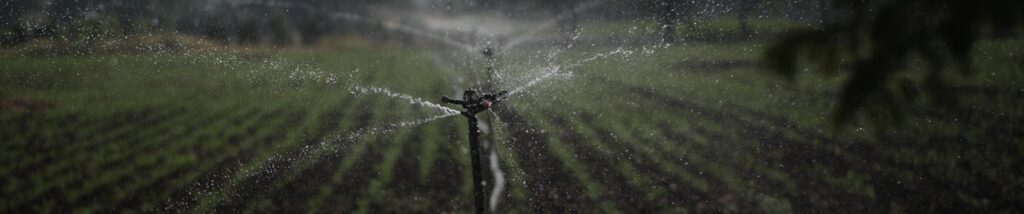
water

Advancing Water Quality and Carbon Transparency Through Doctoral Research

Dr Daniel Ruth - CDT WIRe Impact Case Study:

Impact Summary

Dr Daniel Ruth’s doctoral research on rapid process optimisation and natural organic matter (NOM) removal in drinking water treatment has delivered significant impact in two areas:

  1. Water Industry Innovation: Daniel’s PhD research findings underpinned Scottish Water’s investment of £1 million in next-generation monitoring, analytical processes, and new water treatment systems, helping to improve drinking water quality across Scotland during dynamic weather conditions and from changes caused by climate change.

  2. Climate Action and Carbon Transparency: In his current role as a Carbon Ratings Scientist at BeZero Carbon, Daniel applies his expertise in environmental science to ensure compliance and transparency in carbon markets, supporting global efforts toward net zero.
water

Underpinning Research

Daniel's PhD at Cranfield University, sponsored by EPSRC and Scottish Water, focused on:

  • Developing novel water quality monitoring methods and data interpretation techniques.
  • Optimising processes for natural organic matter removal, a critical step in ensuring safe and wholesome drinking water.
  • Deploying real-time monitoring instruments at operational water treatment sites to validate laboratory findings and help develop dosing algorithms.

This PhD research addressed industry challenges in maintaining water quality during periods of variable weather and the impacts of climate change.

Details of the Impact

Reach

  • Scottish Water implemented Daniel's research findings nationally across Scotland, benefiting millions of consumers.
  • Investment of £1 million in advanced monitoring technologies was directly influenced by Daniel's work. This included the purchase of a liquid chromatography organic carbon detection system, one of only a handful of such instruments available in the UK.

Significance

  • Improved resilience of water treatment processes during extreme weather events.
  • Enhanced operational decision-making through real-time data analytics.
  • Contribution to national water quality improvement initiatives and technical advisory roles.

Evidence of the impact

  • Scottish Water rollout of next-generation monitoring systems based on Daniel’s recommendations.
  • Documented investment and operational changes linked to Daniel's research.
  • Daniel's career progression into BeZero Carbon, applying environmental expertise for global carbon rating systems.

Impact Pathways

Knowledge Transfer

From academic research to industry implementation at Scottish Water.

Policy and Practice Change

Adoption of advanced monitoring technologies and optimisation strategies.

Societal Benefit

Improved drinking water quality and public health protection.

Climate Impact

Supporting carbon transparency and compliance in global markets.

Future Plans

  • Continue leveraging expertise obtained during Daniel’s doctoral studies to influence carbon rating methodologies at BeZero Carbon.
  • Collaborate with industry and academia to develop integrated water and carbon management strategies.
  • Advocate for data-driven approaches in environmental compliance and sustainability initiatives.
tap water
woman in a lab

National Debate on Resilience in the Water Sector – Bridging the Skills Gap

National Debate on Resilience in the Water Sector 2025 - CDT WIRe Impact Case Study:

Impact Summary

The 2025 National Debate on “Bridging the Skills Gap in the Water Sector” brought together industry leaders, academics, and students to address one of the most pressing challenges facing the UK water industry: the shortage of skilled professionals. The event stimulated dialogue, informed policy and practice, and provided actionable insights for workforce development in a sector under increasing pressure from climate change, ageing infrastructure, and digitisation.

hand in a blue rubber glove holding a glass beaker of water

Underpinning Context

The UK water sector faces:

  • Critical workforce challenges: 20% of skilled workers due to retire this decade; only 8% under 24.
  • Increasing complexity: Integration of engineering, environmental science, economics, and social science.
  • Demand for diversity and digital skills: Organisations require talent capable of combining empirical science with digital innovation.

Details of the Impact

Activities

  • Keynote presentations from sector experts on resilience and workforce needs.
  • Panel discussion addressing:
    • Skills required for the digital age.
    • Attracting talent from other sectors.
    • Graduate perceptions of water careers.
    • Role of consultancies and universities in bridging the gap.
  • Student-led survey on career outlook and motivations.

Significance

  • Influenced sector thinking on workforce planning and skills development.
  • Highlighted student perspectives, showing optimism and interest in water careers, with pay and work-life balance as key motivators.
  • Strengthened collaboration between academia and industry to align graduate skills with sector needs.

Reach

  • Event was attended by water utilities, supply chain organisations, consultancies, universities, students, and other interested members of the public.
  • Interactive debate format encouraged contributions from all stakeholders.

Evidence of impact

  • Survey results demonstrated a positive student outlook and willingness to enter the sector.
  • Engagement from industry stakeholders on strategies for recruitment and training.
  • Feedback from attendees confirming the debate’s relevance and value for shaping future workforce initiatives.
Water treatment plant

Impact Pathways

Knowledge Transfer

Shared insights on skills gaps and solutions across academia and industry.

Capacity Building

Informed development of graduate programmes and CPD initiatives.

Policy Influence

Contributed to sector-wide discussions on diversity, inclusion, and digital transformation.

Future Plans

  • Publish a skills gap report summarising debate outcomes and survey findings.
  • Develop joint initiatives between universities and industry to embed interdisciplinary and digital skills in curricula.
  • Organise annual debates to monitor progress and maintain momentum on workforce resilience.
bridge
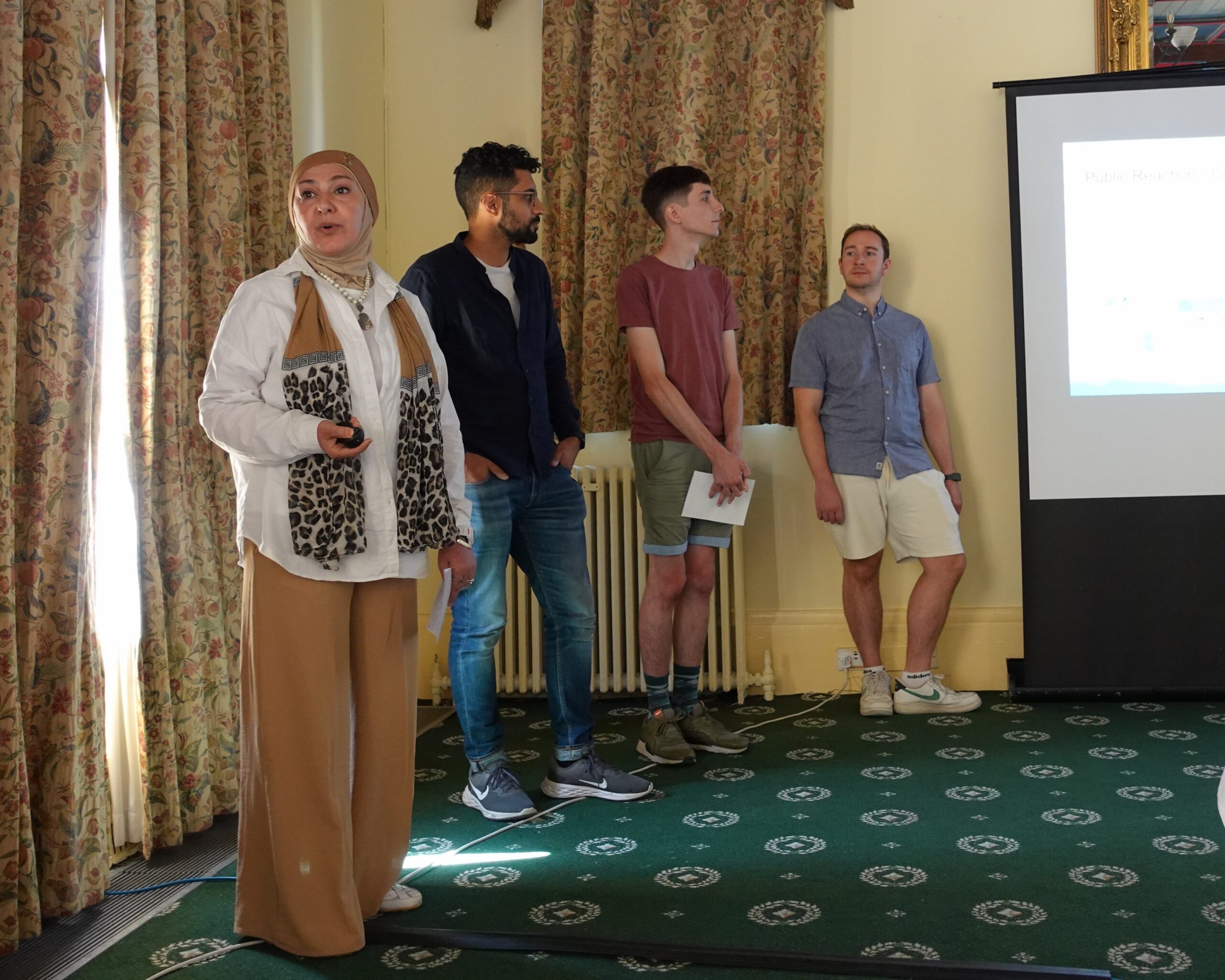
Group 4 presenting their summer challenge proposal. on the left of the field of view a woman wearing a white shirt, brown trousers, and a brown and leopard print headscarf talks to the audience (off camera). three people stand behind her

Developing Technical and Communication Skills Through Real-World Water Reuse Challenges

Summer Challenge Week 2025 - CDT WIRe Impact Case Study:

Impact Summary

The WIRe Summer Challenge 2025 provided PhD students with a unique opportunity to address real-world water reuse challenges in the UK. The event enhanced students’ technical expertise, strategic thinking, and science communication skills, while fostering collaboration with industry experts and promoting innovative solutions for sustainable water management.

Underpinning Research

The Challenge theme, Water Reuse in the UK, aligns with the WIRe CDT’s research focus on water resilience and sustainability. Students applied knowledge from their doctoral projects to:


  • Develop technical solutions for water reuse scenarios.
  • Design public engagement campaigns to improve acceptance of water reuse.
  • Propose research programmes to advance innovation in the sector and water reuse.

Details of the Impact

Reach

  • Involved students from Cohort VI from WIRe II and cohort IV and V from WIRe I.
  • Engaged with experts from Anglian Water, Cranfield University, and The Environment Partnership.

Significance

  • Students gained practical experience in technical problem-solving, stakeholder engagement, and public communication.
  • Industry experts provided feedback, strengthening links between academia and practice.
  • Proposed solutions contributed to addressing water scarcity and promoting sustainable reuse strategies in the UK.

Activities

Teams tackled five real-life case studies:

  1. Alternative water sources for golf courses.
  2. Direct reuse of wastewater for agriculture.
  3. Wastewater reuse for an AI centre.
  4. Reservoir recharge with treated wastewater.
  5. Water sources for green hydrogen plants.
  • Town Hall presentations to an audience of industry and academic experts, simulated stakeholder engagement.
  • PhD students produced social media videos to communicate solutions creatively.
  • Media training workshops developed skills in public speaking and handling press interviews.

Evidence of the impact

  • Positive feedback from industry experts on feasibility and creativity of proposals.
  • Media training instilled increased confidence and communication skills in the students, providing them with tools to handle high-pressure situations effectively.
  • Winning proposal was on reducing the water footprint for golf course irrigation, which highlighted innovative ways of tackling water recycling in a highly applicable manner.
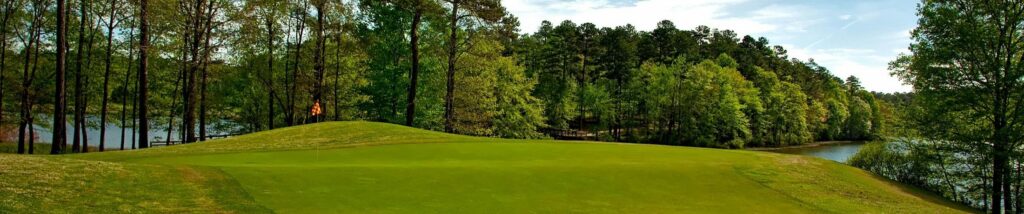
golf course

Impact Pathways

Knowledge Transfer

Students applied research to real-world scenarios, bridging academic research with the needs of industry.

Capacity Building

Students developed transferable skills in communication, teamwork, and strategic planning.
Societal Benefit

Students promoted awareness of water reuse and sustainability through outreach and media engagement.
Future Plans

  • Scale up outreach activities: Extend engagement to more water utilities and stakeholder groups to raise awareness of water reuse.
  • Develop digital resources: Create online materials showcasing student solutions and water reuse strategies.
  • Integrate outreach training: Embed communication and stakeholder engagement training into the WIRe doctoral programme.
  • Attend National STEM Events (e.g., New Scientist Live): Inspire school-age children and the public about water sustainability and re-use.
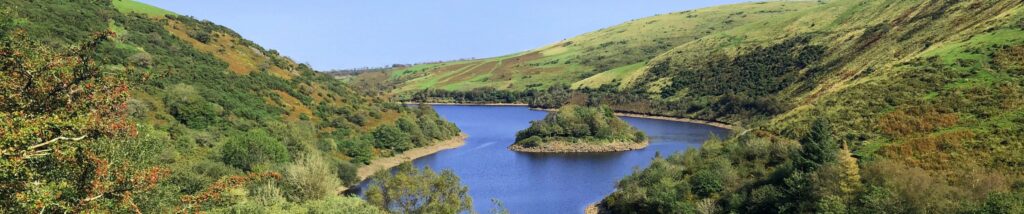
a reservoir
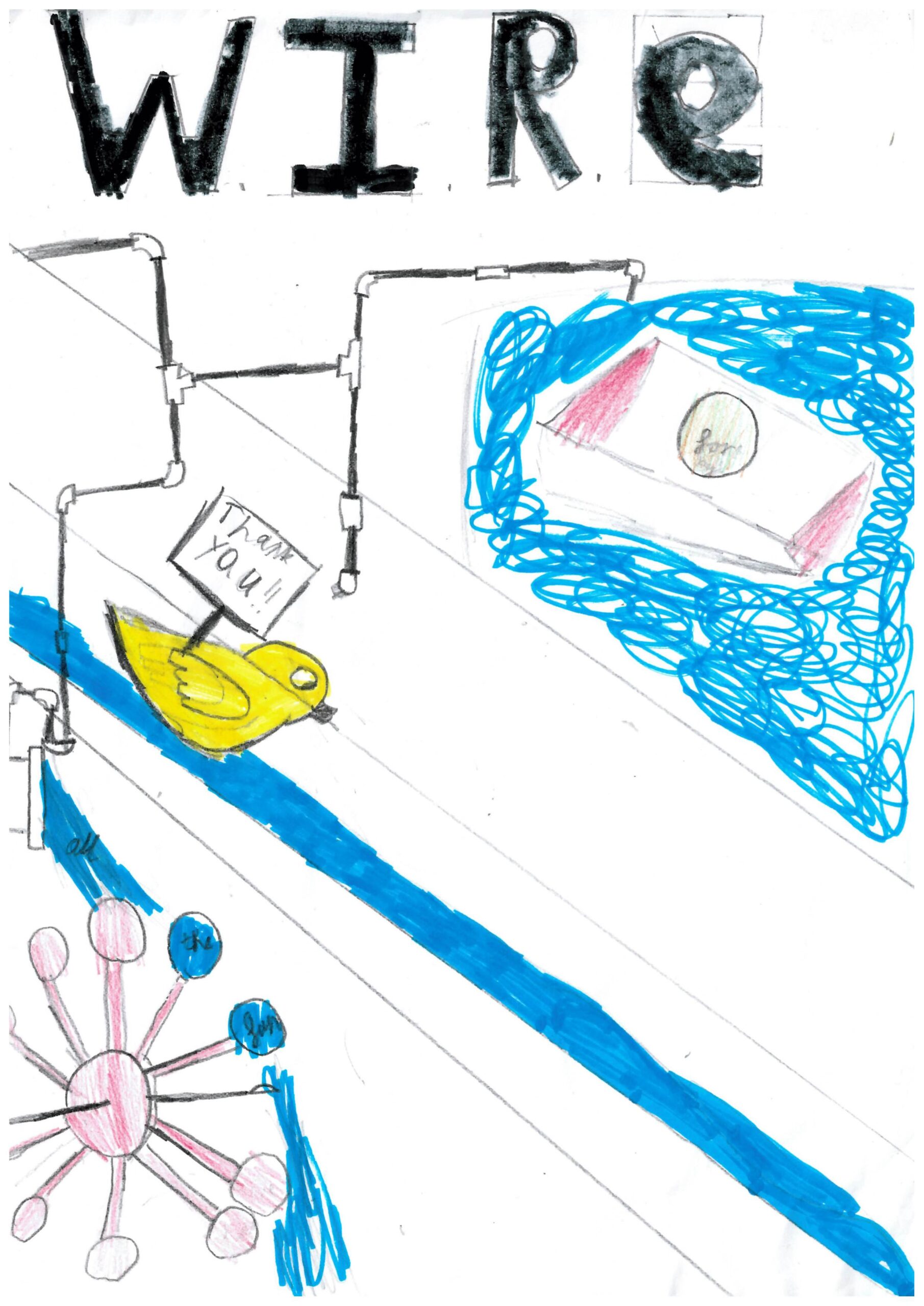
thank you card written by a child

Inspiring Future Generations and Enhancing Researcher Skills Through Water Engineering Outreach

Summer Challenge Week 2023 - CDT WIRe Impact Case Study:

Impact Summary

The CDT WIRe Summer Challenge Week 2023 delivered significant impact by:

  • Enhancing communication and engagement skills of doctoral researchers.
  • Inspiring school pupils from underrepresented backgrounds to consider STEM careers.
  • Strengthening university-school partnerships and widening participation in engineering education.
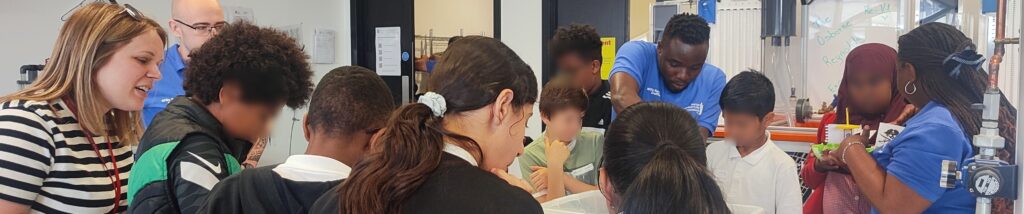
students in a lab

Underpinning Research

The outreach activities were focused on exploring different aspects of water engineering and infrastructure resilience, including:

  • Water distribution systems and flow dynamics.
  • Sewer network management and blockage prevention.
  • Hydropower generation and energy recovery.
 
These areas are central to CDT WIRe’s core mission to address global water challenges through interdisciplinary research.

Details of the Impact

Reach

  • Fifty-three primary and secondary school pupils were engaged, from across two schools from relatively deprived areas around Sheffield.
  • Four WIRe student teams developed and delivered interactive learning sessions for the students at The Diamond and ICAIR state-of-the-art facilities at Sheffield University

Significance

  • Pupils gained firsthand experience with real-world engineering concepts, linking classroom science to practical applications.
  • WIRe students developed transferable skills in science communication, teamwork, and public engagement - key competencies for future research leaders.
  • Feedback from schools highlighted increased enthusiasm for STEM subjects and appreciation for interactive learning.

Evidence of the impact

  • Thank-you cards and positive feedback from participating schools.
  • WIRe students developed essential skills and improved confidence in outreach and communication.
  • Activities aligned with school curriculum topics (energy, forces, sustainability), reinforcing learning outcomes.
  • Some WIRe students are now considering STEM teaching careers.
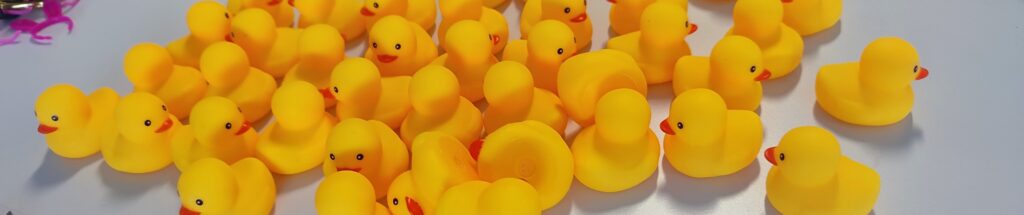
rubber ducks in a pile

Impact Pathways

Knowledge Transfer

Simplifying complex engineering concepts for younger audiences.

Capacity Building

Developing outreach models for future engagement.

Societal Benefit

Inspiring the next generation of engineers and promoting diversity in STEM.

Future Plans

  • Scale up outreach activities to include more schools and age groups.
  • Integrate additional outreach training into CDT WIRe’s doctoral programme.
  • Attend National STEM Events such as New Scientist Live to showcase CDT WIRe research and interactive activities at large-scale public engagement events. This will provide opportunities to inspire thousands of school-age children and their families, raise awareness of water engineering challenges, and promote STEM careers on a national platform.
pipes