
CDT WIRe One-Day Conference and Challenge Week 2023
Organised by the University of Sheffield, the week challenged the students to think out of the box and participate in outreach activities that involved engaging school children in educational, yet interesting water related games. The aim of this year’s challenge was to enhance the social skills of the students, their ability to break down complex water engineering concepts and make them interesting and engaging to school children.
An important part of the week was the one-day conference. The day started with a presentation on research impact from Tony Conway, Visiting Professor at University of Sheffield followed by full presentations by cohort I researchers and alternated by three-minute poster pitches by cohort II students.
Congratulations to Lucie Bertolaso for winning the Best WIRe poster and to Jade Rogers and Daniel Ruth for winning the Best Three Minute Poster pitch and the Best WIRe Presentation prizes, respectively. Jennifer Hollands from cohort IV was presented with the Best Student in the Induction Semester prize at the end of the conference. Well done all!

For the outreach event with the school students, two groups of WIRe students went to The Diamond, that houses exceptional equipment, labs and study spaces while two groups were placed at The Integrated Civil and Infrastructure Research Centre (ICAIR), to interact with the children. The students at the Diamond engaged with thirty 9–10-year-olds from Porter Croft Academy and those at ICAIR engaged with twenty-three 13-14-year-olds from Yewlands Academy.
The students at The Diamond presented four different activities. One was about how water is supplied to cities, which they showcased through an interactive game of understanding the cost of water supply vs cost of bottled water and by using different sized pipes to depict water flow, and how that affects the flow of water to each city. The second showed the ways in which water buoyancy is managed through an exciting and competitive game of pirates, boats and marbles as weights.
The third highlighted the use of water movement to generate energy, using a mini turbine to show the effect of water movement on the spinning of the turbine. Students talked about their experience of visiting a windmill on a school trip and asked them to compare what they’d seen previously to a turbine they were shown. They also used a handheld windmill, looked at the shape of the curves and asked them to suggest why they were shaped that way. They had a mini quiz that asked them some fundamental questions of hydropower and explained key terms that were probably new such as kinetic energy = movement energy. This proved to be the most challenging one for the students.
The final activity talked about water flows, using rubber ducks. The school children decorated their ducks in any way they liked and using a flow meter, tested to see if their duck flowed fastest from one end to the other. This was the most fun game for the students as they could interact with all the elements involved and make a race out of it.
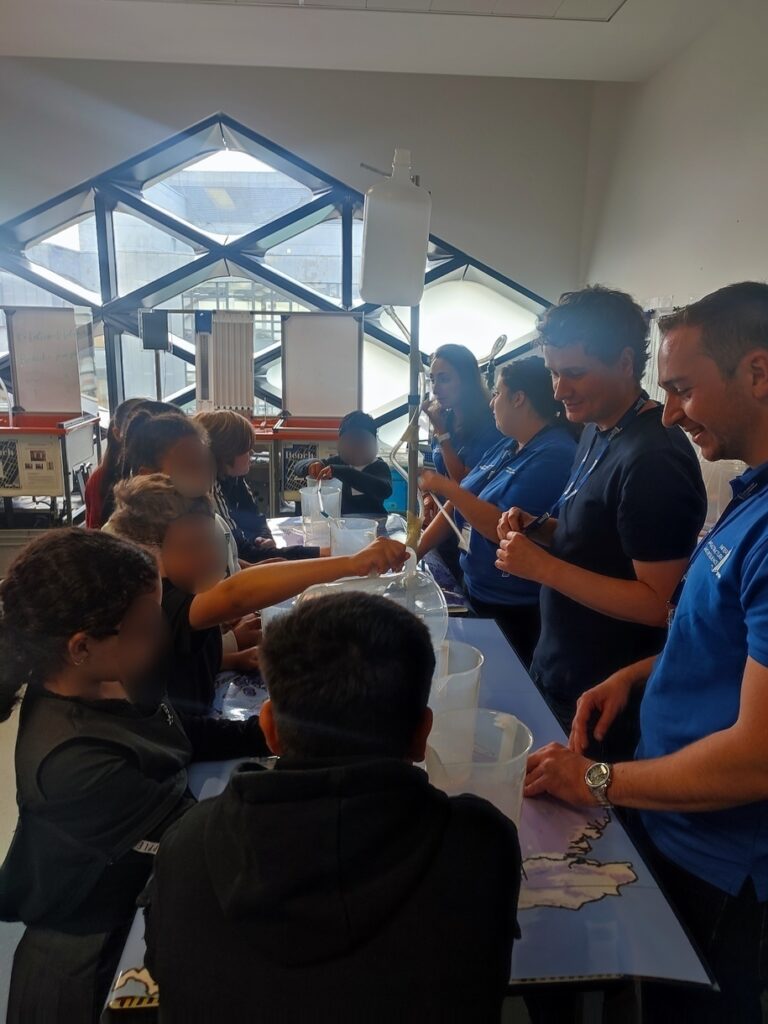
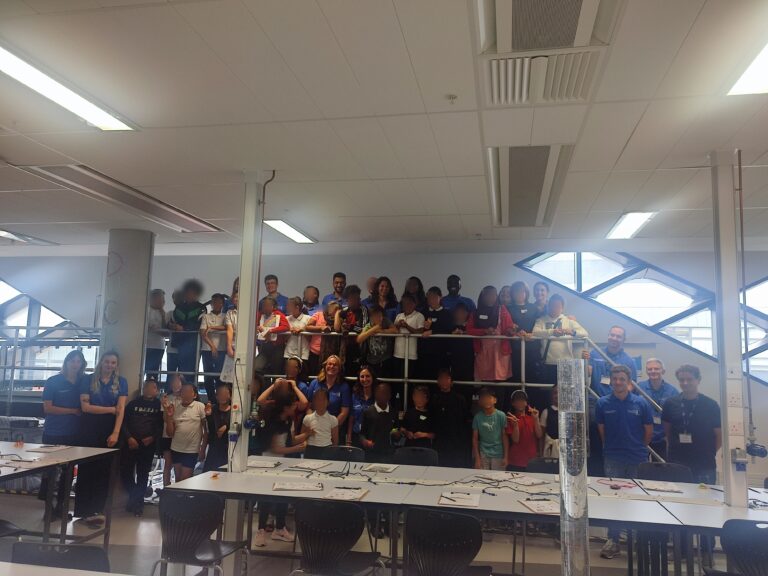
At ICAIR, the students conducted four main activities. In the first activity, the pupils learnt how to investigate sewage pipes using the full-scale sewer pipe testing facility to create replica blockages (to represent things like wet wipes, fat bergs in real life) and then sent water down at various speeds (to represent normal or storm flows) with rubber ducks floating in it and timed how long they took to get through. They used CCTV cameras to identify items in pipes and then discussed on which of those items are likely to block sewers.
The second activity was to look at water distribution networks using the smaller scale water pipe test facility to understand flows through pipes and the forces involved in a typical water distribution network, ensuring that each ‘tank’ / house received an equal amount of water.
The third activity was about investigating blockages, a follow-up on the sewer blockage activity, where the students dropped rubber ducks of various sizes into the pipes to see which would arrive first at the end of the test cell. There was a discussion on blockages and fatbergs and impact on sewer systems post the activity.
The final activity was about water flow monitoring where a desktop pipe network was used to simulate what would happen if there was a pipe leakage. The students were able to use simple formula to calculate how much water was lost to a leaking pipe after a given time.
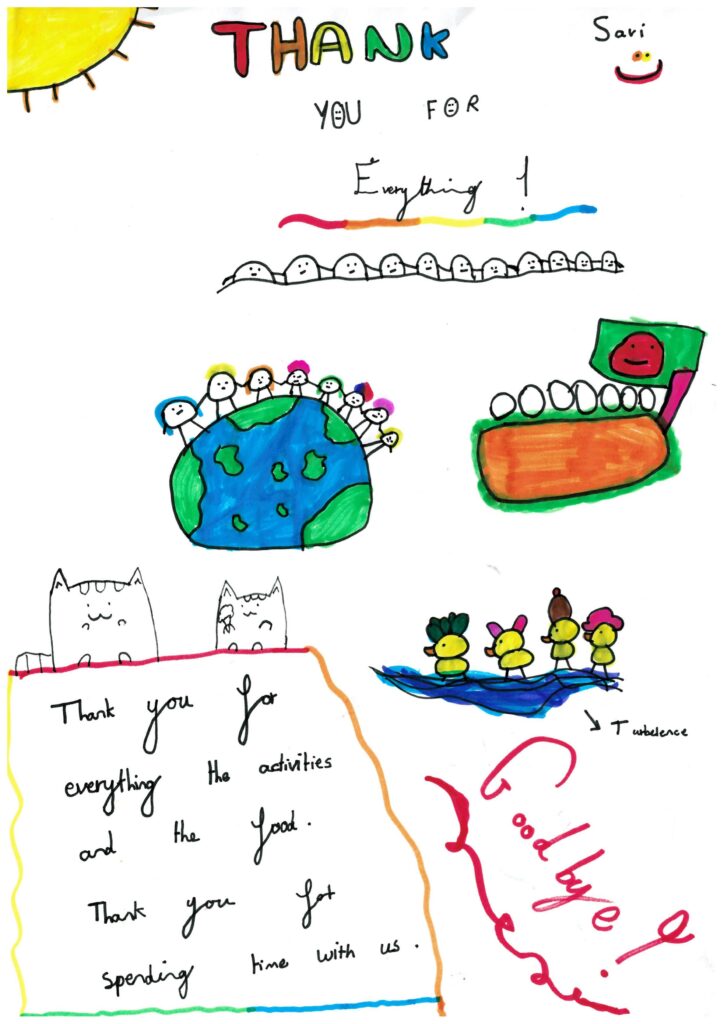
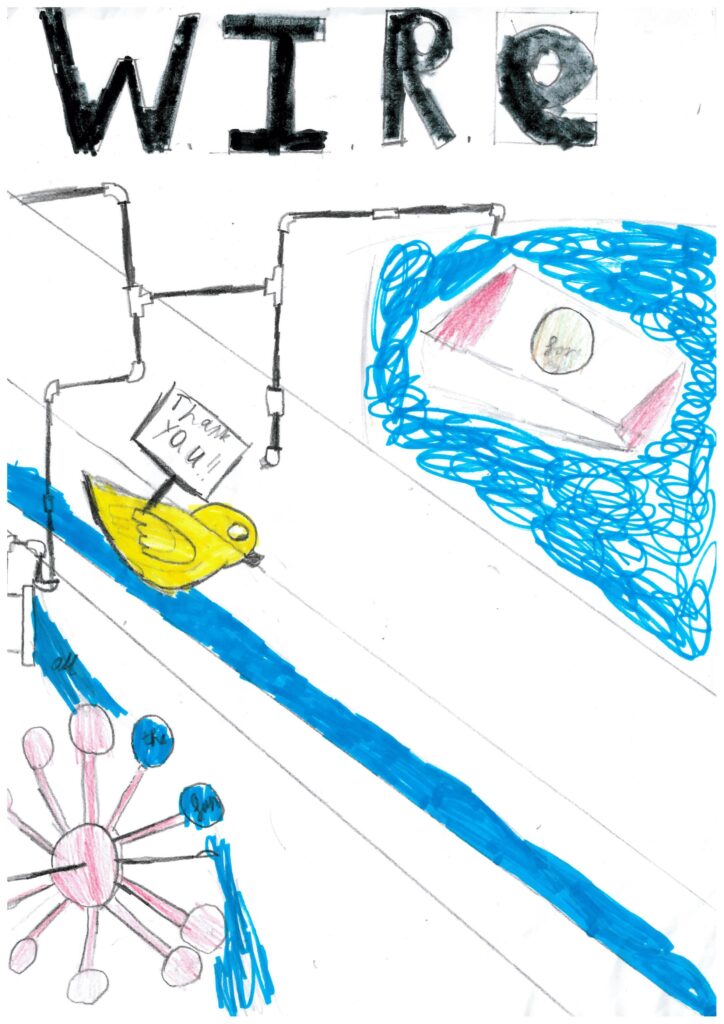
After the activities the schools shared adorable thank you cards with the WIRe students, expressing their enthusiasm for the activities organised as well as the pizza that the team got them for lunch!
The WIRe students reflected on their key takeaways from the outreach activity, what they learnt from the experience of explaining the science behind their activities to school children.
The Summer Challenge Week was a stimulating time for the WIRe students to step out of their comfort zone and engage in activities that they normally do not, as part of their PhD. Well done all, you did a great job!
We look forward to another exciting Summer Challenge Week next year!