Find out what our researchers have been up to: conference presentations, workshops, and more

MP visits Cranfield University with Affinity Water

On 23 January 2026, Mr Blake Stephenson, MP for Mid Bedfordshire, visited Cranfield University with Danny Coffey and Joe Shorten from Affinity Water to see the world-class research being done by our colleagues in water research. Blake Stephenson is interested in the impact of agriculture and soil management practices on hydrology. Affinity Water is one of CDT WIRe’s end-user partners, sponsoring Matthew Pitt’s project on ‘The influence of tillage methods on water transport through the whole soil profile’. Matt met with Blake during his visit, along with Peter Jarvis and Andrea Momblanch. Andrea and Matt led demonstrations of the facilities at Cranfield, including the soil columns and erosion rigs used to research infiltration, runoff, and erosion for different soil treatments. Matt delivered a presentation on his PhD findings so far, alongside Rob Simmons, followed by Danny Coffey offering an overview of Affinity Water’s work on catchment management.

Matt shared: ‘It was a pleasure to show Blake around the facilities and showcase what Cranfield University and its research is capable of doing. I'm grateful to be able to cover some of what my research can give to the wider scientific community, and hope it helps in explaining the potential benefits and caveats of conservation agriculture.’

three people looking at experimental equipment set up to study soil
Matthew Pitt (left) and Andrea Momblanch (centre) demonstrating the facilities at Cranfield University for Blake Stephenson (right)
six people stand in a row smiling towards the camera
From left to right: Danny Coffey, Matthew Pitt, Andrea Momblanch, Peter Jarvis, Blake Stephenson, Ron Corstanje

WIRe PhD students attend the Molecular Microbial Ecology Group meeting in December 2026

Two men stand in front of a clock tower, both smiling at the camera. It is sunset
Nick (left) and Vinny (right) in Birmingham

Nicholas Donati and Vincent Smith (both Cohort VI) attended MMEG in December 2025. The programme included discussions on environmental microbiology, biogeochemical cycling, and host-microbe interactions. As a conference primarily aimed at Early Career Researchers, it was a very welcoming event to gain experience in networking with colleagues across the microbial ecology community. The conference included a social event, giving Nick and Vinny lots of opportunities for discussions with other attendees about their work. 

Roman Tijsseling presents at IWA Water and Development Congress & Exhibition in Bangkok

From 8-12 December 2025 Roman Tijsseling (Cohort V) was in Bangkok attending the IWA Water and Development Congress & Exhibition. Roman delivered a presentation titled ‘Low-Cost Method For Comparing Turbidity Data To Guide Drinking Water Distribution System Interventions’. The networking sessions were a highlight for Roman, who was able to make international connections and discuss expanding the scope of his project beyond treatment to tap.

four men stand in a row smiling at the camera in a city at night
Roman (second from the right) with colleagues in Bangkok

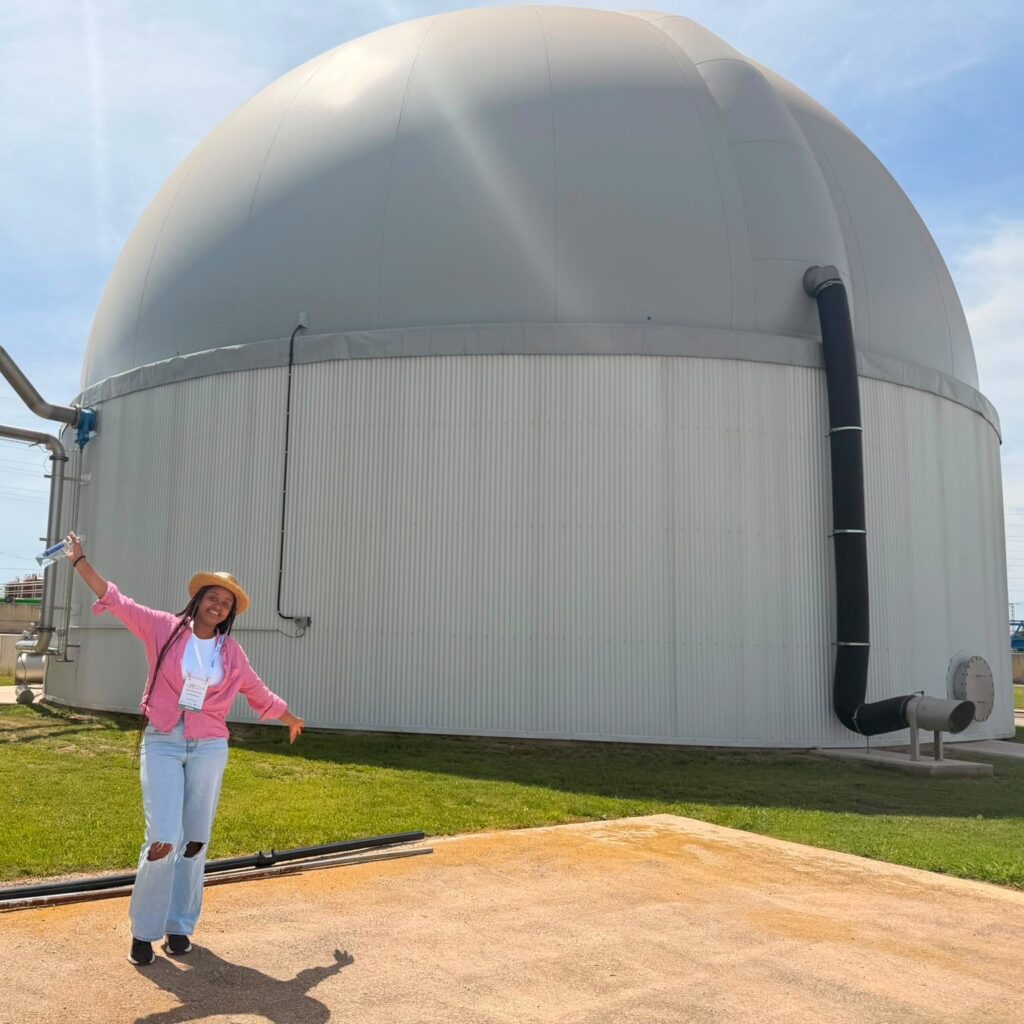
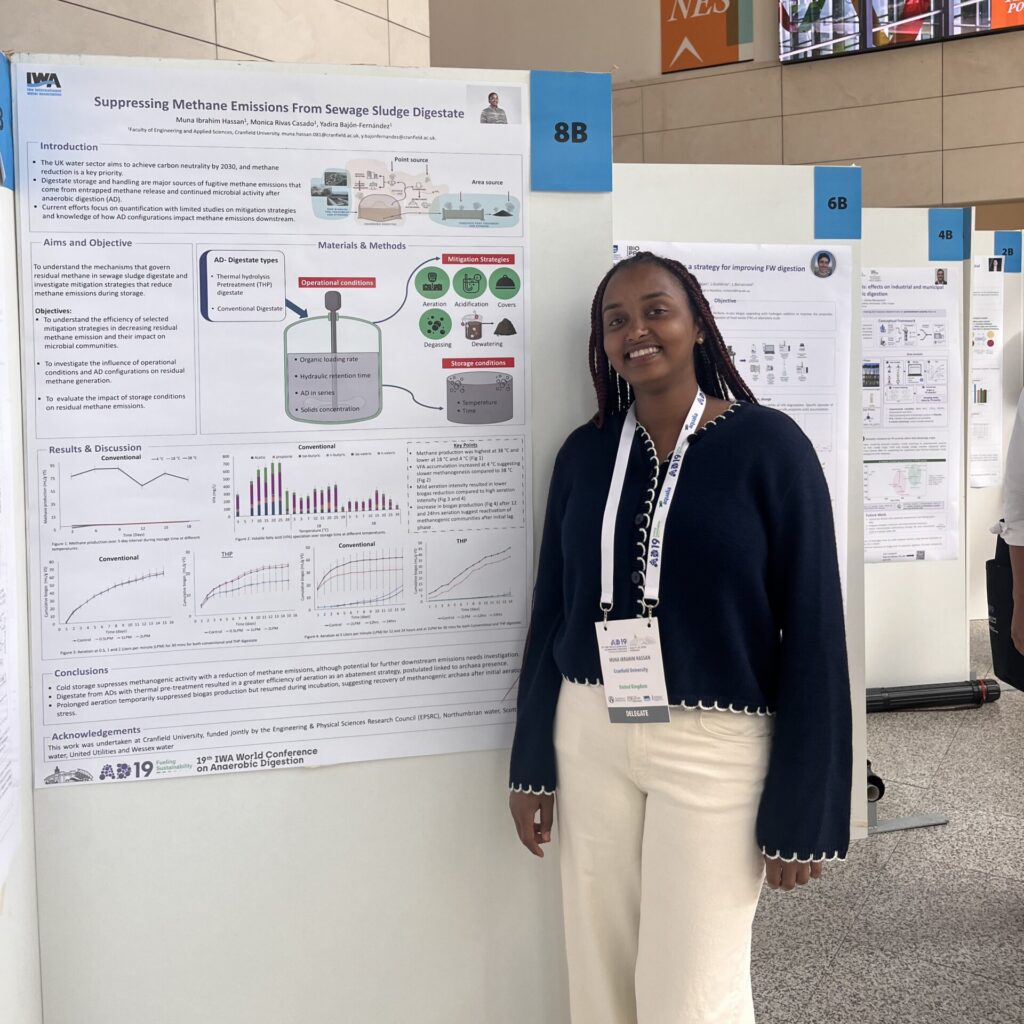
Muna Hassan attends the European Biosolids & Bioresources Conference

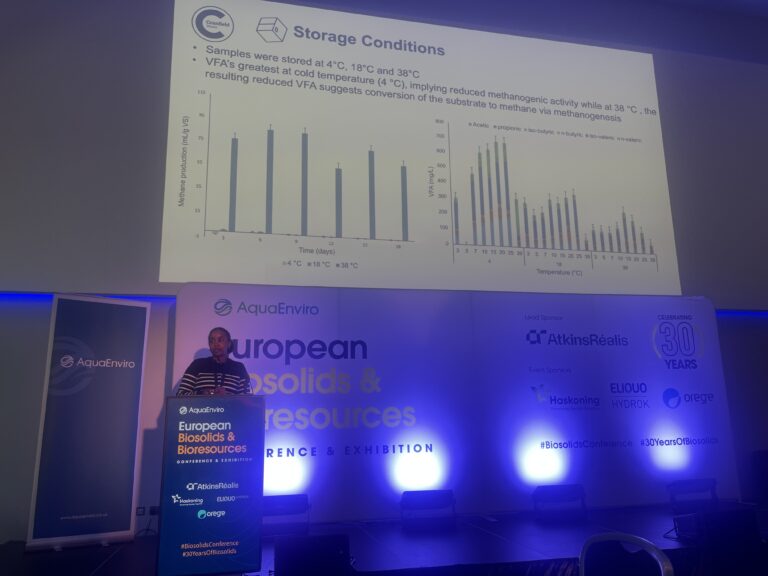
In November 2025 Muna Hassan (Cohort V) attended the European Biosolids & Bioresources Conference in Manchester. Muna delivered a presentation on 'Supressing Methane Emissions from Sewage Sludge Digestate'.

A woman presents behind a lectern, with a project screen behind her showing a slide titles 'storage conditions'
Muna presenting

Siqi Xu travels to Kyoto and Manchester for conferences

Siqi Xu (Cohort III) recently attended two different conferences, where she presented talks on her PhD research. At the end of October she travelled to Kyoto, Japan, to attend The 19th IWA Conference on Sludge Management, where she presented a talk on ‘Rethinking sewage sludge valorisation options and pathways via thermochemical output upgrading: a product-oriented analysis’. Siqi then travelled to Manchester in November to attend the European Biosolids & Bioresources Conference, where she presented on ‘Linking sewage sludge macromolecular contents to pyrolysis output characteristics for novel insights’.

Siqi presenting in Kyoto
A conference presentation
Siqi's talk in Manchester

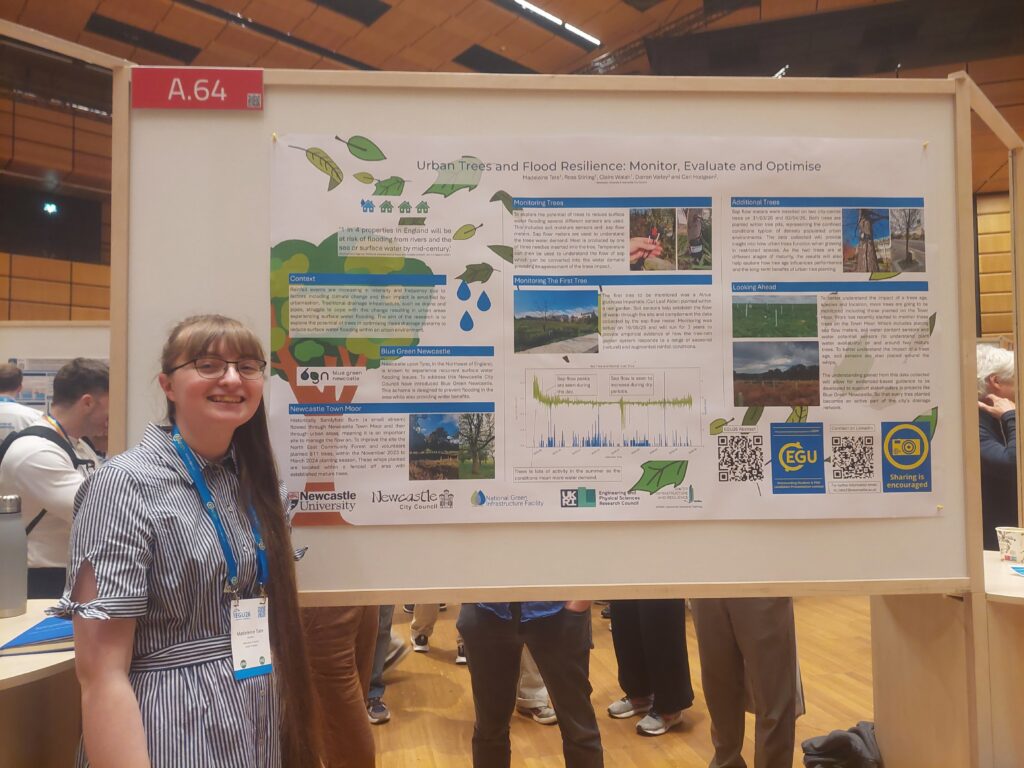
Madeleine Tate presents in urban tree research seminar

The Trees and Design Action Group (TDAG) Trust hosted an online seminar on 4 November 2025. Madeleine Tate (Cohort VI) presented her research exploring how trees could help reduce surface water flooding in cities. Using a suite of environmental sensors she installed on trees at the National Green Infrastructure Facility, Madeleine is collecting data to see how much water the trees use over time. The results will provide insight into how trees interact with water and respond to different weather conditions, such as heavy rainfall.

a tree trunk with a wires attached
One of Madeleine's trees with a sensor attached
A slide from a PowerPoint presentation
Madeleine's title slide

Cohort VII go on a field trip to Pitsford Water Treatment Works and the Broadholme Anglian Water Recycling Centre

As part of their Global Water Sector module, Cohort VII visited the Pitsford and Broadholme sites in October 2025 to see first-hand the magnitude and complexity of water and wastewater treatment processes. The students had the opportunity to explore a range of facilities in action, including aerators and storm overflows, deepening their understanding of the infrastructure behind clean water delivery. Site visits like these are invaluable to gaining insight into the real-world logistics and challenges involved in managing water systems, as well as helping students get a sense of the scale of these processes.

Thank to Anglian Water for hosting our students, especially to Steven Smith, Michael Bazylewycz, and Sam Cotter at Broadholme, and to Neasa Revens at Pitsford, for providing such informative tours. Thanks also to Heather Smith (Global Water Sector module lead and academic lead for the trip), Irene Carra (Waste Water Treatment Processes MSc Programme Director at Cranfield University), and our very own Jackie Whelan (CDT WIRe Centre Manager) for accompanying our students and ensuring the day was an engaging success!

A group of people wearing high viz vests stand next to a reservoir
Heather Smith leading the discussion at Pitsford Reservoir
A group of people wearing high viz vests at a water treatment plant
The scale of the infrastructure at Broadholme
A group of people wearing high viz vests at a water treatment plant
The students and Heather Smith looking at the separation stage at the Broadholme site
A group of people wearing high viz vests at a water treatment plant
The students at the screening stage at the Broadholme Recycling Centre
A group of funded PhD students wearing high viz vests stand next to a reservoir
The students at Pitsford Reservoir

Lydia Mahan presents at the University of Sheffield Sustainability Symposium 2025

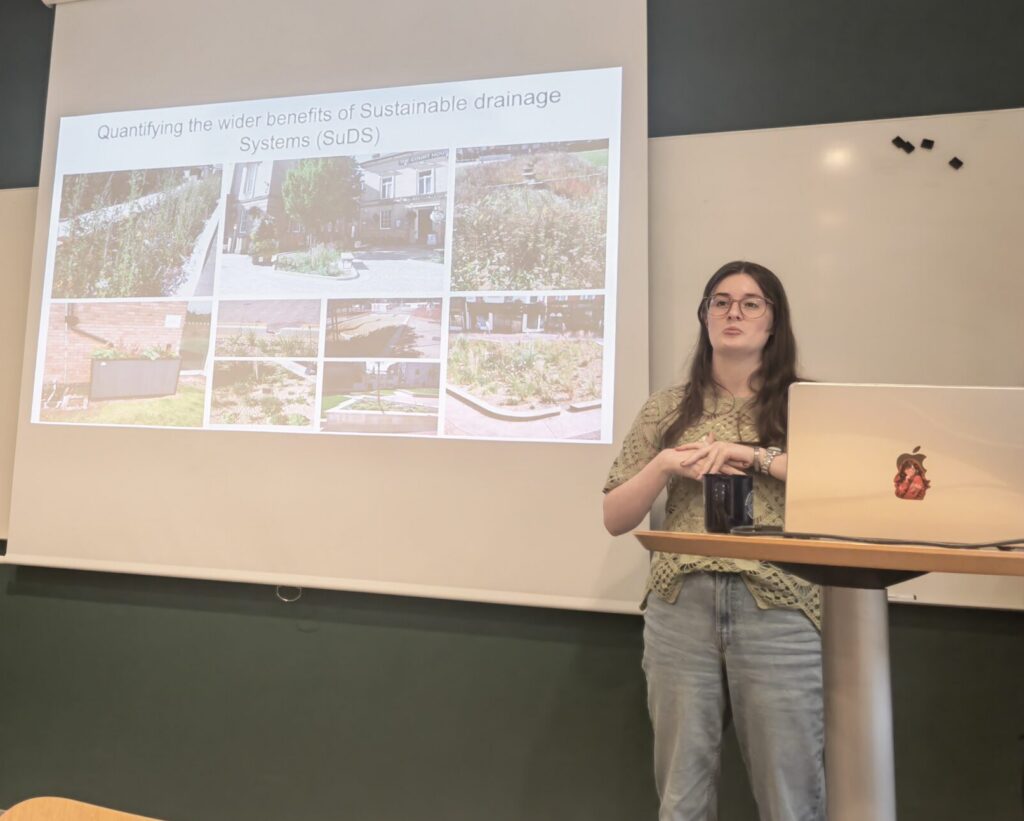
On 7 October 2025, Lydia Mahan (Cohort VI) presented a poster showcasing her work as part of the Grantham Scholars Programme.


The Sustainability Symposium is an annual event that brings together researchers, practitioners, and students to explore sustainability. This year’s programme featured a range of interdisciplinary panels and talks, including discussions on system change versus behaviour change, the limitations of data in driving meaningful action, and the idea that "if you’re not uncomfortable, you’re not doing it right."


The event was organised jointly by the South Yorkshire Sustainability Centre and the Grantham Centre for Sustainable Futures, which supports interdisciplinary research and collaboration to address global sustainability challenges. Lydia’s poster was titled ‘Quantifying the Wider Benefits of Sustainable Drainage Systems’.

The symposium venue
Three women wearing purple t shirts stand in front of scientific posters
Lydia and colleagues from the Grantham Scholars Programme

CDT WIRe students at the 13th Urban Drainage Modelling Conference

In September 2025, Gareth Cotton and Vladislav Dukhovskoy (both Cohort V) travelled to Innsbruck in Austria for the 13th Urban Drainage Modelling Conference where they each presented a poster on their PhD research. Gareth’s poster was titled ‘Real-Time Date Driven Overflow Control in Urban Drainage Networks to Mitigate Environmental Harm in Riverine Systems’. Vlad’s poster was titled ‘Challenges in Modelling Urban Catchments: Integrating Surface Runoff and CSO Response’.

a man in a dark jacket and blue shirt stands in front of a scientific poster display
Vladislav Dukhovskoy with his poster
Two men stood in the sun wearing smart casual clothes
Gareth (left) and Vladislav (right) in Innsbruck for the conference

Raman Suri travels to South Korea for IWA’s Membrane Technology Conference

Raman Suri (Cohort IV) recently presented his research on ceramic nanofiltration for drinking water treatment at the 11th IWA Membrane Technology Conference in Daegu, South Korea from 13-18 September. The event gathered researchers, practitioners, and industry partners from across the globe to share advances in membrane technology for water and wastewater treatment, reuse, and resource recovery. Raman’s presentation was titled ‘Ceramic nanofiltration: Creating a resilient future for drinking water supply’. The conference included a Gala Dinner, networking events, and a technical tour to the Gumi Water Reuse Facility.

a man in a striped shirt delivering a presentation
Raman presenting
a group of people wearing business attire smiling at the camera
IWA Young Water Professionals networking evening at the conference
a group of people smiling at the camera holding a banner that says 'technical and cultural tour'
The Technical Tour of the conference
people walking around a water treatment facility
Gumi Water Reuse Facility

CDT WIRe students attend CCWI 2025 

At the beginning of September 2025, Gareth Cotton (Cohort V), Emily Jane Blackburn (Cohort VI), Linda Sebty Alobaidy (Cohort VI), and Roman Tijsseling (Cohort V), presented their research at CCWI 2025 – the 21st International Conference on Computing & Control in the Water Industry, held in Sheffield, UK.


Their presentations showcased cutting-edge research and innovation in urban water systems, reflecting the CDT’s ongoing commitment to advancing sustainable and resilient water infrastructure through interdisciplinary approaches.

four people in business attire stand in a row next to a pull-up banner advertising CCWI 2025
The PhD students at CCWI. From left to right: Gareth Cotton, Emily Jane Blackburn, Linda Sebty Alobaida and Roman Tijsseling

WIRe PhD students attend the CNDS/EGU/TRANSCEND Summer School

In August 2025, Vladislav Dukhovskoy and Cerith Morgan (both Cohort V) represented the CDT at the Centre of Natural Hazards & Disaster Science (CNDS) Summer School, held in collaboration with EGU and TRANSCEND.


During the week-long programme, they delivered short presentations on their research projects and actively participated in a range of sessions—including lectures, seminars, and group activities—focused on Disaster Risk Reduction and the full disaster management cycle: mitigation, preparedness, response, and recovery.


The course placed strong emphasis on managing uncertainty and building resilience within complex systems, offering valuable insights and practical approaches for future research and professional practice.

A man stands presenting in front of a projector screen
Vladislav Dukhovskoy presenting
A group of people stand smiling at the camera
Participants of the summer school

Lucie Bertolaso presents a poster at the Water Disinfection, Byproducts and Health Gordon Research Seminar and Conference 2025

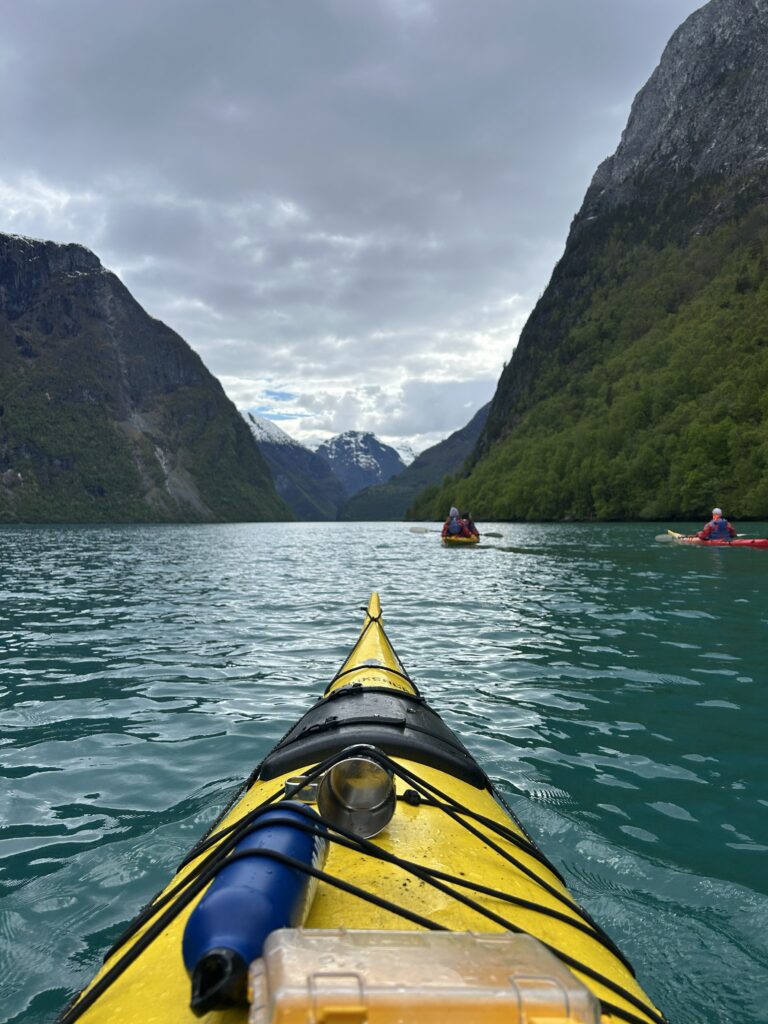
Lucie Bertolaso (Cohort III) attended the Water Disinfection, Byproducts and Health Gordon Research Seminar and Conference in Mount Holyoke College, MA (USA) in July 2025. It was an inspiring and intense week with high-quality presentations at the frontiers of science on "Engineering, Biological, and Chemical Implications of Oxidative Water Treatment for Sustainable Futures". Lucie presented a poster on her research, titled 'Ozonation of propyzamide and adsorption of generated transformation products to activated carbon'. Beyond the science, it was also a great opportunity to network with fellow researchers and experts in the field, and to share fun activities like kayaking.

A selfie of Lucie with her research poster
Lucie with her poster
A lake surrounded by trees, in the background there is a red brick building
The conference venue

Ali Leonard travels to Tokyo, Japan, for the 2nd International Sociohydrology Conference

In July, Ali Leonard (WIRe alumna) attended the 2nd International Sociohydrology Conference in Tokyo, Japan. Ali delivered a presentation on the research she completed during her PhD, titled 'The Complexity of Clarity: Balancing Granularity and Trust in Modelling for Water Resources Planning in England'.

Ali Leonard stands at the front of a lecture theatre delivering a conference presentation. to her left is a projector screen.
Ali presenting

Rachael Giles attends the EBIC Early Career Researcher Conference

Rachael Giles (Cohort V) attended the Environmental Biotechnology Innovation Centre's inaugural Early Career Researcher (ECR) Conference 8-9 July 2025 in Edinburgh, Scotland. The conference was an opportunity for ECRs working in Engineering Biology and Environmental Biotechnology to share their research and network with experts in the field. Rachael presented a poster on her research titled 'Identifying opportunities for biological coagulant recovery in drinking water and wastewater treatment processes'.

A large group of people stand in a conference hall in rows smiling at the camera
Delegates of the EBIC ECR Conference 2025

André Frota attends the Netherlands Centre for River Studies Summer School

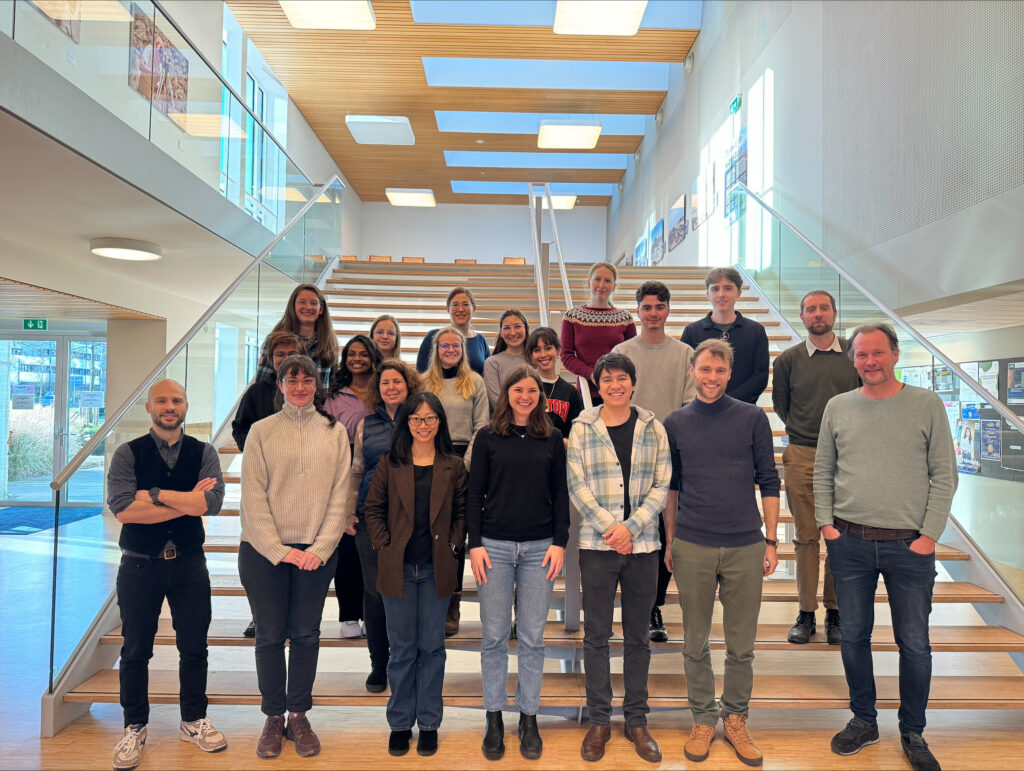
In July 2025, André Frota (Cohort IV) joined the NCR Summer School in the Netherlands, which provided an excellent combination of lectures, tutorials, and field excursions on river-related topics such as hydraulics, sediment transport, and morphodynamics. The summer school was a valuable opportunity to learn about the Dutch approach to managing complex water challenges, which gave André new perspectives and ideas for his own research and career.

A group of people stand smiling at the camera on steps
Attendees of the NCR Summer School 2025

The Annual WIRe One-Day Conference and Summer Challenge Week 2025

The Annual WIRe CDT One-Day Conference took place 30 June 2025, providing our PhD students with an opportunity to share their research both with each other and industry professionals. To find out more about the conference, see here.

Following the conference, we went straight into the Summer Challenge with Cohort IV, V and VI! This year’s Challenge theme was Water Reuse in the UK. Click here to find out what we got up to this year!

A large group of people wearing business attire stand in rows smiling at the camera. They are outside on grass, the weather is sunny with blue skies and behind them is a stately home. Members of the group include PhD students, academic staff and industry partners who are sponsoring students
Delegates of the Annual WIRe CDT One-Day Conference 2025

WIRe staff, students, and alumni attend the 18th Conference of the UK Water Network at Cranfield University 

The 18th Conference of the UK Water Network took place at Cranfield University on 19 June 2025. Speakers included Jennifer Hollands (Cohort IV) - Disrupting Disruptions: Drinking Water Resilience to Chemical Supply Shortage; Edward John (WIRe alumnus) - The Impact of Cast Iron Pipe Fatigue Strength on Remaining Life Prediction; and Peter Jarvis (WIRe Director) speaking with Irene Carra from Cranfield University about their bench scale research project on PFAS removal for the Drinking Water Inspectorate.

Edward John presenting. He is stood in front of an audience in a classroom, to the right of a projector screen, wearing a light blue shirt
Edward presenting
Jennifer hollands presenting. she is stood in front of an audience in a classroom, to the right of her is a projector screen. she is wearing a black shirt.
Jennifer presenting
Peter Jarvis presenting. he is stood in front of an audience in a classroom, to the left of him is a projector screen. he is wearing a light blue shirt.
Peter presenting

Sreelakshmi Babu attends the 22nd Health Related Water Microbiology Conference in Amersfoort, Netherlands 

Sreelakshmi Babu (Cohort III) attended the 22nd Health Related Water Microbiology Conference in Amersfoort, Netherlands in June 2025. She gave a presentation on ‘Hospital and Community Drivers of Antimicrobial Resistance in Urban Wastewater System’. Sree's research is in affiliation with Northumbrian Water, Scottish water, and NHS Hospitals, exploring hospital and community drivers of antimicrobial resistance in urban wastewater using a combination of HT-qPCR, 16S sequencing, prescription data, and culture-based analysis. The conference provided an opportunity to connect with a variety of researchers and industry experts.

Sree presenting on a large stage, with the words WATERMICRO in lights. she is wearing light trousers and a grey shirt.
Sree presenting

André Frota attends LuWQ2025 in Denmark

A man stands smiling next to a scientific poster
André with his poster

In June 2025, André Frota (Cohort IV) attended the International Interdisciplinary Conference on Land Use and Water Quality in Aarhus, Denmark, where he presented a poster titled ‘Catchments as the first stage of treatment’ and had the chance to follow inspiring presentations on water quality and pollution challenges.

Anne Kamau presents a poster at the Royal Society of Chemistry #EnvChem2025 - Chemistry of The Whole Environment conference

Anne stands wearing a navy jacket smiling at the camera. She is stood next to a scientific poster.
Anne with her poster

In June 2025 Anne Kamau (Cohort IV) attended the Royal Society of Chemistry #EnvChem2025 - Chemistry of The Whole Environment conference last week in Portsmouth. Anne presented a poster titled ‘Influence of source water characteristics on formation of emerging nitrogenous disinfection by-products (DBPs) in drinking water’ under the theme ‘Emerging Contaminants’. The poster session gave Anna the opportunity to speak about her research with conference attendees – she discussed how water quality and treatment processes impact on the formation of emerging nitrogenous disinfection by-products.

Zachary Thompson presents a poster at the 11th Microbial and Water Engineering Conference

Zachary Thompson (Cohort IV) attended IWA MEWE-11 in Atlanta, Georgia, USA, in June 2025, and presented a poster titled ‘Linking activated sludge emissions to process and microbial factors’. He travelled with colleagues from Newcastle University.

Zach (right) with colleagues from Newcastle University.

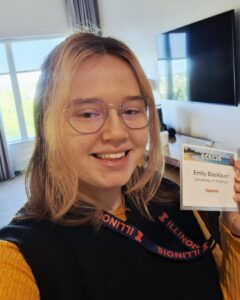
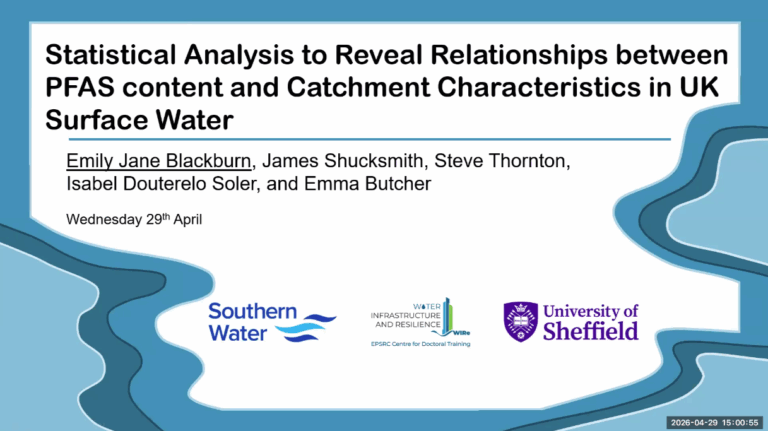
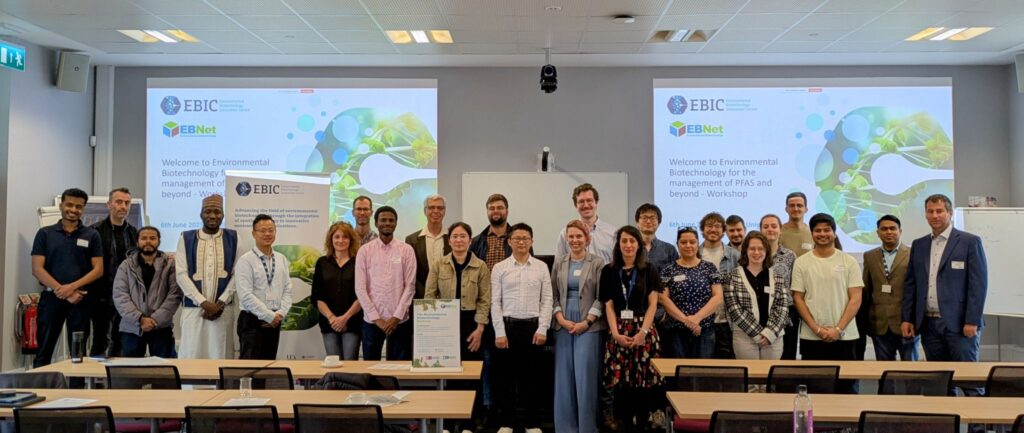
Emily Jane Blackburn presents at the Environmental Biotechnology Innovation Centre workshop: Environmental biotechnology for the management of PFAS and beyond

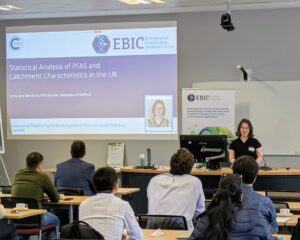
Emily Jane Blackburn (Cohort VI) attended the workshop in June 2025, and delivered an Early Career Researcher flash talk titled 'Statistical analysis of PFAS and catchment characteristics in the UK', which touched on topics from her PhD project 'Understanding risks from emerging contaminants PFAS to surface water resources'. The workshop included a range of talks from PFAS researchers and experts. Emily's talk came second overall in the ECR talk rankings - congratulations!

Emily stands at the front of a classroom delivering a presentation
Emily delivering her presentation
The workshop attendees

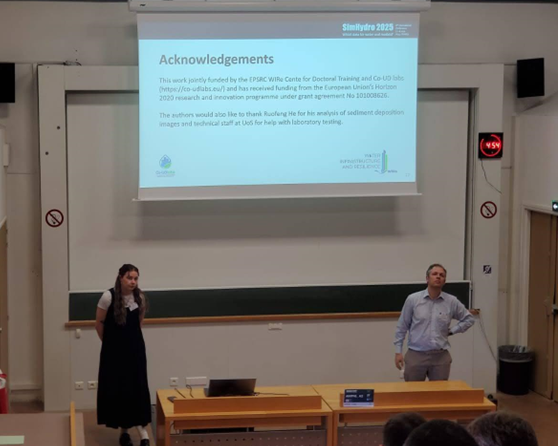
WIRe staff and PhD students attend IAHR SimHydro 2025 in Nice, France

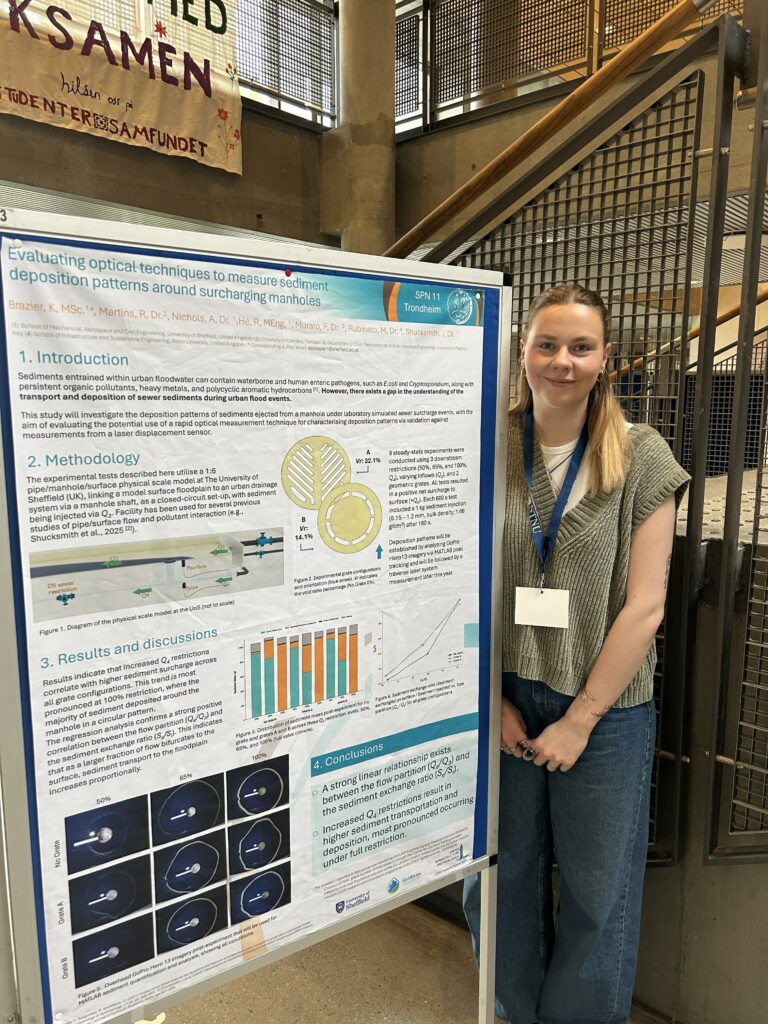
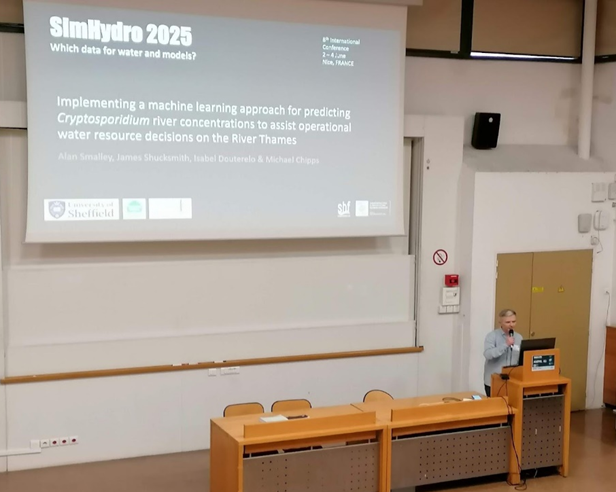
In June 2025, Kaeli Brazier (Cohort IV), Alan Smalley (Cohort III) and James Shucksmith (WIRe co-director) attended the IAHR SimHydro 2025 conference in Nice. Alan gave a talk titled ‘Implementing a machine learning approach for predicting Cryptosporidium river concentrations to assist operational water resource decisions on the River Thames’.

James and Kaeli delivered a presentation titled ‘Experimental study of the transport and deposition of sewer sediments from pipe systems to surface flows via manholes during urban flooding events’, their work was well received, with strong interest in their PTV results. The conference provided the opportunity to connect with researchers working on sediment experiments. The sessions on urban flooding were especially relevant, featuring insightful talks on pollutant intrusion and GIS-based hazard analysis. Informal networking events also provided a great opportunity to exchange ideas and learn about ongoing work in the field. Overall, it was a valuable and enjoyable trip that will help shape upcoming lab experiments.

Alan delivering a conference presentation in a lecture theatre
Alan delivering his presentation
Kaeli and James delivering their conference presentation in a lecture theatre
Kaeli and James presenting


WIRe PhD students attend the IWA Resource Recovery Conference in the Netherlands

Rachael Giles (Cohort V), Siqi Xu, and Mark Powders (both Cohort III) attended the IWA Resource Recovery Conference in Leeuwarden, the Netherlands, in May 2025. They each had the opportunity to present about their research, and the conference included several workshops on resource recovery and tours of water treatment works.

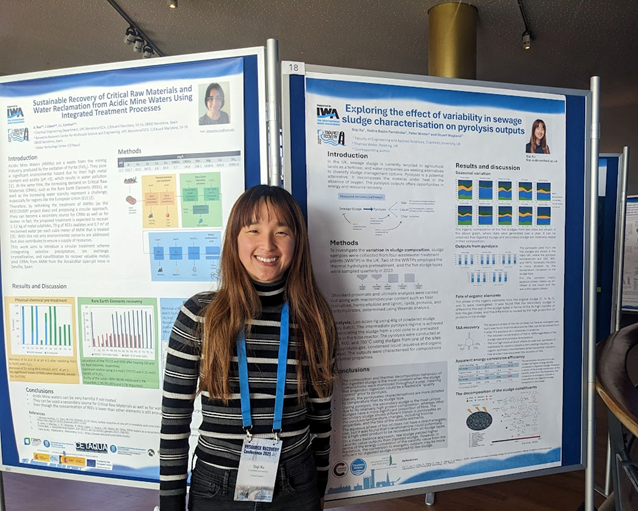
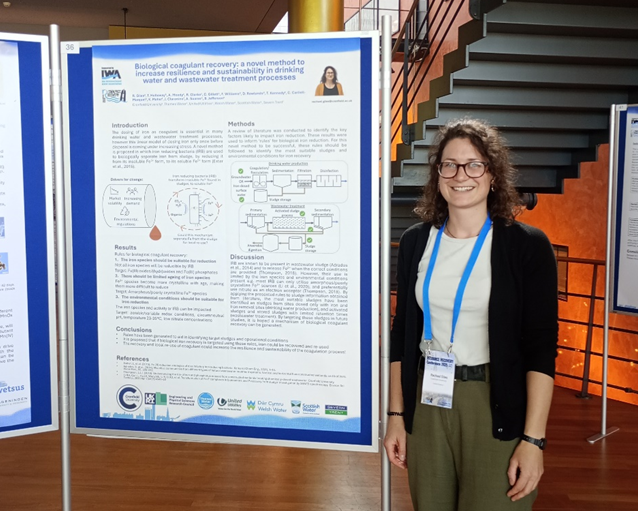
Rachael presented a poster on her work, titled ‘Biological coagulant recovery: a novel method to increase resilience and sustainability in drinking water and wastewater treatment processes'. Siqi also presented a poster, titled ‘Exploring the effect of variability in sewage sludge characterisation on pyrolysis outputs’. Mark gave a presentation on his work, which was titled ‘Low-energy thermal stripping to recover quality ammonia for the water sector’.

The conference was a great opportunity for the WIRe students to have meaningful conversations with others in the same field, and to see the potential impact of their work!

Siqi stands next to her scientific conference poster
Siqi with her poster
Rachael with her conference poster
Rachael with her poster


Pinelopi Savvidou presents at the SETAC Europe 35th Annual Meeting

Pinelopi Savvidou (Cohort III) attended the SETAC Europe 35th Annual Meeting in Vienna, Austria, in May 2025. She presented part of her PhD research, with a presentation titled “Predicting the Fate of 40 Emerging Contaminants: A Case Study of SimpleTreat and TOXCHEM”, which provided insights on whether current fate and transport models for organic contaminants and sewage treatment works are fit for purpose.

Pinelopi delivers a conference presentation, she is standing at a lectern
Pinelopi presenting


Matthew Pitt presents at EGU25 in Vienna

Matthew Pitt (Cohort III) had a great time at EGU25 presenting his research as a poster titled: “Understanding seasonal variability in shrink-swell clay soils and the impact on parameterisation of soil-water mass transfer models” assessing the difficulties of the field soils he researches as part of his wider PhD project and representing them in a valid manner within mass transfer models.

As a final year PhD student, Matthew found it was helpful to discuss his research with other world-leading academics to understand the sorts of questions he could face for his Viva and beyond.

two academics discuss a scientific poster
Matthew discussing his poster with another academic


Siqi Xu presents a poster at the UK Carbon Capture and Storage Research Centre Research Community Spring Conference 2025

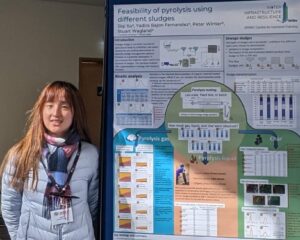
Siqi stands next to her conference poster
Siqi with her poster

Siqi Xu from Cohort III presented a poster titled 'Feasibility of pyrolysis using different sludges' at the UK Carbon Capture and Storage Research Centre Research Community Spring Conference in Glasgow, 24-25 March 2025. During the conference she had the opportunity to meet and discuss with researchers from other institutions on the carbon sequestration potential of biochar and thermal chemical processes.


WIRe researchers attend Newcastle University's Faculty of Science, Agriculture & Engineering Postgraduate Researcher Conference

Several WIRe PhD students attended the SAgE PGR conference at Newcastle University in January 2025. Talks included Sreelakshmi Babu (Cohort III), who discussed 'The Future of Wastewater-based Epidemiology', and Ana Amezaga-Kutija, whose talk 'Proactive management of Dissolved Organic Carbon (DOC) in Drinking Water Catchments' won the prize for Best Presentation! 

Sreelakshmi is pictured presenting in front of a large screen. She is wearing a pink top.
Sreelakshmi presenting


Siqi Xu wins a prize for her poster at the European Biosolids & Bioresources Conference & Exhibition 2024

Siqi stands to the left of Paul Fountain, they are both smiling at the camera holding a large framed certificate. Siqi is wearing a cream top and a grey skirt. The man is wearing black.
Siqi being presented her prize by Paul Fountain, Thames Water

Siqi Xu (Cohort III) won the Student & Early Career Professionals' Poster Competition at the European Biosolids & Bioresources Conference & Exhbition in November 2024. Siqi's Poster was titled ' Feasibility of pyrolysis using different sludges' and was presented by Paul Fountain of Thames water.


WIRe PhD students attend the Anglian Water Student Summit

In November 2024, several WIRe researchers went to the Anglian Water Student Summit. The students had the opportunity to present their research:

Raman Suri (Cohort IV): Ceramic nanofiltration for more resilient drinking water production.

Samuel Nyarko (Cohort III): The role of organic matter on water treatability to secure drinking water supplies.

Mark Powders (Cohort III): Ammonia to energy as a key decarbonisation strategy for the water sector.

Blessing Mobalaji (Cohort IV): Nitrous oxide management in a membrane aerated bioreactor.

8 people stand in a row smiling at the camera. They are indoors in a corporate setting wearing smart casual clothing.
WIRe PhD researchers with other students at the summit. Back row from left to right: Raman Suri, Mark Powders, Samuel Nyarko Yeboah, and Eric Cowan. Front row from left to right: Blessing Mobolaji, Nasreen Nasar, Ayisha Affo Souleymane, and Priya Dharwadkar.


WIRe researchers attend the UKWIR 5th Annual Conference

André Araujo Frota, Anne Kamau (both Cohort IV), and Polly Grundy (Cohort III) travelled to London to attend the UKWIR 5th Annual Conference in October 2024, presenting their work with posters. A great opportunity to showcase their research and engage with industry professionals. It’s always inspiring to see our students actively participating in discussions that aim to improve connectivity and drive positive change in the water industry

From left to right: Polly, Anne and André


Anne Kamau and Polly Grundy take part in the Disinfection and Disinfection By-Products Conference 2024 (DDBP24)

Anne Kamau (Cohort IV) and Polly Grundy (Cohort III) travelled to Almeria, Spain in October 2024 to attend the Disinfection and Disinfection By-Products Conference 2024 (DDBP24). Polly presented her research on Brominated DBPs, while Anne presented about Nitrogenous DBPs. They also learned about solar disinfection, which is particularly relevant given Almeria’s sunny climate.

A conference lecture theatre full of people sat watching a scientific presentation.
Polly presenting
Anne exploring Almeria's water infrastructure
Two women wearing business attire stand either side of a pull-up banner smiling at the camera. the banner is advertising the DDBP24 conference
Anne and Polly


WIRe researchers attend the IWA World Water Congress & Exhibition 2024

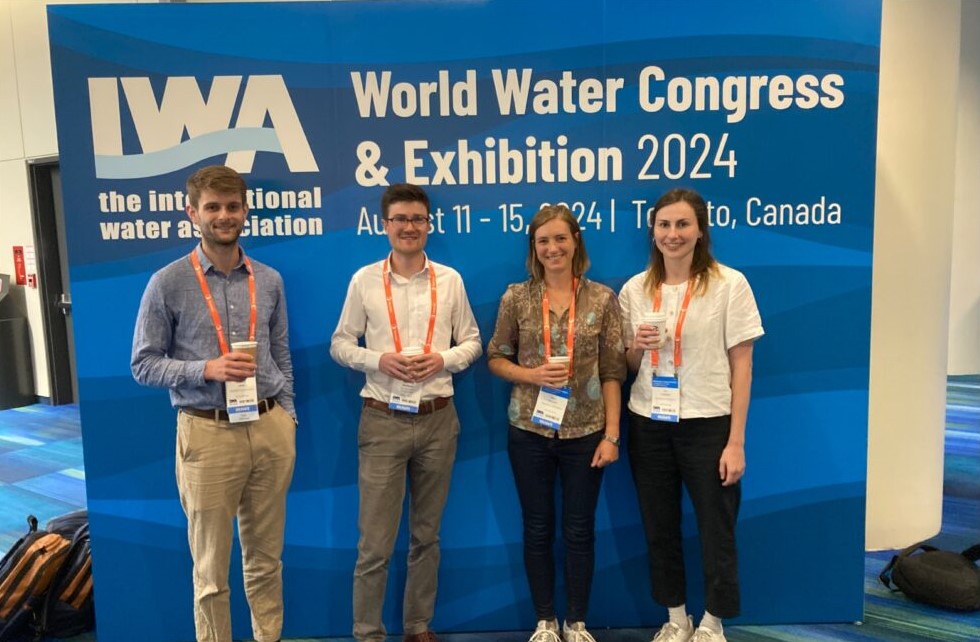
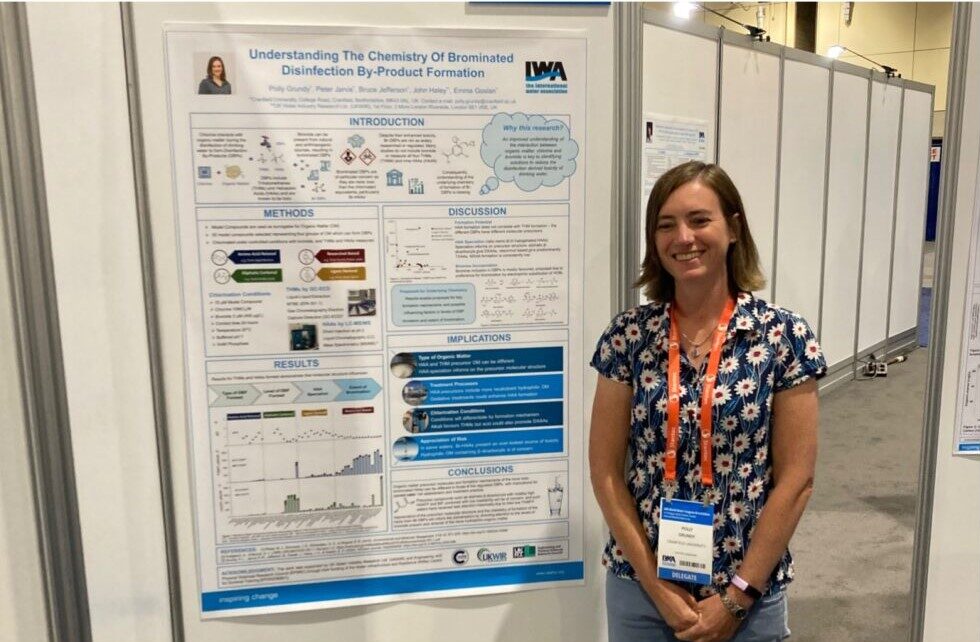
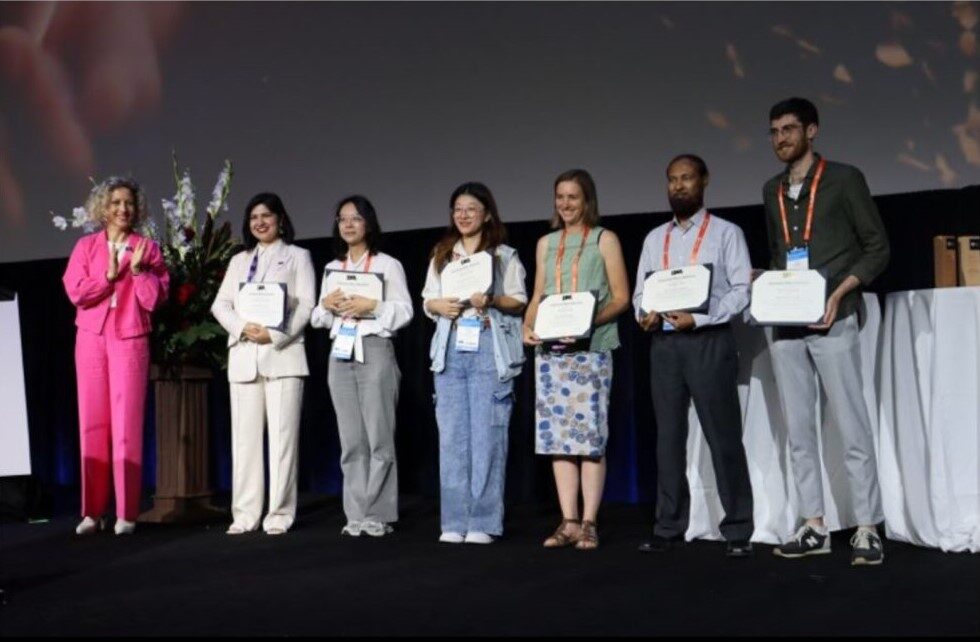
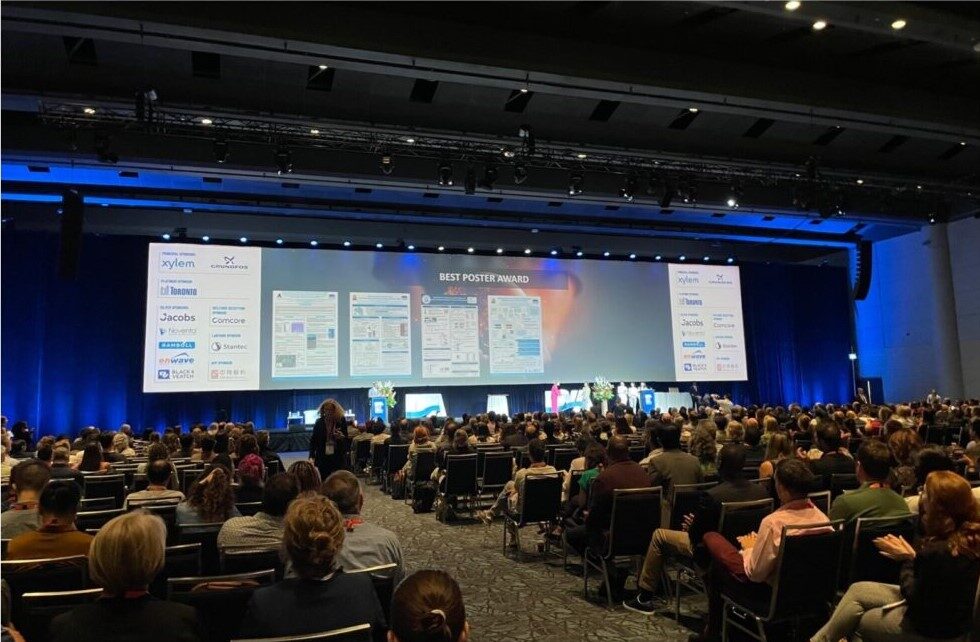
Six CDT WIRe researchers, Polly Grundy, Ravina Bains, Edward John, Matthew MacRorie, Ali Leonard and Anna Laino participated in the recently held IWA World Water Congress and Exhibition in Toronto. Matthew and Edward presented on their PhD research at the conference while Polly, Ali and Ravina had poster presentations. Polly won the best poster prize in the drinking water theme! 

Edward, Matthew, Polly and Ali stand smiling at the camera in front of an IWA World Water Congress and Exhibition 2024 banner
From left to right: Edward, Matthew, Polly and Ali
Polly stands next to her scientific conference poster
Polly with her poster
Several people stand on a stage holding certificates
Polly winning the poster prize
A large room of people in chairs facing a big screen announcing best poster awards
The poster prize announcement


Polly Grundy attends a Royal Society of Chemistry One Day Meeting

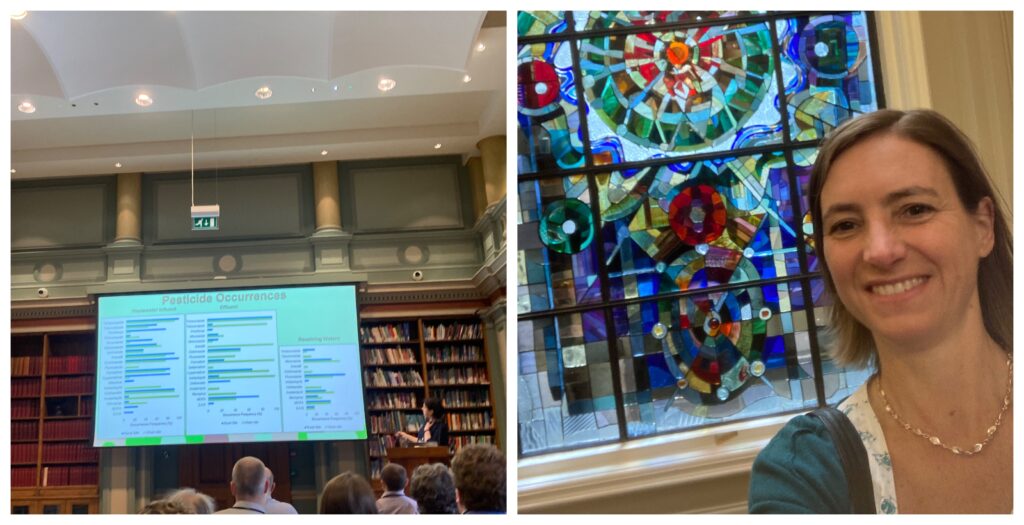
Polly Grundy from Cohort III attended a one day meeting held by the Royal Society of Chemistry on ‘How to deal with the issues of emerging contaminants of concern in the aquatic environment’. The meeting focused on industry perspective, regulatory issues and the monitoring of these emerging contaminants. It included presentations from experts in the field on the different types of contaminants such as pharmaceuticals and personal care products, antibiotics, veterinary medicines, plant protection products, Per- and Poly-fluorinated Substances (PFAS) and microplastics present in our water bodies.

Left: Polly Grundy presenting in a lecture theatre Right: Polly Grundy takes a selfie in front of a stained glass window
Polly presenting (left) and admiring the stained glass in the Royal Society of Chemistry at Burlington House (right)


Philippa Mohan and Kaeli Brazier present at the International Conference on Urban Drainage

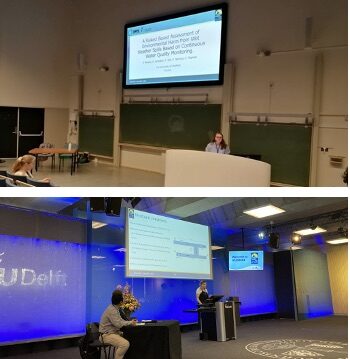
Philippa Mohan from Cohort II and Kaeli Brazier from cohort IV presented their research work at the International Conference on Urban Drainage, held from 9-14 June 2024 at Delft University of Technology, Netherlands.

The conference was held in collaboration with the International Water Association and the International Association for Hydraulic Research through the Joint Committee Urban Drainage.

Top: Lydia stands at the front of a lecture theatre delivering a presentation Bottom: Kaeli stands on a stage presenting
Lydia presenting (top) and Kaeli presenting (bottom)


Anna Christy attends an input-output modelling course at Leiden University

Anna Christy (Cohort III) from Newcastle University attended an Input-Output modelling course at Leiden University held from 14-19 January 2024. She was also invited to give a seminar on her research for their Industrial Ecology group on 6 March 2024. 

A group of people stand in rows on a wide staircase smiling at the camera
Anna (second row, second from left) with the modelling course team


Ravina Bains participates in IWA ASPIRE and UKWIR 4th Annual Conferences

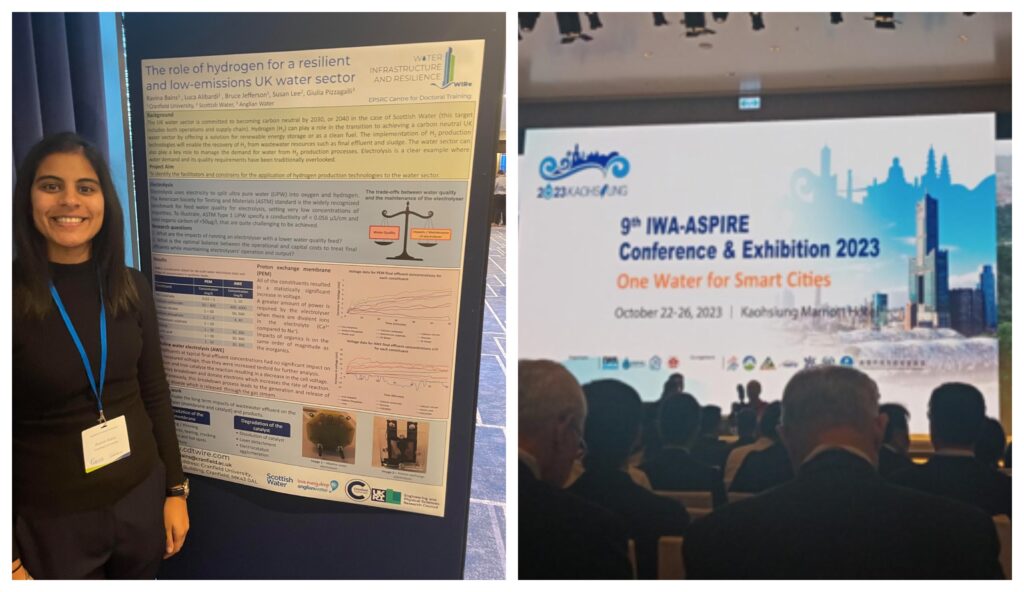
In October 2023 Ravina Bains from Cohort II of CDT WIRe participated in the 9th IWA-ASPIRE conference held in Taiwan with the theme ‘One Water for Smart Cities’. At the conference, she presented on ‘Investigating the Impacts of Wastewater Final Effluent on Electrolysis for Hydrogen Production’.

In November 2023 Ravina also participated in the UKWIR 4th Annual Conference held in London where she presented a poster on ‘The Role of Hydrogen for a Resilient and Low Emissions UK Water Sector’. The theme of the conference was ‘Positively influencing the water sector through research and innovation’.

Left: Ravina stands to the left of a scientific poster smiling at the camera wearing black. Right: A screen introduces the IWA ASPIRE conference in Taiwan
Left: Ravina with her poster at the UKWIR 4th Annual Conference. Right: The 9th IWA-ASPIRE Conference and Exhibition introduction


Anne Kamau presents a poster, and Daniel Ruth and Samuel Yeboah Nyarko deliver talks at the IWA 8th International Water Association Specialist Conference on Natural Organic Matter

In December 2023 the 8th International Water Association Conference on Natural Organic Matter (NOM8) took place at UNISA, South Africa. The conference provided a platform for researchers and experts to delve into the intricate world of natural organic matter (NOM) in water systems.

CDT WIRe’s Anne Kamau (Cohort IV) presented a poster, titled 'Formation of nitrogenous disinfection by-products in drinking water', aimed to contribute valuable insights into the role that NOM plays in influencing the formation of these disinfection by-products. The presentation highlighted innovative research methodologies, including advanced analytical techniques and state-of-the-art instrumentation, to comprehensively analyse the composition and behaviour of organic matter in various water environments. She addressed key challenges in understanding organic matter dynamics, such as its sources, transformation processes, and impacts on water quality.

Samuel Yeboah Nyarko (Cohort III), delivered a presentation on ‘Natural Organic Matter Removal by Coagulation and Ion-exchange in Lowland Surface Water Treatment: Impact on Treatment and Operational Benefits’. During his presentation, Samuel discussed how pH, hydrophobicity, and molecular weight aid in understanding NOM removal by coagulation and ion-exchange processes, particularly in water sources with high alkalinity and hydrophilic DOC content.

Daniel Ruth (Cohort I) also presented at the NOM8. His talk was titled 'NOM compositional impacts on coagulant demand and water treatability'.

Attendees had the opportunity to engage in meaningful discussions, exchange ideas, and explore potential collaborations with fellow researchers and industry professionals. The overall experience at the conference provided a unique platform for networking, learning about cutting-edge research in the field, and fostering collaborations that will contribute to advancing our collective understanding of natural organic matter in water systems.
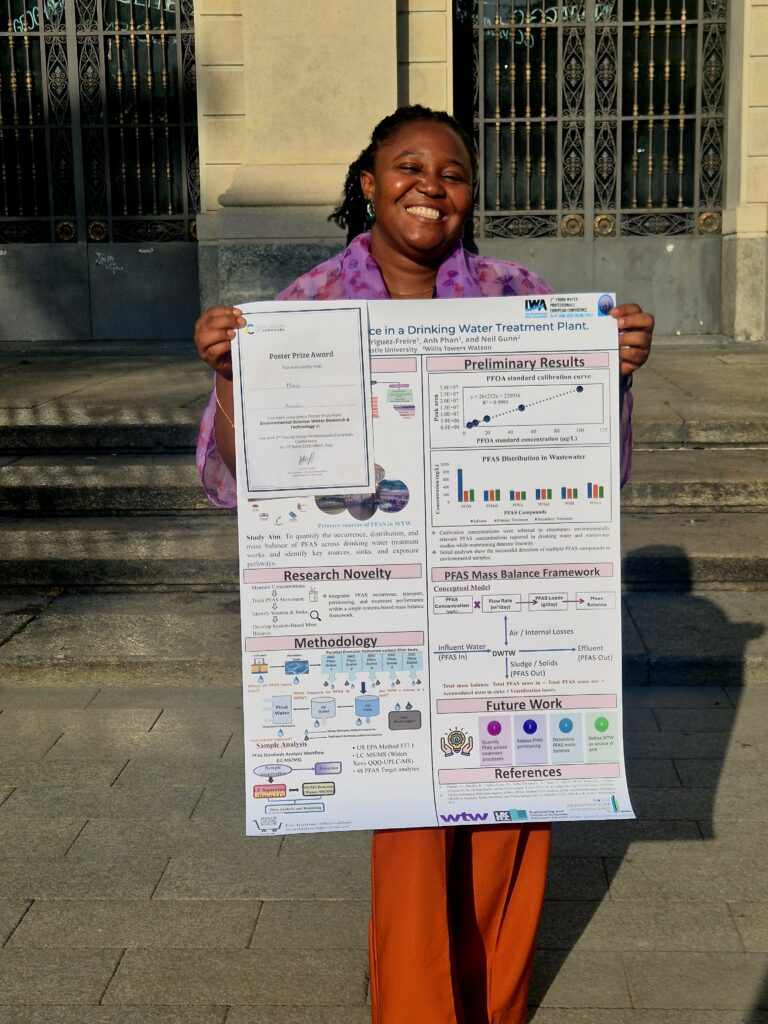
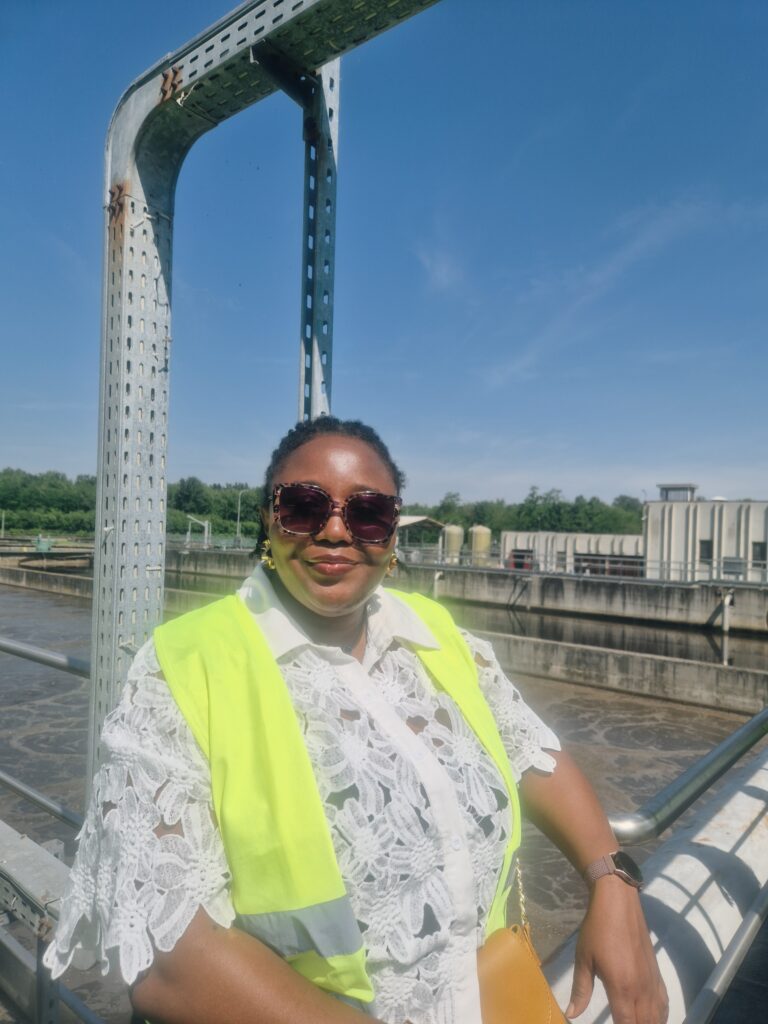
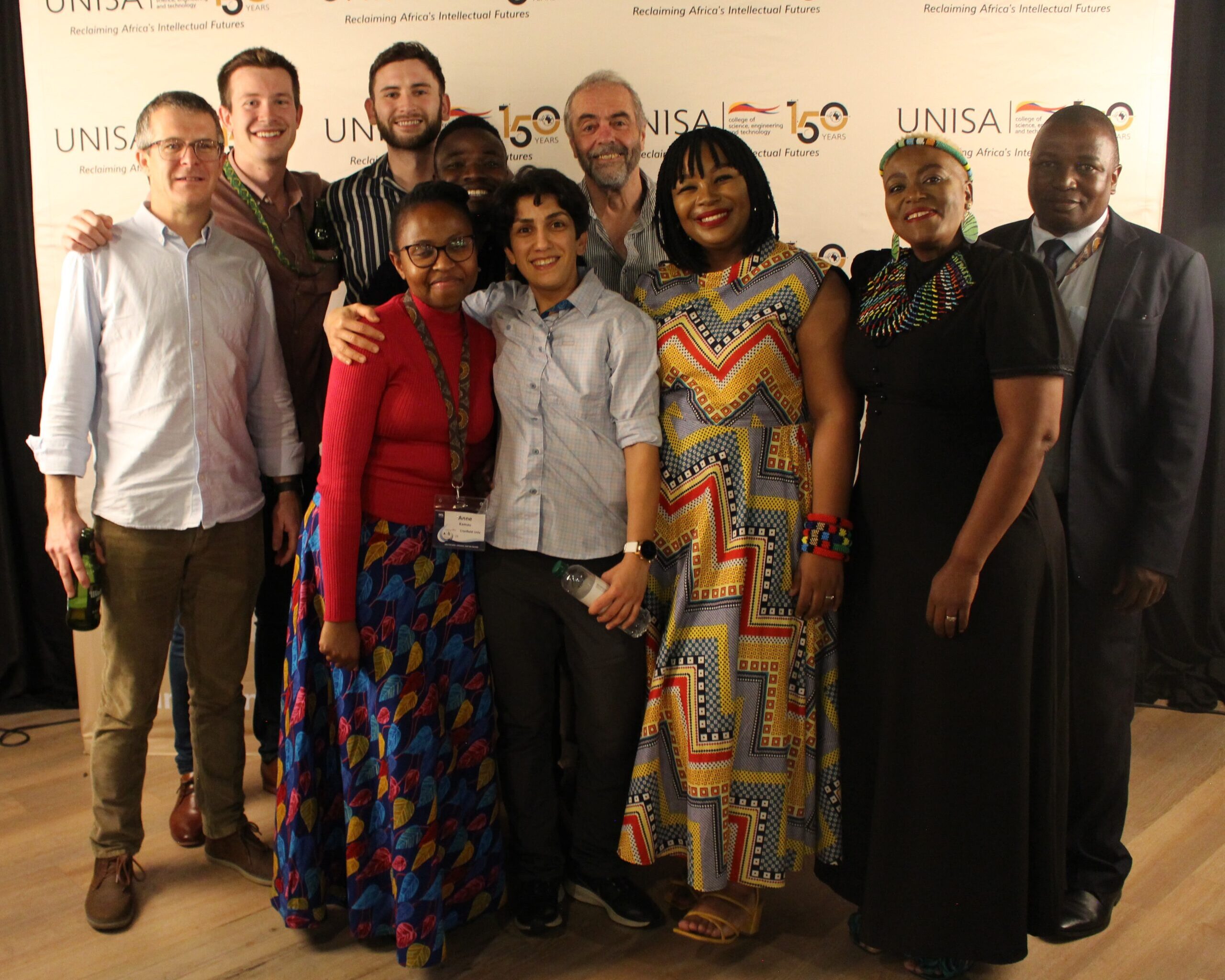
A group of people stand smiling at the camera, some have their arms around each other.
Several WIRe staff and students at IWA NOM8. Peter Jarvis, WIRe CDT Director (far left); Daniel Ruth, Cohort I (back row, second from left); Samuel Nyarko, Cohort III (left of centre); Anne Kamau, Cohort IV (front left)
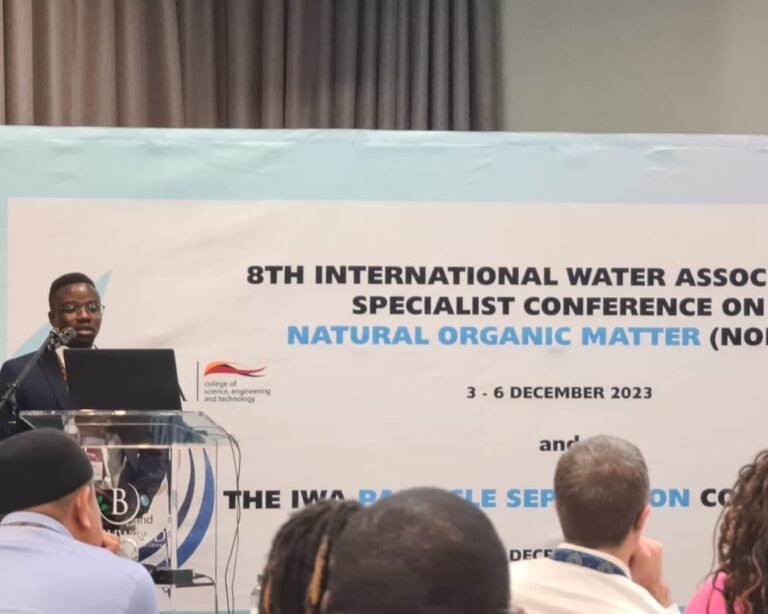
Samuel Nyarko stands at a lectern delivering a conference presentation
Samuel delivering his presentation
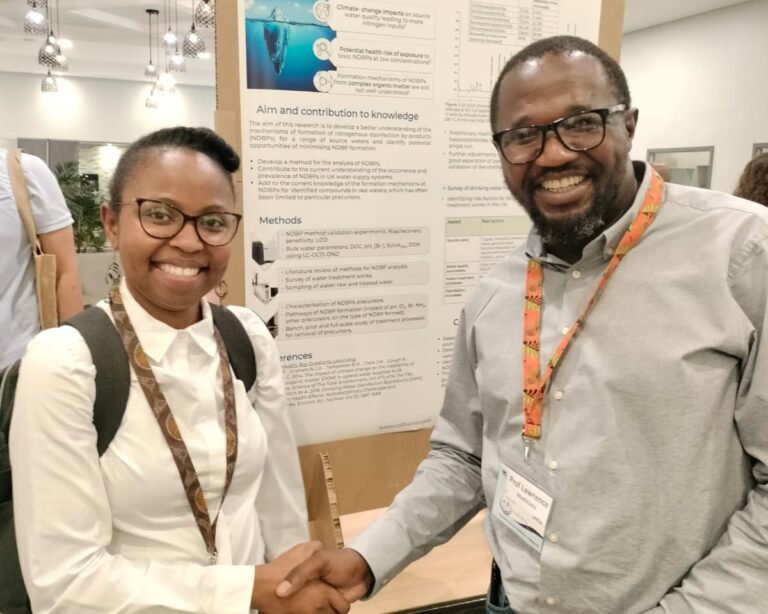
Two people are shaking hands in front of a scientific poster
Anne at her poster


Isabel Carneiro and Ishara Perera visit Newcastle University

Isabel Carneiro Cardoso da Silva (Cohort III) and Ishara Perera (Cohort IV) from University of Sheffield (UoS) attended an MSc module on Geographic Information Systems led by Dr Craig Robson, Lecturer in Data-centric Civil (and Geospatial) Engineering at Newcastle University.  Isabel and Ishara both identified this module as highly relevant to their projects.  This module has proved very popular throughout the WIRe Programme, with previous students attending from UoS and Cranfield in the past. The team at Newcastle arranged a catch-up and lunch session for Isabel and Ishara along with the other WIRe students at the university.

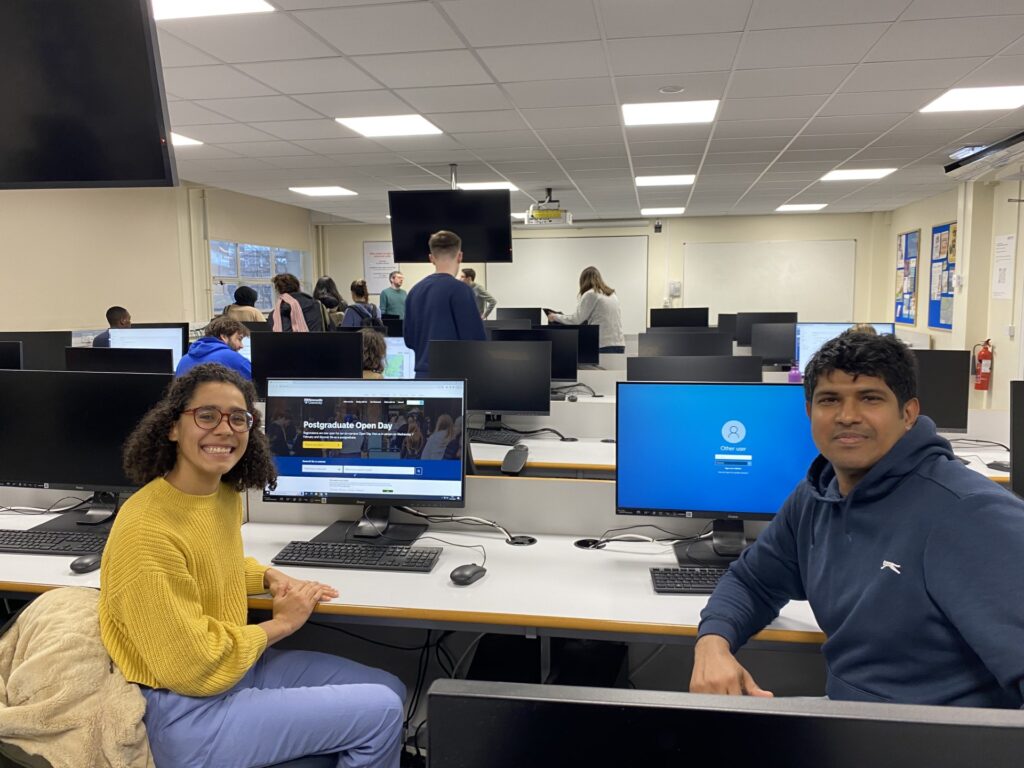
Isabel and Ishara sit in a room of computers on desks, they are sat in front of two computers smiling at the camera. Isabel wears a yellow top and Ishara wears a grey hoodie
Isabel and Ishara on the GIS module in Newcastle
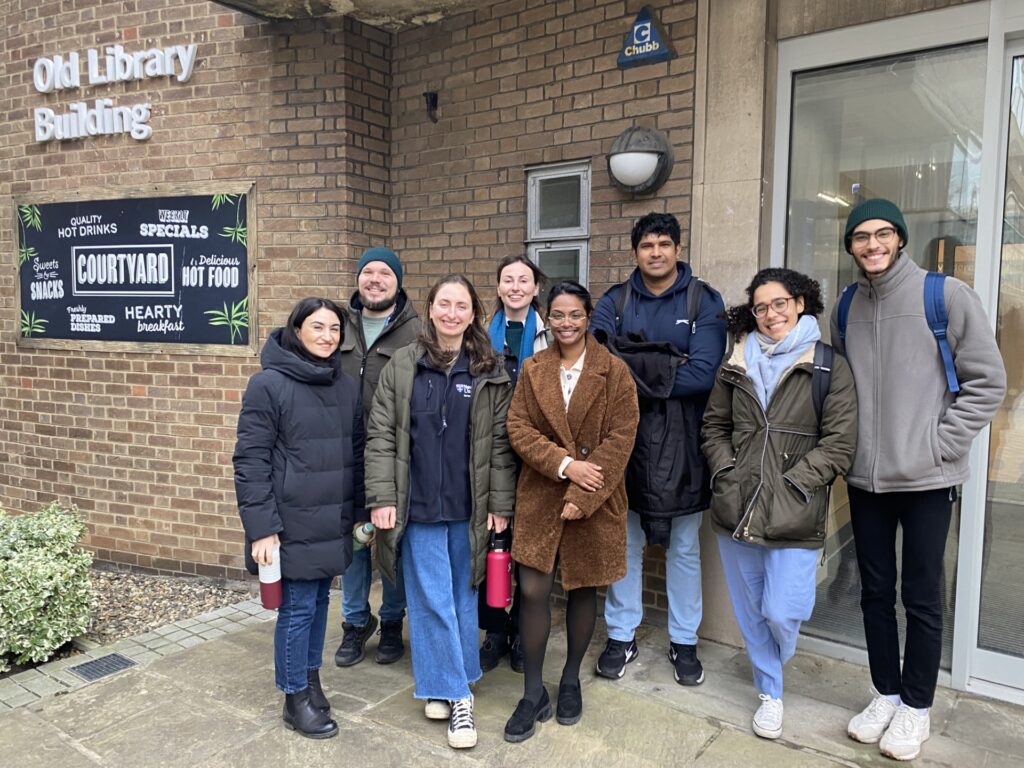
A group of WIRe CDT PhD students smiling at the camera in front of a building
WIRe students meeting up in Newcastle. From left to right: Anna Laino (Cohort II), Vlad Dukhovskoy (Cohort V), Eleyna McGray (Cohort III), Ali Leonard (Cohort II), Anna Christy (Cohort III), Ishara Perera (Cohort IV), Isabel Carneiro Cardoso da Silva (Cohort III) and André Araujo Frota (Cohort IV)


Edward John wins the prestigious Peter Watson Prize for Young Engineers

Edward John (Cohort II) won the Peter Watson Prize for young engineers in December 2023 for his presentation on “Proactive pipe management: Multiaxial fatigue of water pipe grey cast iron”. The event was hosted and organised by the Engineering Integrity Society (EIS). Speaking after receiving the award, Edward said, “The award has definitely given me a confidence boost for future presentations and it is nice to have my research recognised in this way.”

Read a short interview with Edward here.

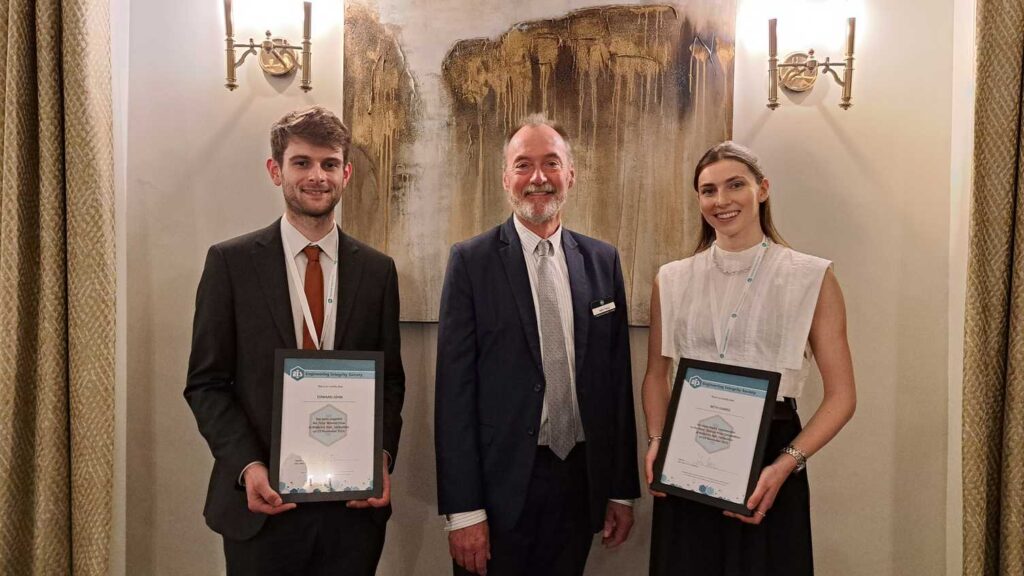
Edward John stands to the left of two other people. all are wearing smart clothes and smiling at the camera. the two outer people are holding certificates
Edward John (left), John Yates (judge and EIS chairman, centre) and Beth Eames (University of Oxford, Highly Commended Presentation, right)


Philippa Mohan participates in the CIWEM Urban Drainage Group Conference

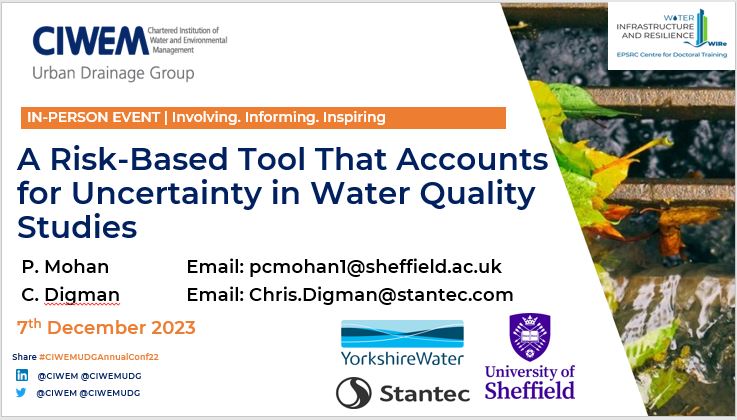
In December 2023 CDT WIRe’s Philippa Mohan (Cohort II) presented on a risk based tool that accounts for uncertainty in water quality studies at the CIWEM Urban Drainage Group event in Birmingham, UK. In her talk, titled 'A Risk-based Tool That Accounts for Uncertainty in Water Quality Studies' she talked about how uncertainty in the data we use to monitor discharges of sewage into rivers can alter the understanding of if harm has occurred or not. 

A slide from Philippa's CIWEM Urban Drainage Group Conference presentation
Philippa's title slide


CDT WIRe Researchers at the UKWIR 4th Annual Conference

CDT WIRe students Polly Grundy (Cohort III), Ali Leonard (Cohort II), Alethea Goddard (Cohort I), Ravina Bains (Cohort II), Killian Gleeson (Cohort I), Jade Rogers (Cohort II), Anne Kamau (Cohort IV), Thomas Langshaw (Cohort II), Edward John (Cohort II), Dimitris Athanasopoulos-Tseles (Cohort I), Harry Nicklin (Cohort II) and Anna Laino (Cohort II), along with other colleagues, attended the UKWIR 4th Annual Conference held in London in November 2023. The aim of the conference was to bring people together to promote inspiration and innovation in the water sector.

The WIRe students contributed by presenting their work as posters and taking time in the breaks between sessions to discuss their research with fellow conference attendees from  across the water industry.

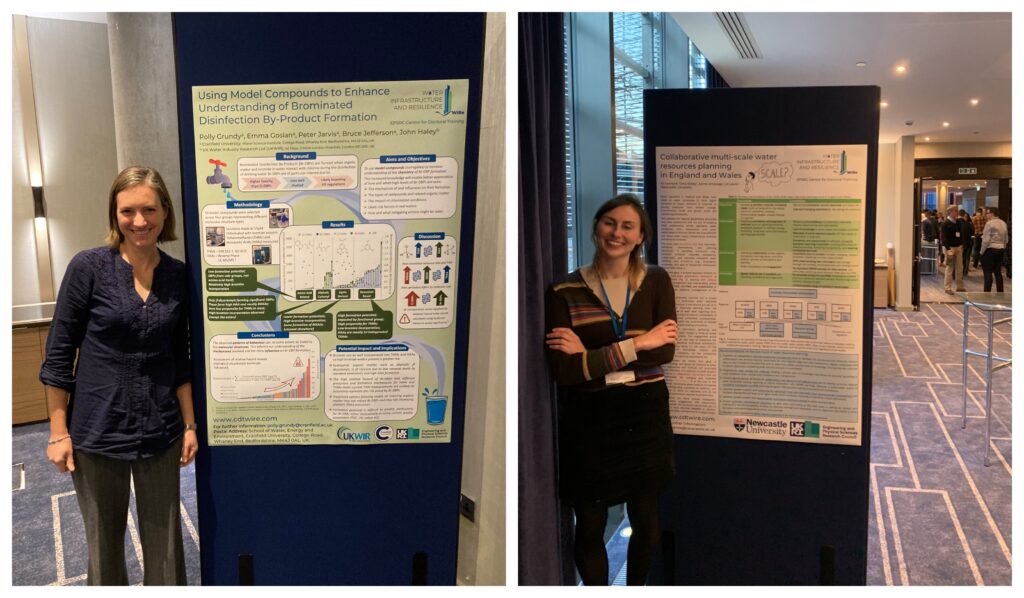
left: Polly stands wearing a dark shirt smiling at the camera next to a scientific poster. right: Ali stands with her arms crossed smiling at the camera next to a scientific poster. She is wearing a striped top.
Left: Polly with her poster. Right: Ali with her poster.


CDT WIRe Students at Summer Challenge Week 2023

Organised by the University of Sheffield, the week challenged the students to think out of the box and participate in outreach activities that involved engaging school children in educational, yet interesting water related games. The aim of this year’s challenge was to enhance the social skills of the students, their ability to break down complex water engineering concepts and make them interesting and engaging to school children.
An important part of the week was the one-day conference. The day started with a presentation on research impact from Tony Conway, Visiting Professor at University of Sheffield followed by full presentations by cohort I researchers and alternated by three-minute poster pitches by cohort II students. 

Congratulations to Lucie Bertolaso for winning the Best WIRe poster and to Jade Rogers and Daniel Ruth for winning the Best Three Minute Poster pitch and the Best WIRe Presentation prizes, respectively. Jennifer Hollands from cohort IV was presented with the Best Student in the Induction Semester prize at the end of the conference. Well done all!

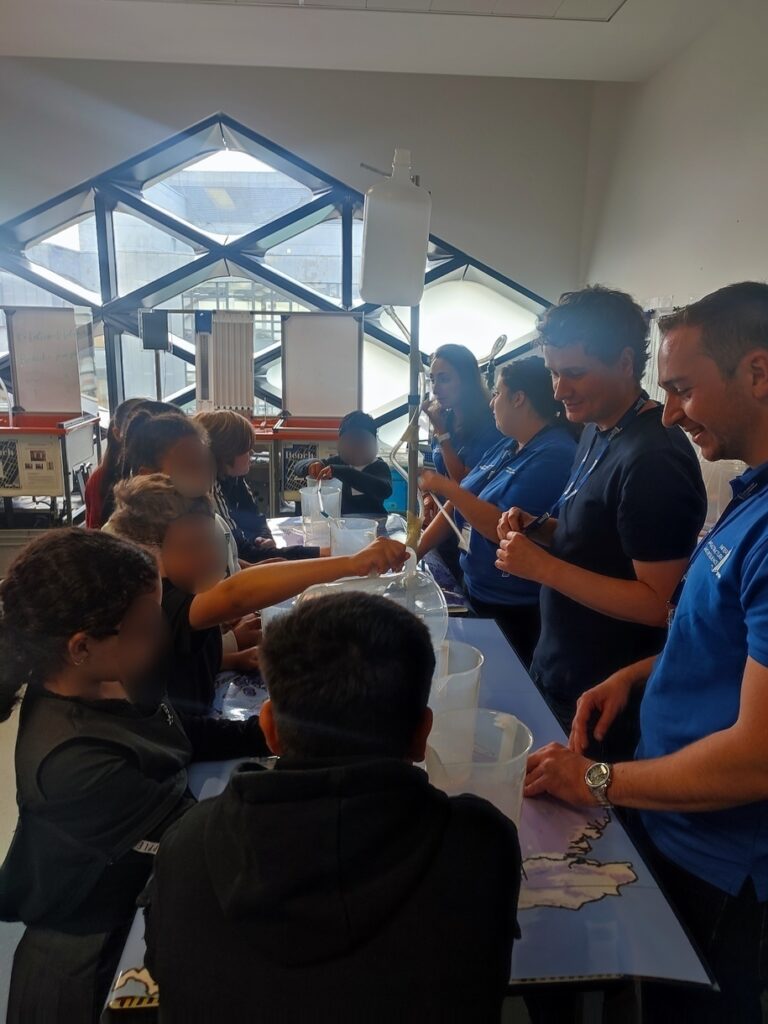
A group of WIRe CDT PhD students work with children in a lab setting
WIRe PhD students leading an outreach activity

For the outreach event with the school students, two groups of WIRe students went to The Diamond, that houses exceptional equipment, labs and study spaces while two groups were placed at The Integrated Civil and Infrastructure Research Centre (ICAIR), to interact with the children. The students at the Diamond engaged with thirty 9–10-year-olds from Porter Croft Academy and those at ICAIR engaged with twenty-three 13-14-year-olds from Yewlands Academy.

The students at The Diamond presented four different activities.  One was about how water is supplied to cities, which they showcased through an interactive game of understanding the cost of water supply vs cost of bottled water and by using different sized pipes to depict water flow, and how that affects the flow of water to each city.  The second showed the ways in which water buoyancy is managed through an exciting and competitive game of pirates, boats and marbles as weights. 

The third highlighted the use of water movement to generate energy, using a mini turbine to show the effect of water movement on the spinning of the turbine. Students talked about their experience of visiting a windmill on a school trip and asked them to compare what they’d seen previously to a turbine they were shown. They also used a handheld windmill, looked at the shape of the curves and asked them to suggest why they were shaped that way. They had a mini quiz that asked them some fundamental questions of hydropower and explained key terms that were probably new such as kinetic energy = movement energy. This proved to be the most challenging one for the students.

The final activity talked about water flows, using rubber ducks. The school children decorated their ducks in any way they liked and using a flow meter, tested to see if their duck flowed fastest from one end to the other. This was the most fun game for the students as they could interact with all the elements involved and make a race out of it. 

WIRe PhD students lead an outreach workshop
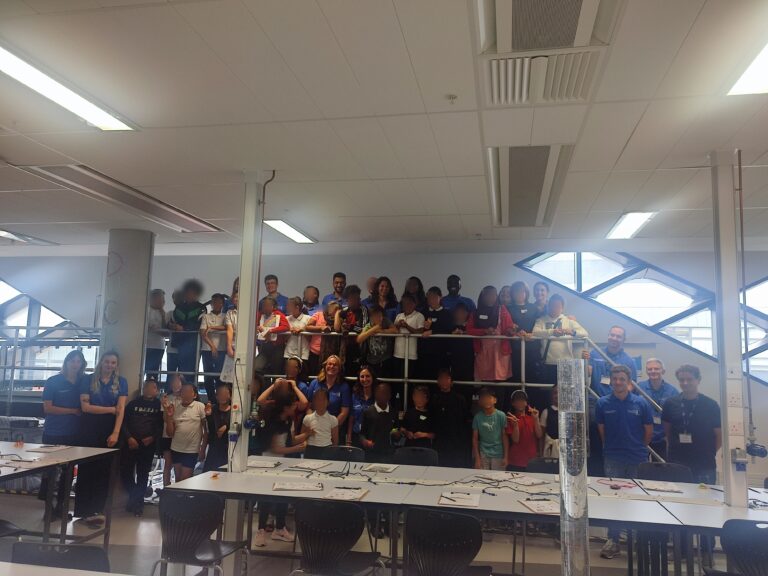
a group of children and PhD students stand in a science classroom smiling at the camera
WIRe PhD students with the children taking part in the outreach activities

At ICAIR, the students conducted four main activities. In the first activity, the pupils learnt how to investigate sewage pipes using the full-scale sewer pipe testing facility to create replica blockages (to represent things like wet wipes, fat bergs in real life) and then sent water down at various speeds (to represent normal or storm flows) with rubber ducks floating in it and timed how long they took to get through. They used CCTV cameras to identify items in pipes and then discussed on which of those items are likely to block sewers. 

The second activity was to look at water distribution networks using the smaller scale water pipe test facility to understand flows through pipes and the forces involved in a typical water distribution network, ensuring that each ‘tank’ / house received an equal amount of water. 

The third activity was about investigating blockages, a follow-up on the sewer blockage activity, where the students dropped rubber ducks of various sizes into the pipes to see which would arrive first at the end of the test cell. There was a discussion on blockages and fatbergs and impact on sewer systems post the activity. 

The final activity was about water flow monitoring where a desktop pipe network was used to simulate what would happen if there was a pipe leakage. The students were able to use simple formula to calculate how much water was lost to a leaking pipe after a given time.

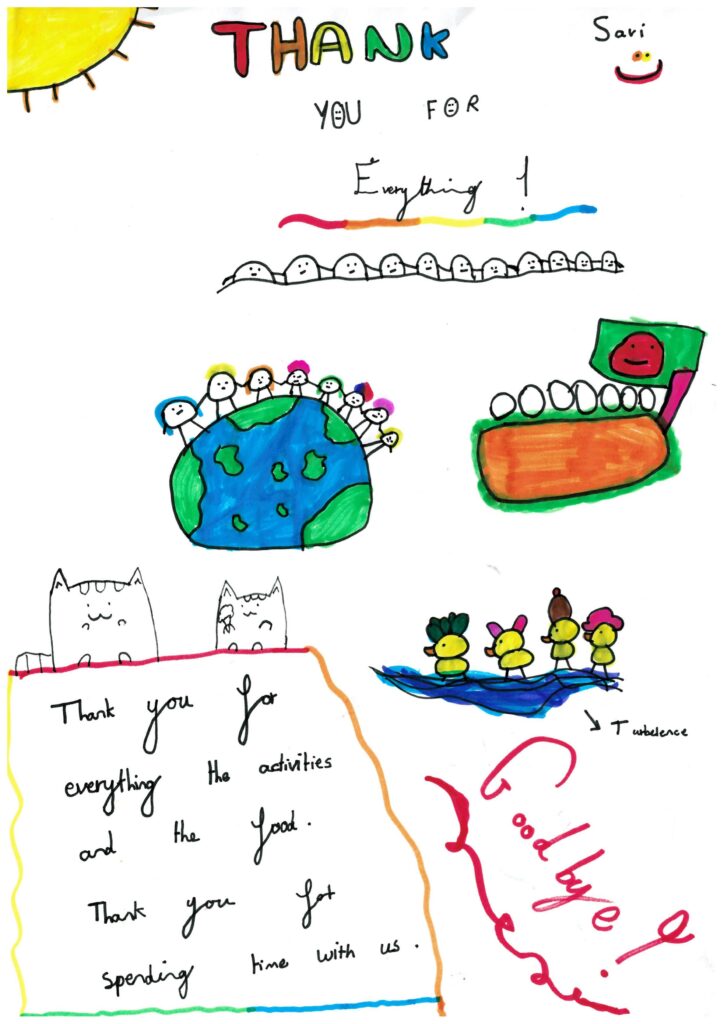
After the activities the schools shared adorable thank you cards with the WIRe students, expressing their enthusiasm for the activities organised as well as the pizza that the team got them for lunch!

The WIRe students reflected on their key takeaways from the outreach activity, what they learnt from the experience of explaining the science behind their activities to school children. 

The Summer Challenge Week was a stimulating time for the WIRe students to step out of their comfort zone and engage in activities that they normally do not, as part of their PhD. Well done all, you did a great job!

We look forward to another exciting Summer Challenge Week next year! 

Thank you card drawn by a child
Thank you notes written by the participating children
thank you card written by a child


Anna Laino Participates in the 8th IWA WRRmod Conference

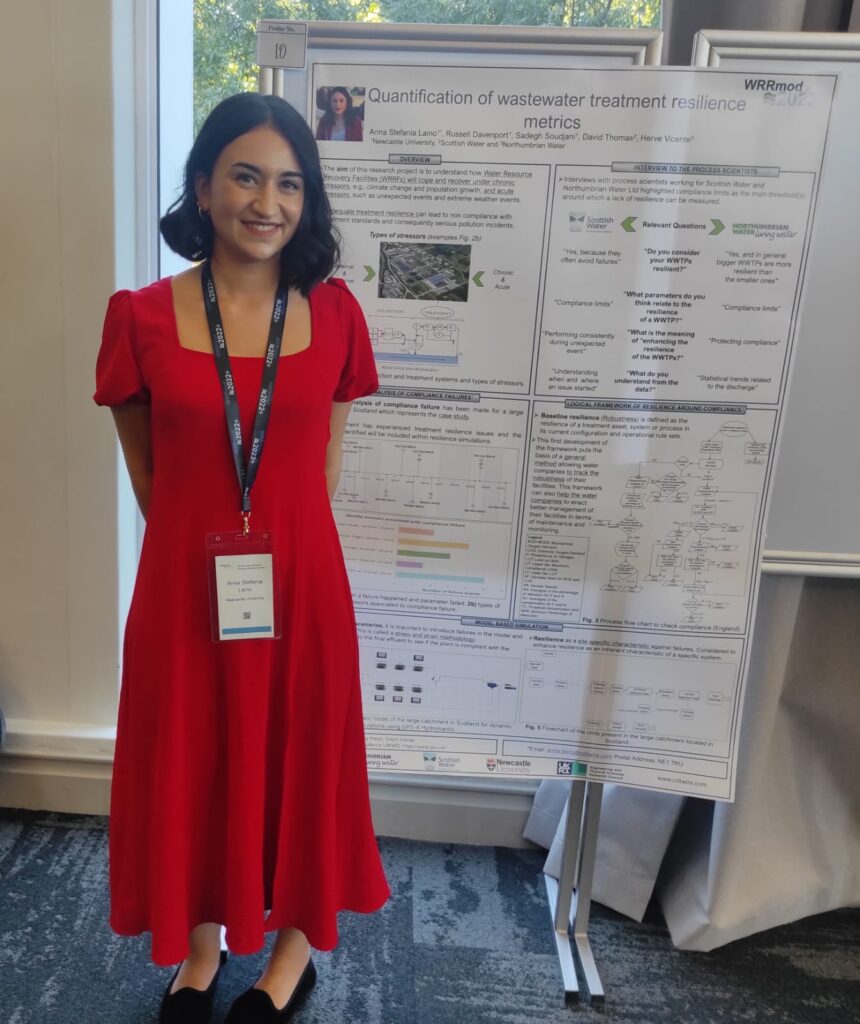
Anna Laino from Cohort II of the WIRe CDT presented a poster on ‘Quantification of wastewater resilience metrics’ at the 8th IWA Water Resource Recovery Modelling Conference held in Stellenbosch, South Africa from 18-22 January 2023.   

Anna Laino is wearing a red dress and standing next to a scientific conference poster smiling at the camera
Anna with her poster


WIRe Researcher Matthew MacRorie Conducts Research in Lahan, Nepal

Matthew MacRorie, CDT WIRe researcher in Cohort II, spent over three months in Lahan, a small city in Nepal, along the South-East border with India. Lahan is the focus of The Beacon Project, a collaboration between Anglian Water, WaterAid Nepal and the government water utility Nepal Water Supply Corporation (NWSC) to improve the water and sanitation situation in the city.


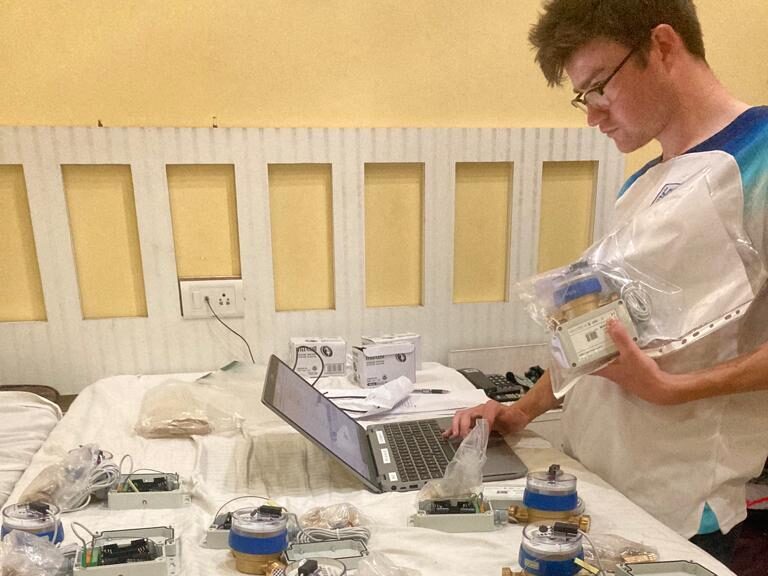
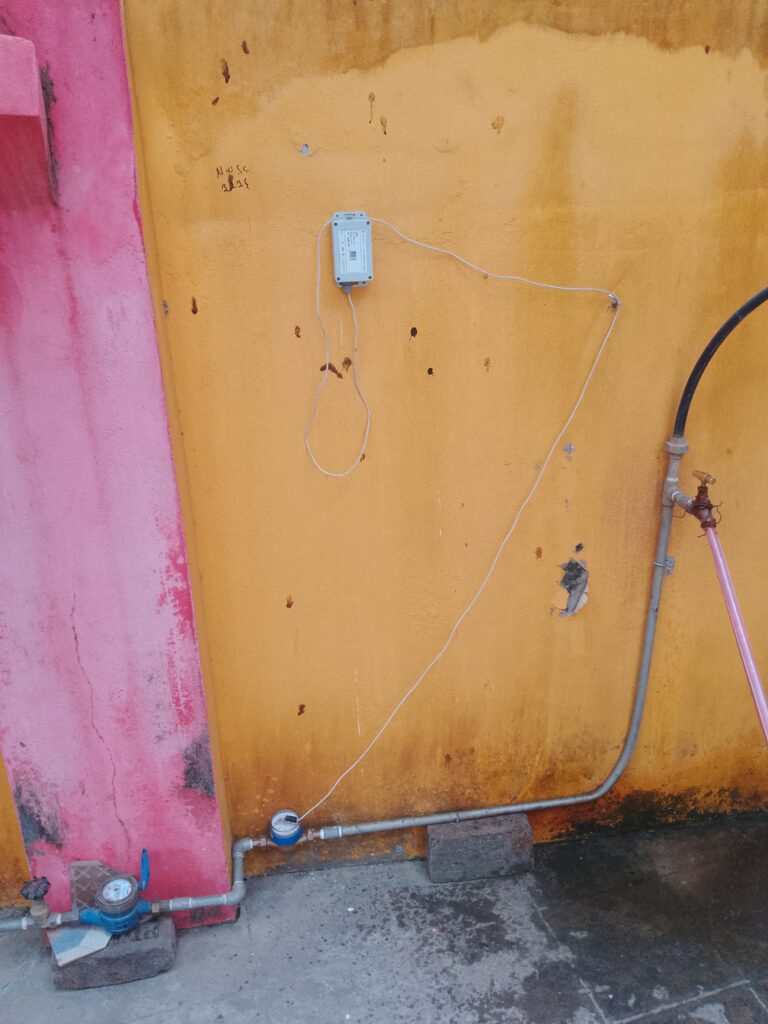
As part of the visit, Matthew and Beacon project partners, conducted 60 household surveys to understand their experience with piped water supply, how they adapt to the intermittency of the piped water and the ways in which they would like the water supply to improve. Along with the surveys, the team also installed smart water meters in the households to record water usage every minute and used a SIM card to transfer that data to a web-based platform to track water usage from the UK. The combination of the smart meters and surveys allows for a greater understanding of the variation in water access within an intermittent water supply network and the challenges of transitioning to a continuous supply system.


Matthew also had the opportunity to trek around the Manaslu circuit and visit Pokhara and Surkhet.

The data collection setup
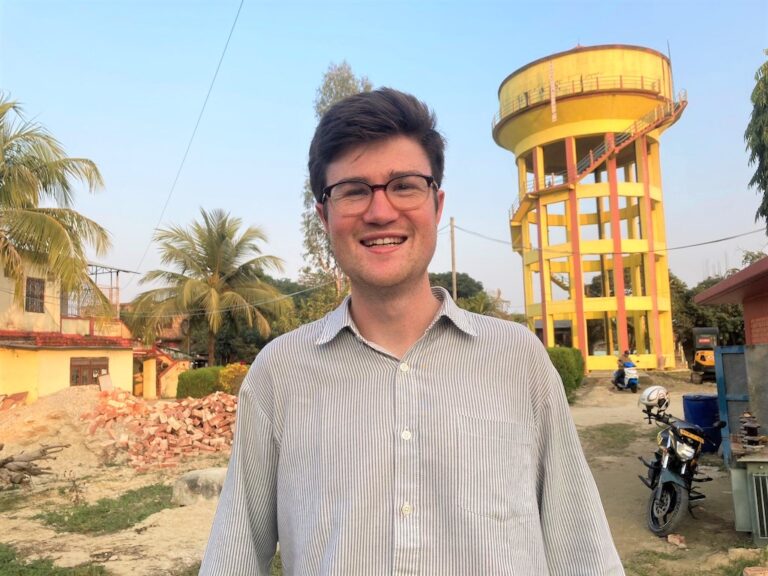
Matthew stands in the centre of the frame wearing a pale blue shirt and glasses smiling at the camera in the background there are palm trees
Matthew in Nepal
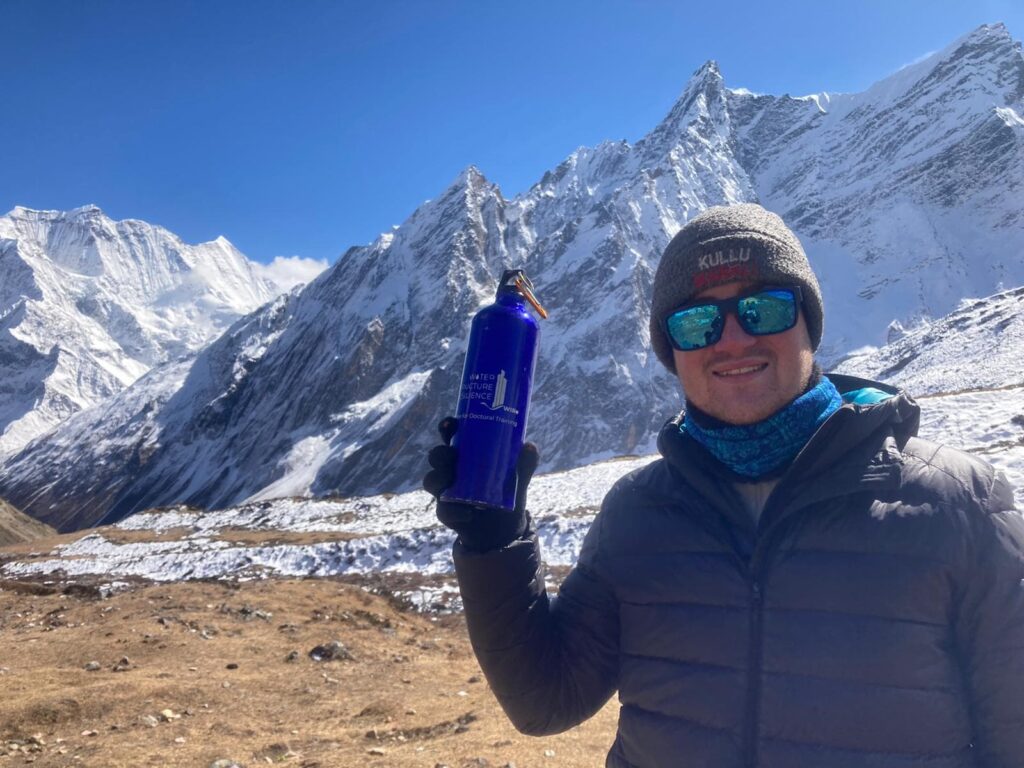
Matthew stands smiling at the camera wearing a blue coat, a hat and blue sunglasses. in the background there are snowy mountains. Matthew is holding a water bottle with the WIRe logo
Matthew in the mountains representing WIRe
Matthew sits at a laptop surrounded by wires and other computer parts
Matthew setting up data collection


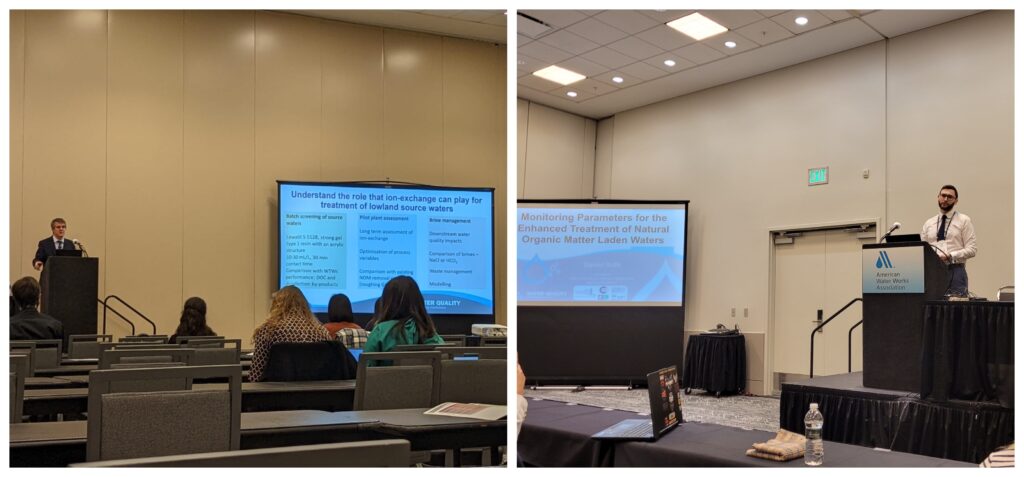
Peter Jarvis and Daniel Ruth participate in the 2022 Water Quality Technology Conference

Peter Jarvis, WIRe director, and Daniel Ruth (Cohort I) participated in the 2022 Water Quality Technology Conference, organised by the American Water Works Association.

At the conference, Peter was a speaker at a session on ‘Impact of Reduced Regeneration Frequency on the Ion Exchange Equilibrium for Removal of Organic Matter and Inorganic Ions’ while Daniel was part of the session on ‘Monitoring the Right Parameters for the Enhanced Treatment of Natural Organic Matter Laden Water Sources’.

Left: Peter stands at a lectern delivering a conference talk to a lecture theatre. Right: Daniel stands in front of an audience delivering a talk
Left: Peter Jarvis presenting. Right: Daniel Ruth presenting


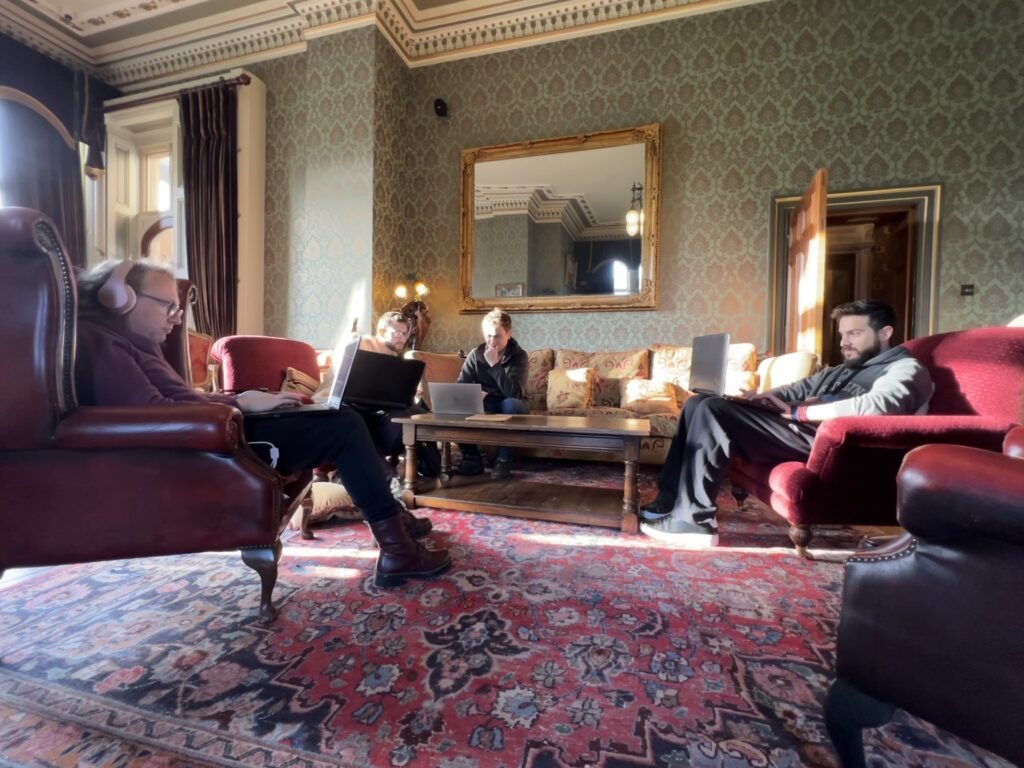
CDT WIRe Cohort I Researchers Attend A Scientific Writing Training and Retreat

CDT WIRe’s first cohort participated in a week-long scientific writing training and retreat. The retreat aimed to help the students understand the need for scientific writing; learn more about the publication process; strategies and techniques to writing; barriers to scientific writing and how to overcome them; and also, to learn from their peers.

During the week, they attended sessions on ‘My approach to writing’ by Jerry Knox from Cranfield University and Fran Pick from the University of Sheffield. The students brought a piece of their research work to the retreat (data set, non-started or an ongoing paper) and worked on it using their learnings from the retreat. They also had the opportunity to peer reviewed each others' work.

Several people sit on ornate chairs in a stately room. they are working on laptops
Cohort I hard at work on the writing retreat


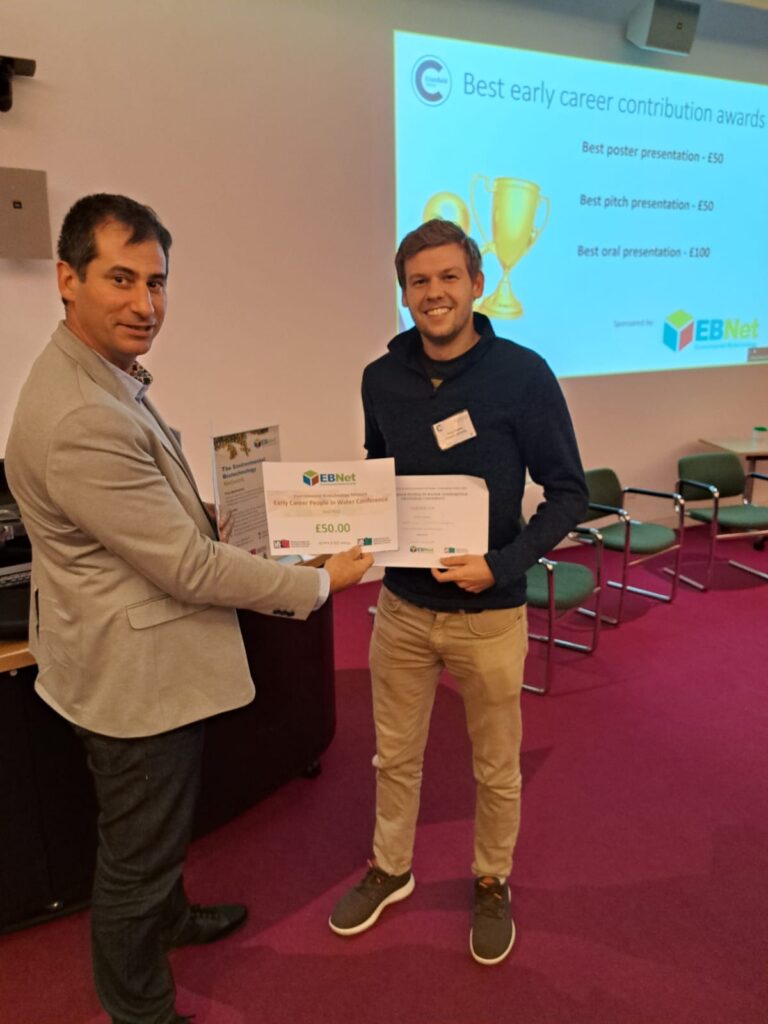
Harry Nicklin Wins Best Poster Presentation Award at the EBNET Early Career People in Water Conference

CDT WIRe researcher Harry Nicklin (Cohort II), from Cranfield University, won the best poster presentation award at the EBNET Early Career People in Water Conference held at Cranfield University recently. Harry’s presentation was on ‘Understanding domestic water use behaviour using smart sensor-based behavioural interventions.’

Pinelopi Savvidou (Cohort III) also won the best poster award at the conference.

Two men stand holding certificates smiling the the camera.
Harry receiving his award


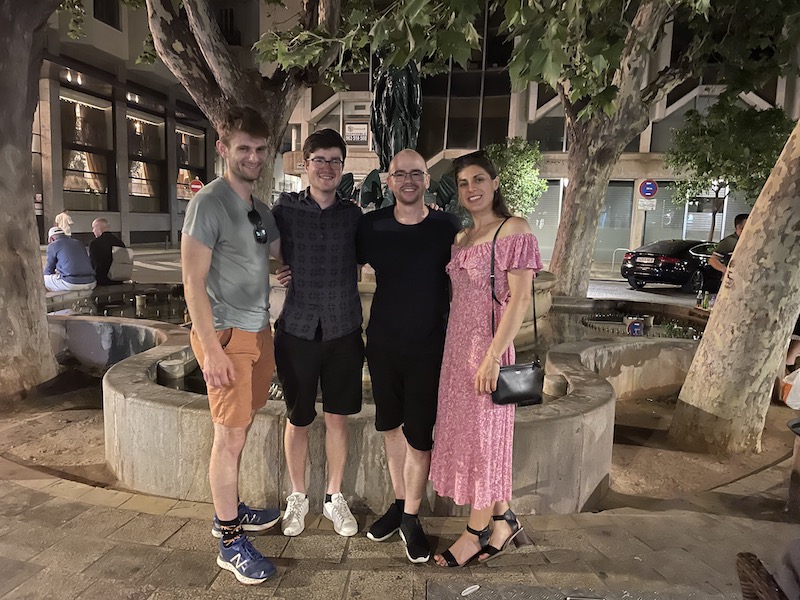
WIRe researchers attend WDSA-CCWI Conference 2022, Valencia, Spain

CDT WIRe researchers Jade Rogers, Reinar Lokk, Edward John and Matthew MacRorie (all Cohort II) from University of Sheffield presented their research from their PhDs at the WDSA-CCWI Conference held in Valencia.

four people stand wearing summer clothes smiling at the camera in front of trees in a town square
From left to right: Edward John, Matthew Macrorie, Reinar Lokk, Jade Rogers