Meet Pinelopi Savvidou

Email: Pinelopi.Savvidou@cdtwire.com


Academic and Industrial affiliations: Cranfield University, Atkins

Title of research project: Wastewater Integrated Selection Environment: A UK Model comprising regulation, resilience and sustainability 

Pinelopi Savvidou


Concerns for the impact of micropollutants (MPs) on the environment from treated wastewater have increased, hence the implementation of tighter regulations leading to high removal efficiencies in discharged effluents. Most countries require for MPs to be assessed for their treatability in the sewage treatment plants (STP). Hence, models of chemical transport and fate in an STP are required. 

Although models exist since 1990, current versions fail to predict the fate of complex MPs such as PFAS. Additionally, these models focus on one treatment or take into consideration a specific removal mechanism. The most studied treatment is the activated sludge process (ASP) with or without primary settling. ASP models determine MPs removal via biodegradation, volatilisation, and sorption. Nevertheless, other mechanisms such as cometabolic degradation, abiotic hydrolysis, compound oxidation and reduction, desorption and compound retransformation are not considered. Moreover, the addition of tertiary treatments (e.g., activated carbon filtration and advanced oxidation processes) also requires the update of current fate models. 

The aim of this research is to develop an all-purpose model capable of predicting the fate of MPs for different wastewater treatment processes and removal mechanisms. Hence, a critical review of the current models will be conducted followed by the evaluation of the most used ones for their ability to predict the fate of complex MPs such as PFAS and polybrominated compounds. Then, a model will be developed with features that allow the user to a) choose between activated sludge process and membrane bioreactor treatment, b) to predict micropollutant removal considering more than the three main removal mechanisms (biodegradation, sorption, and volatilisation), and c) for the user to choose on tertiary treatments. The model will be accordingly validated by using data derived from the National Chemical Investigations Program.

Meet Sreelakshmi Babu

Email: Sreelakshmi.Babu@cdtwire.com

Academic and Industrial affiliations: Newcastle University/The University of Sheffield, Northumbrian Water, Scottish Water

Title of research project: The future of wastewater-based epidemiology

Sreelakshmi Babu

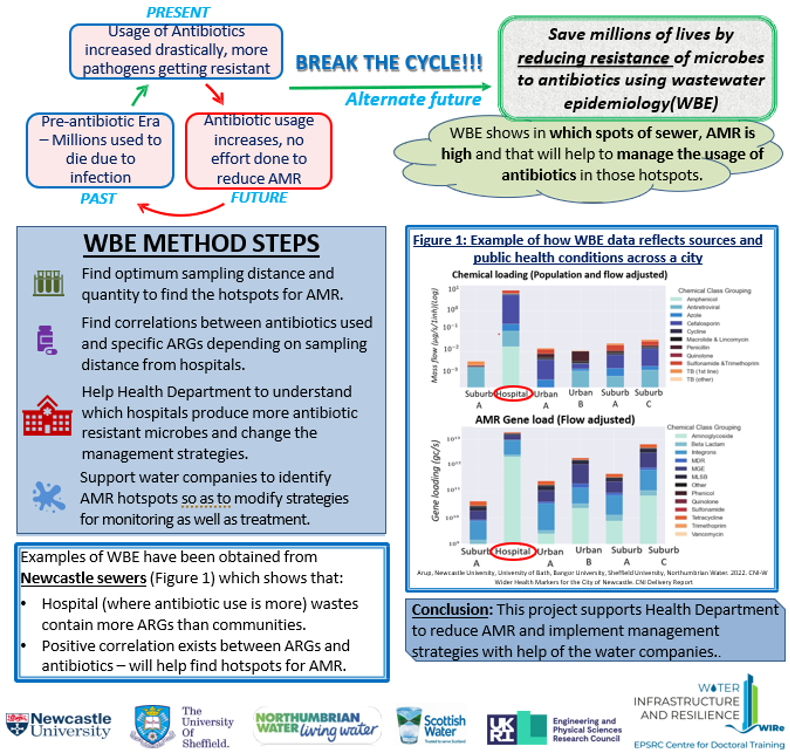
Wastewater based epidemiology (WBE) is a strategic approach for health protection that employs the analysis of wastewater to determine the prevalence of chemicals, infectious diseases, and other anthropogenic indicators in mass populations. WBE works on the principle that any substance or compound excreted by humans or animals, if adequately stable in wastewater, can be quantified, such that one can back-calculate original concentrations produced or consumed by the service population. The use of WBE for antimicrobial resistance (AMR) monitoring is among the recent applications and is being promoted around the world. AMR has been identified by medical professionals and public health specialists as a ‘silent’ or ‘the next’ pandemic.

The main objective of this project is to identify AMR using wastewater epidemiology in hospital wastewater. The experimental work includes DNA extraction from hospital wastewater and quantifying the antimicrobial genes (ARGs). It will also involve finding the optimum sampling distance and sampling quantity to find the hotspots for AMR. The data obtained will help find correlations between antibiotics used and specific ARGs depending on the sampling distance from hospitals. This will support Health Departments and other governing bodies to identify AMR hotspots and change management strategies. WBE data obtained will help water companies to modify treatment techniques and monitoring strategies.

Meet Thomas Langshaw

Email: tlangshaw1@sheffield.ac.uk
Academic and Industrial affiliations: The University of Sheffield, UKWIR
Title of research project: The insidious nature of pressure transients

Thomas Langshaw

A large portion of the UK’s water distribution network is still made up of cast iron pipes laid during the late 19th and early 20th century. These aging assets are, through a combination of continually varying loading and material loss due to corrosion, deteriorating. The deterioration can eventually initiate through-wall cracks and in turn leaks. Such leaks, although small, can contribute to a large volume of water loss due to the nature of being active for long periods or even indefinitely. One loading condition which can change rapidly is the internal pressure of the pipe. Termed pressure transients, these rapid internal pressure changes result from changes to the network conditions such as downstream flowrates. In recent years, the acknowledgement of how widespread and frequently pressure transients occur in water networks has led to the postulation that they can enable deterioration, specifically mechanical fatigue, during a pipe’s lifetime. Analysing the fatigue life of cast iron pipes is problematic due to mainly: i) these pipes were laid without consideration for fatigue in standards or design practice, ii) transient pressures and in turn stress histories, and corrosion rates of such pipes are largely unique to a specific pipe, iii) pipes are buried assets and routine inspection to monitor crack growth on any meaningful number of pipes would be infeasible.

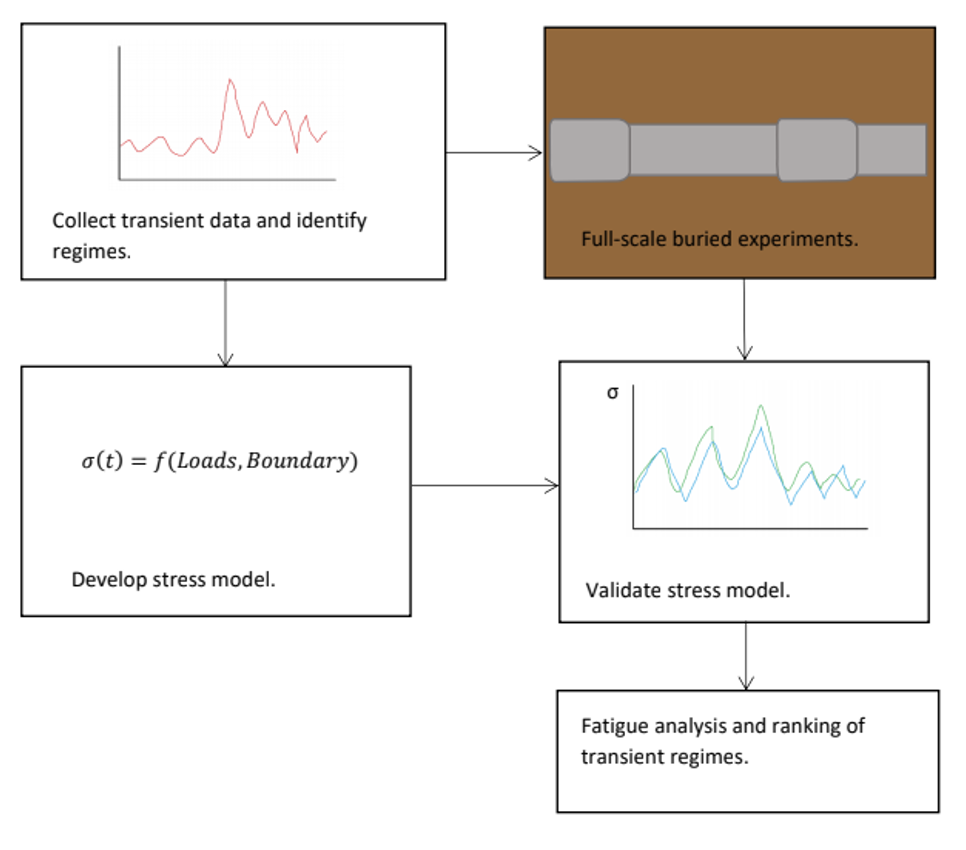
The project will use transient data recorded from UK water companies and identify transient regimes that can be linked to certain locations in water networks. To undertake a fatigue analysis of pipe lengths subjected to such transient regimes, a stress model which considers the external loadings and boundary conditions of a generalised cast iron pipe will be produced to give the temporal stress profile at a critical point on the pipe. The transient regimes will then be ranked in order of the fatigue damage they incur on cast iron pipes. Such information would enable water companies to focus mitigation activities upon areas where the most problematic regimes are found, thus increasing the effectiveness of asset management. By validating the stress model and subsequent fatigue analysis results against full-scale experiments and numerical modelling, conducting meaningful fatigue analysis of buried assets in the network could become a possibility in the future.

Meet Sam Settle

Email: s.settle2@newcastle.ac.uk
Academic and Industrial affiliations: Newcastle University and Northumbrian Water Ltd
Title of research project: Developing large scale MECs for treatment of sludge return liquor

Sam Settle

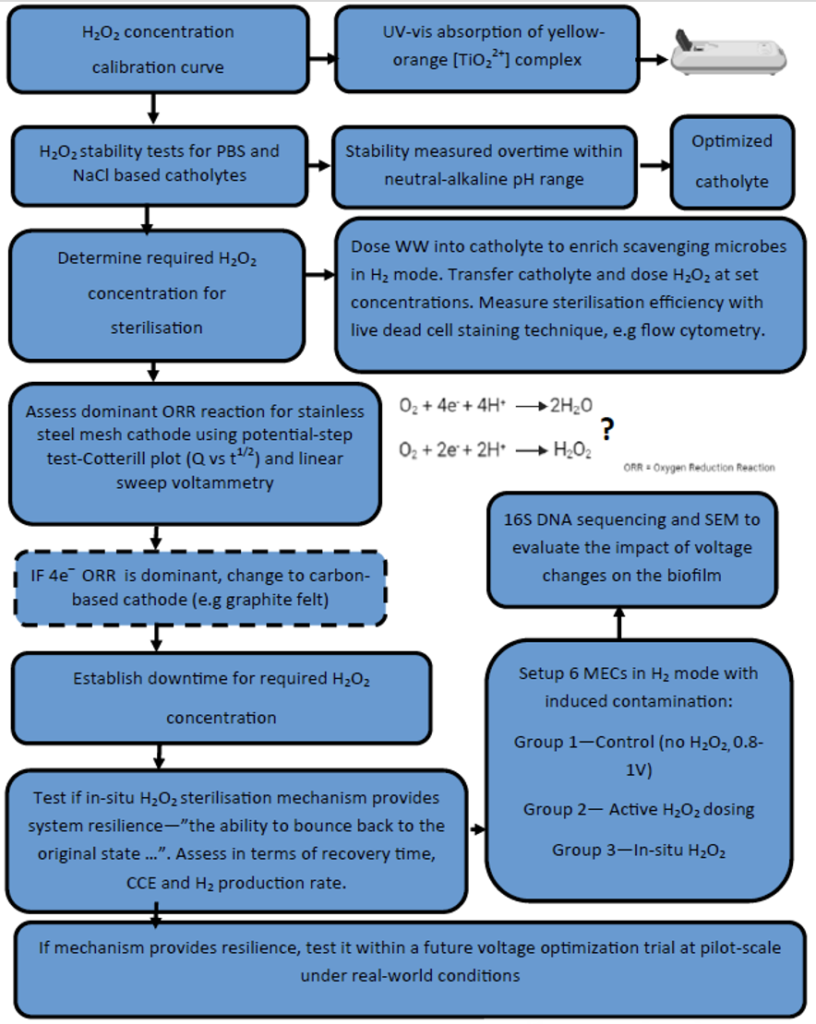
For UK’s water companies, discolouration of the drinking water is the main source of customer complaints. Drinking Microbial electrolysis cells (MECs) utilise an electroactive biofilm to degrade organic pollutants into electrons which are involved in proton reduction to form H 2 gas. Hence, these systems are currently being considered as a potential option for achieving net zero carbon emission and even energy-positive wastewater treatment (where the energy gained in the recovered H 2 is greater than the energy input to drive the electrochemical reaction). Commercialisation of MEC is still a long way off, with only a handful of ‘pilot’ L-scale reactors been tested on real domestic wastewater at WWTP which have achieved sub-optimal performance. A significant issue appears to be that H 2 production rates and cathodic coulombic efficiencies (moles of H 2 physically recovered / theoretical moles of H 2 that could be recovered based on measured current) are low. This prohibits MECs for real application, both economically (as this technology is expensive to construct, therefore, H 2 production rates need to high enough to allow for an acceptable payback time) and environmentally (the technology needs to be competitive against current and new WWT options in terms of global warming potential emissions). A previous pilot trial identified H 2 -scavenging microbes at the catholyte as a major H 2 sink. The first objective of the project is to develop and test a periodic self-cleansing mechanism based on in-situ peroxide production at the cathode to eliminate the H 2 -scavengers, which in turn improves system resilience and energy performance (refer to graphical abstract for proposed methodology). If the mechanism provides the necessary resilience in the laboratory, it will be trialled during a pilot-trial under real world conditions. The primary objective of the pilot-trial will be to investigate intermittent voltage input as an operating philosophy in terms of improving H 2 yields, wastewater treatment and energy efficiency compared to constant voltage input.

Meet Reinar Lokk

Email: reinar.lokk@cdtwire.com
Academic and Industrial affiliations: The University of Sheffield, United Utilities
Title of research project: The Future of Hydraulic Water Network Design to Manage Discolouration Risk

Reinar Lokk

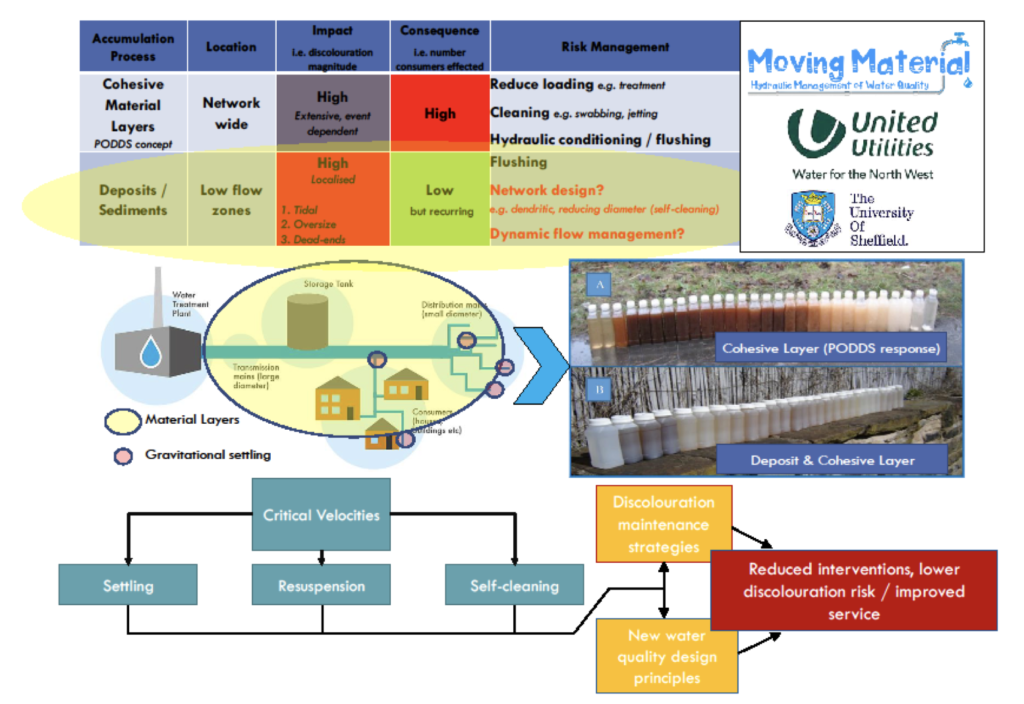
For UK’s water companies, discolouration of the drinking water is the main source of customer complaints. Drinking water discolouration can be traced back to material accumulation within the distribution system. The accumulated material can originate from corroding pipes, treatment works or even from microbiological growth within the network. Thus far the research has focused on PODDS type of accumulation where discolouration material builds up in cohesive layers around the circumference of the pipe. However, recent evidence has shown that there can be additional ‘hot spots’ where the material is accumulating by sedimentation. My research project, called Moving Material, focuses on trying to identify those additional sedimentation zones and how hydraulic parameters affect sedimentation build-up. The image below showcases flushing exercises carried out in different areas. Picture A shows PODDS type of gradual increase of material mobilization in response to flushing steps. Whereas on picture B we can see a sudden and instant response to low flow flushing step, which indicates loose deposits/sediments within the network. Ability to identify those additional ‘hot spots’ would give water companies an advantage on discolouration maintenance strategies and inform the design teams of new water quality design principles. Enhanced knowledge of the previous would directly benefit the customer as the discolouration risk is lowered and the service improved.

Meet Ravina Bains

Email: ravina.bains@cdtwire.com
Academic and Industrial affiliations: Cranfield University, Anglian Water, Scottish Water
Title of research project: Achieving Net-Zero – Hydrogen as a key factor for energy resilience and emission reduction for the UK water sector

Ravina Bains

The growing concerns for the impacts of the use of fossil fuels on the climate and the environment have prompted a movement to explore new ways of producing low-carbon energy. Hydrogen has a key role to play in the transition to a low carbon economy and the UK water sector can have a role in the future hydrogen economy. The production or the use of hydrogen can open opportunities for the sector to achieve net-zero carbon emissions. 

The aim of the project is to develop an evidence-based strategy for Anglian Water and Scottish Water to switch towards a hydrogen economy aligned to achieving carbon neutrality. The challenge is understanding the current limitations on the implementation of carbon-neutral (green) hydrogen production processes in the water sector and define solutions delivering carbon emission reduction, process, and energy resilience.

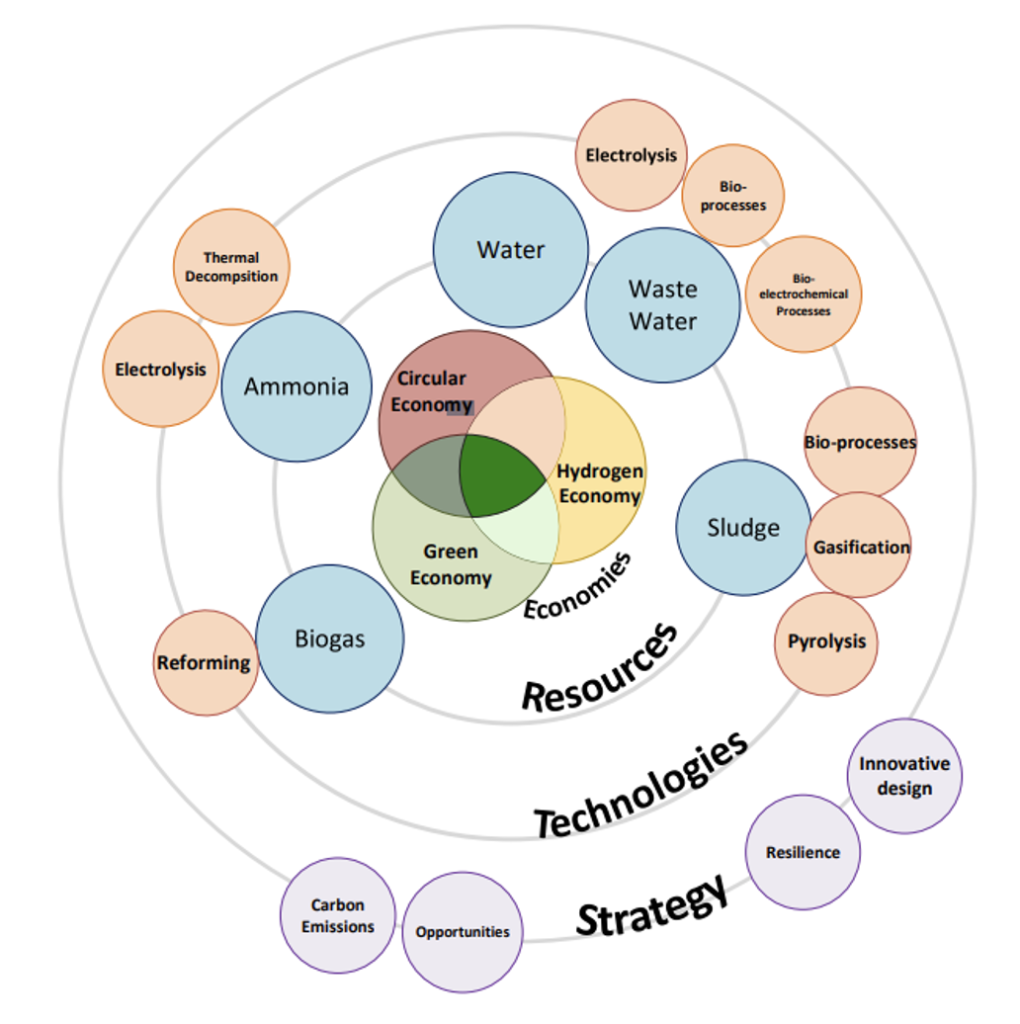
The balance between the hydrogen economy, circular economy, and green economy underpins the ability for hydrogen to provide a decarbonisation strategy for the water sector. The green economy focuses on the importance of ensuring substantiality and ecosystem regeneration as well as decarbonisation of society while the circular economy focuses on regenerating materials for use and reducing waste. The implementation of a hydrogen economy into the water sector brings both challenges and solutions to the success of these economies. An example is the possible challenge associated with the water demand of hydrogen production processes. High-water demands would impose threats on current ecosystems and lead to water scarcity for already stressed areas. This potential conflict highlights the requirement for a fundamental understanding of how hydrogen production impacts existing systems

Other sources of hydrogen the water sector has access to includes fresh water, wastewater, sludge, biogas, and ammonia. Technologies developed to scale that can produce hydrogen from these sources are electrolysis, steam methane reforming or biogas reforming, gasification, and pyrolysis. Electrolysis is a promising technology for which there are projects planned to produce hydrogen at a gigawatt scale. However, its water demand can represent a limitation for water-scarce areas. Another fully developed technology is steam methane reforming which is used by the petrochemical industry to produce hydrogen for onsite refineries. Reforming of biogas or biomethane has been adopted in some countries (e.g. Japan) to produce hydrogen for low emissions transport vehicles, with most projects being run at a scale of less than one megawatt. Gasification and pyrolysis can provide solutions for sludge disposal but are less developed technologies. There are currently no known gasification plants being used solely for hydrogen production. Plants are typically used for power generation with few installations using sewage sludge. Pyrolysis is the least developed technology and has limited full-scale applications. By evaluating the status and the applicability of these and other less developed technologies (e.g. bio-processes) to the water sector, further work will commence determining how best to deliver carbon emission reduction and energy resilience using hydrogen.

The project will deliver a robust and science-based analysis of established and innovative technologies for green hydrogen production applicable to the water sector highlighting steps for implementations, favourable conditions, innovative designs, and contribution to carbon emissions reduction. The experimental activities will focus on the most promising technologies to fill the knowledge gaps in the view of future implementation.

Meet Philippa Mohan

Email: Philippa.Mohan@cdtwire.com
Academic and Industrial affiliations: The University of Sheffield, Stantec
Title of research project: Development of risk-based investment decision making tools that account for predictive model uncertainty in Water Framework Directive studies

Philippa Mohan

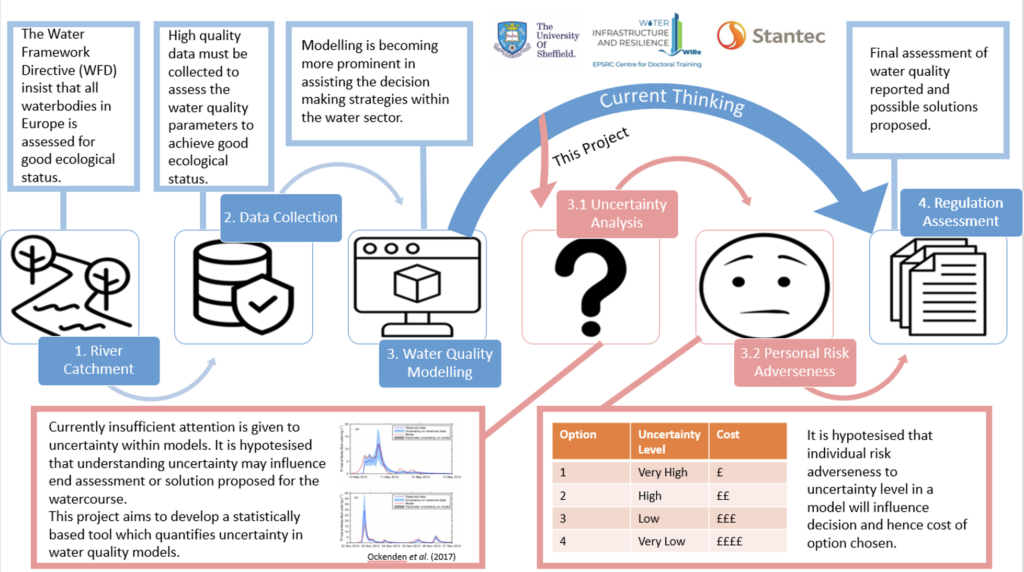
Modelling is becoming more prominent in assisting the decision making strategies within the water sector. This includes the assessment of water quality parameters to achieve ‘good’ ecological status in Water Framework Directive (WFD) studies. When modelling is used correctly it can offer a holistic approach in considering different dynamics of a catchment and thus allowing a balanced assessment of the implementation of both regulatory and infrastructural mitigation strategies.  However, currently insufficient consideration is being made to correctly identify and then use uncertainty within water quality models; leading to a possible incorrect assessment of watercourse and hence ineffective use of economic resource. Therefore, in this project, Philippa Mohan firstly aims to develop a statistically based tool which quantifies uncertainties in sub-models. It is then the aim to aggregate these individual uncertainties to better understand the uncertainty as a whole in the hydraulic and water quality parameters used in WFD assessments. With the final aim of the project to investigate the role of personal risk adverseness in terms of investment decision making strategies to allow the development of a framework which incorporates model uncertainty into an objective investment decision making strategy.  It is the idea that this framework would be applied to a range of different catchments to evidence the potential cost variation of investment decision for WFD compliant solutions. 

Meet Matthew MacRorie

Email: Matthew.macrorie@cdtwire.com
Academic and Industrial affiliations: The University of Sheffield & The Beacon Project
Title of research project: Transitioning from intermittent to continuous water supply 

Matthew MacRorie

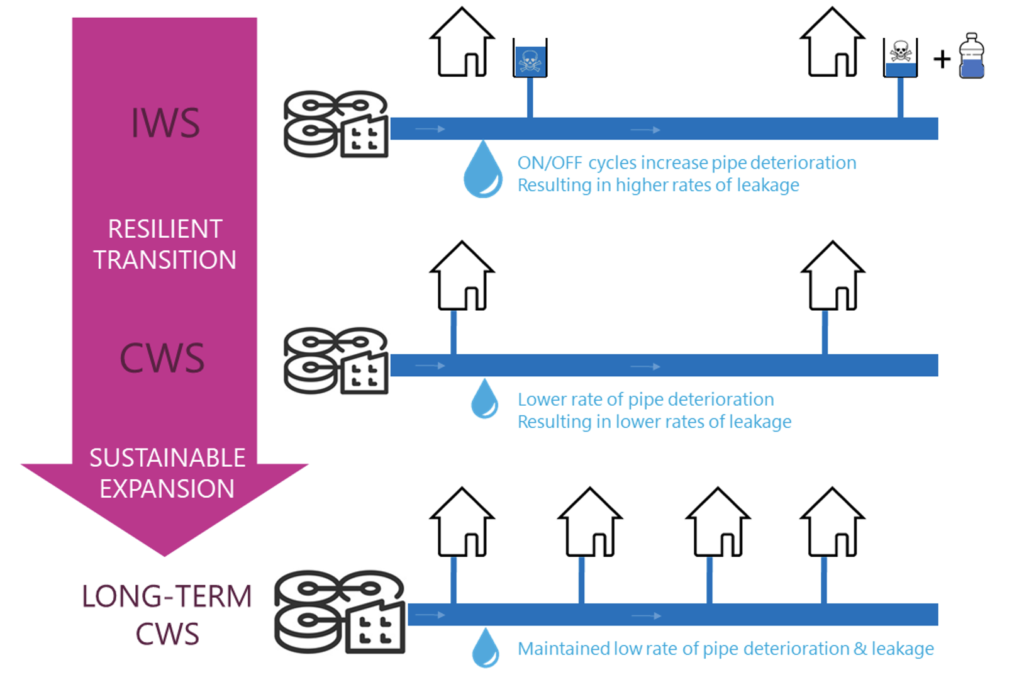
Approximately 1 billion people worldwide experience intermittent water supply (IWS) through piped networks, this causes approximately 4.5 million cases of diarrhoea every year. In addition to poor water quality, IWS results in large inequity within the distribution system as customer supply hours are highly dependent on their location. Surprisingly, the causes of intermittency are often rooted in technical or economic scarcity, not a scarcity of water. This therefore begs the question of how these human-orientated issues can be overcome to enable continuous water supply (CWS). In this project, Matthew MacRorie will investigate the transition to continuous supply with a focus on resilience. Incorporating a long-term view will inform the development of optimal steps for transition and hope to minimise the risk of the water supply returning to intermittency. The research will involve a case study of Lahan, Nepal which currently operates IWS and hopes to provide new insights and guidance for water utilities managing IWS systems.

Meet Jade Rogers

Email: Jcrogers1@sheffield.ac.uk
Academic and Industrial affiliations: The University of Sheffield, Scottish Water
Title of research project: Managing biofilms and disinfection residuals to protect drinking water safety

Jade Rogers

Disinfection residuals are common place in UK drinking water distribution systems (DWDS), used to control microbiological degradation of drinking water. Water utilities are increasingly switching disinfection residuals from chlorine to chloramines in order to minimise the formation of regulated disinfection by-products (DBPs). This will affect DWDS biofilms (microbial communities present at the pipe wall) and bulk water chemical interactions, potentially leading to adverse water quality impacts such as discolouration and nitrification. The interactions between biofilms, bulk water chemistry and physical disturbances are poorly understood in regards to disinfection changes, yet such understanding is essential to improve DWDS management and asset performance. In this project, Jade Rogers aims to determine how disinfection residuals, in particular, chloramination can be better managed to reduce adverse water quality impacts. Critically, the project will consider chemical, physical and biological processes in combination, through the use of two pipe loops located in the DWDS, to understand the uncertain impacts of chloramination upon biofilm structure and behaviour, such as growth rates and bulk water quality exchanges.

Meet Harry Nicklin

Email: harry.nicklin@cdtwire.com
Academic and Industrial affiliations: Cranfield University, Reckitt Benckiser
Title of research project: Understanding Domestic Water Use Behaviour

Harry Nicklin

Freshwater demand in the UK is expected to outstrip supply by over 1 billion litres per day by 2050, so water demand must be managed more sustainably. Despite technological innovations in water efficiency, per capita water demand has increased in recent years, hovering around 140L per person per day. Household water use behaviour needs to be addressed since we remain wasteful even with more water-efficient products available. To aid with this, smart water meters collect and transmit household water use data to water companies and consumers in real-time, supporting water resource planning decisions and informing consumers about their water usage. This research project investigates the impacts of smart water meters on domestic water use behaviour. By installing smart water meters in campus residence halls and exploring the prolonged impacts of different behavioural interventions on water consumption, this research builds evidence informing the most effective strategies for influencing water use behaviour over the long-term. The overarching aim is to generate prolonged water and energy savings and elevate understanding of the role of smart meters in household resource conservation for the benefit of generations to come.